European Parliament slams Zelensky over military unit renaming in Ukraine-Poland row
Synopsis
The European Parliament has taken the unusual step of formally rebuking a wartime ally — criticising Zelensky's decision to name a military unit after the UPA, a group Poland holds responsible for a WWII-era genocide. With Poland revoking Zelensky's highest state honour in response, the episode reveals how unresolved historical wounds can fracture even the most strategically aligned partnerships.
Key Takeaways
The European Parliament approved an amendment criticising President Zelensky 's decision to rename an elite military unit after the World War II-era Ukrainian Insurgent Army (UPA) .
The amendment was tabled by Polish MEP Andrzej Halicki and German MEP Michael Gahler as part of a report on Ukraine's EU accession progress.
Poland associates the UPA with the Volyn massacre of 1943–45 , in which tens of thousands of ethnic Poles were killed; Poland classifies it as genocide, a label Ukraine rejects.
Polish President Karol Nawrocki revoked the Order of the White Eagle — Poland's highest state honour — from Zelensky , who had received it in 2023 .
Despite the rebuke, the broader European Parliament resolution reaffirmed support for Ukraine against Russia and recognised its EU membership progress.
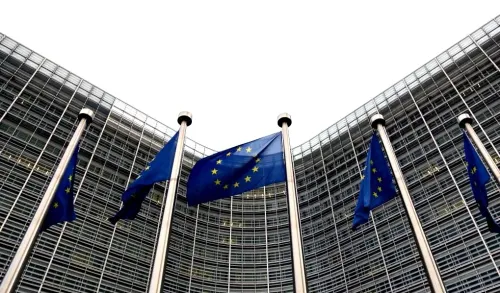
The European Parliament has approved an amendment formally criticising Ukrainian President Volodymyr Zelensky's decision to rename an elite military unit after the World War II-era Ukrainian Insurgent Army (UPA), a move that has deepened a diplomatic rift between Warsaw and Kyiv. The vote, which drew majority support from Members of the European Parliament, marks a rare instance of the bloc publicly rebuking a wartime ally it continues to back against Russia.
What the Amendment Says
The approved text expressed regret over what it described as Zelensky's 'recent unnecessary and unprovoked escalation', while simultaneously reaffirming Poland's steadfast support for Ukraine in its ongoing conflict with Russia. The amendment was tabled by Polish MEP Andrzej Halicki of the European People's Party and his German colleague Michael Gahler, and was incorporated into a broader report assessing Ukraine's progress on the path to EU membership.
The Parliament's text specifically cited 'disregard for Polish sensitivities and grief linked to the UPA's estimated tens of thousands of victims and their families' as grounds for its criticism. It further stated that the renaming decision affects bilateral neighbourly ties and is inconsistent with European values, calling for de-escalation and reconciliation between the two nations.
The Historical Fault Line: UPA and the Volyn Massacre
The UPA occupies starkly different places in the national memories of Ukraine and Poland. In Ukraine, the organisation is celebrated for resisting Soviet rule and championing Ukrainian independence. In Poland, however, the UPA is indelibly associated with the Volyn massacre of 1943–45, during which tens of thousands of ethnic Poles were killed under Nazi occupation. Poland officially classifies the massacre as a genocide — a designation that Ukraine has consistently rejected, leaving the historical wound unresolved for decades.
This is not the first time the UPA question has strained Warsaw-Kyiv relations, but Zelensky's decision to formally attach the name to an active military unit has brought the dispute into sharp contemporary relief.
Poland's Sharp Diplomatic Response
The diplomatic fallout was swift. Polish President Karol Nawrocki revoked the Order of the White Eagle — Poland's highest state honour — from President Zelensky, who had received the award in 2023. The move signals a significant cooling in the personal and institutional relationship between the two governments at a moment when Ukraine depends heavily on Polish logistical and political support.
EU Support for Ukraine Remains Intact
Despite the pointed amendment, the broader European Parliament resolution reaffirmed unwavering support for Ukraine's fight against Russia and acknowledged the country's continued progress toward EU accession. Since the onset of the Russia-Ukraine conflict in 2022, EU member states have provided military, financial, and humanitarian assistance to Kyiv. The bloc has also imposed successive rounds of sanctions on Russia, targeting its political elite, military supply chains, energy revenues, and financial systems.
The amendment's passage underscores the complexity of managing wartime alliances when deep historical grievances resurface — and signals that Ukraine's EU membership path may require navigating sensitive bilateral disputes with existing member states.
Point of View
And Zelensky's decision to formalise the unit's name was a political choice with entirely foreseeable consequences. The revocation of the Order of the White Eagle is more than symbolism; it signals that Poland — one of Ukraine's most critical logistical corridors and loudest advocates in Brussels — is willing to impose diplomatic costs. As Ukraine's EU accession negotiations deepen, Kyiv will increasingly need to reconcile its domestic historical narratives with the sensitivities of existing member states, or risk accumulating friction that slows the very process it most needs to succeed.
NationPress
8 Oct 2026
Frequently Asked Questions
Why did the European Parliament criticise Zelensky?
The European Parliament approved an amendment expressing regret over Zelensky's decision to rename an elite Ukrainian military unit after the World War II-era Ukrainian Insurgent Army (UPA), which Poland associates with the Volyn massacre of 1943–45. The Parliament said the move showed disregard for Polish sensitivities and was inconsistent with European values.
What is the UPA and why is it controversial?
The Ukrainian Insurgent Army (UPA) is remembered in Ukraine as a force that resisted Soviet rule and fought for Ukrainian independence. In Poland, however, it is linked to the Volyn massacre of 1943–45, during which tens of thousands of ethnic Poles were killed. Poland classifies the massacre as genocide, a designation Ukraine has not accepted.
What action did Poland take against Zelensky?
Polish President Karol Nawrocki revoked the Order of the White Eagle — Poland's highest state honour — from President Zelensky following the military unit renaming decision. Zelensky had been awarded the honour in 2023.
Does the amendment affect EU support for Ukraine?
No. Despite the amendment's criticism, the broader European Parliament resolution reaffirmed full support for Ukraine's defence against Russia and acknowledged Ukraine's continued progress toward EU membership. The rebuke was targeted at the specific renaming decision, not Ukraine's overall relationship with the EU.
Who tabled the amendment in the European Parliament?
The amendment was tabled by Polish MEP Andrzej Halicki of the European People's Party and his German colleague Michael Gahler. It was included within a report analysing Ukraine's path to EU membership.