Ex-CEC Quraishi: Why he refused PMO posting over Muslim officer 'quota' fear
Synopsis
A former Chief Election Commissioner has revealed he turned down a coveted PMO posting — not out of indifference, but because he feared being placed there as a Muslim officer quota rather than on merit. S.Y. Quraishi's account, now in print, surfaces a rarely-spoken tension at the intersection of bureaucratic placement and religious identity in India's top corridors of power.
Key Takeaways
Quraishi declined an offer to serve as Joint Secretary in the PMO , citing professional satisfaction and concerns about communal framing.
Quraishi said he feared being subjected to extra vetting as a Muslim officer in sensitive ministries including the PMO, Home Ministry, and Defence Ministry.
He learnt of the posting through a third party after security clearance had reportedly already been completed , without any official communication to him.
PMO's then Additional Secretary N.K.
Sinha confirmed the posting was intended partly because a Muslim officer was needed for Waqf-related matters .
Former Secretary to the PM K.R.
Venugopal later told Quraishi his stand was correct, revealing he had recommended Quraishi's name but was told 'we already have a Muslim officer; we can't have two.' Quraishi has documented the episode in his book 'India and I: A Hundred Memories, Not a Memoir' .
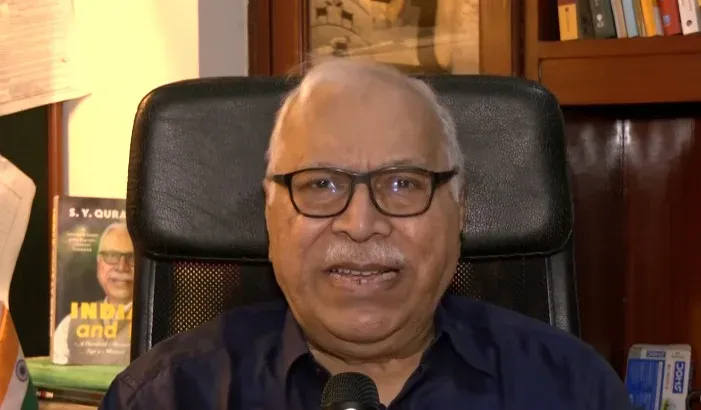
Former Chief Election Commissioner (CEC) S.Y. Quraishi has revealed that he declined an offer to serve as Joint Secretary in the Prime Minister's Office (PMO), saying he was uncomfortable with what he perceived as a communal framing of the posting and wanted to be recognised purely on professional merit. Quraishi made the disclosure in an exclusive interview, details of which he has also documented in his latest book, 'India and I: A Hundred Memories, Not a Memoir'.
The Posting He Turned Down
At the time the PMO offer surfaced, Quraishi was serving as Joint Secretary in the Ministry of Youth Affairs, simultaneously holding charge as Director General of Nehru Yuva Kendra Sangathan (NYKS) — which oversaw 3 lakh youth clubs across the country — and as head of the National Service Scheme (NSS), operational in 300 universities.
'With the result, instead of a Secretariat job, my job had become a field job. In fact, it had a double benefit. I was also a Secretariat officer, as Joint Secretary, but as DG and as Director of NSS, the whole country was my field, and I found it unique. It was the only job of its kind, and I was quite enjoying it,' Quraishi said.
How He Found Out — And Why He Was Shocked
Quraishi said he first learnt of the proposed transfer not through official channels but through a third party, by which point security clearance had reportedly already been completed. 'When somebody told me that I was going to PMO, he thought I'd be excited, but I was shocked,' he recalled.
He explained that while serving in the PMO is widely considered a privilege, the role also meant becoming 'totally anonymous, faceless, nameless — a backroom boy.' Combined with his satisfaction in his existing role, he said he had no desire to move.
The 'Communal Feeling' He Feared
Beyond professional preference, Quraishi said he held a long-considered personal reservation about serving in three specific ministries — the PMO, the Home Ministry, and the Defence Ministry — due to what he described as a perception of heightened scrutiny of Muslim officers in sensitive postings.
'I also had another funny notion; maybe wrong, maybe right; I don't know; that I would not like to work in three Ministries, PMO was one and Home Ministry and Defence Ministry because there was a kind of a communal feeling around, and if I was subjected to extra vetting — oh, this is a Muslim officer, therefore, let us keep an extra watch on him — that was not acceptable to me at all. That was insulting. I used to think that I would rather be a king in Panchayati Raj Department, than be a suspect in these three Ministries,' he said, adding that it was 'a considered long-term view.'
The Conversation With the PMO's Additional Secretary
Quraishi said he confronted the matter directly with his neighbour, N.K. Sinha, who was then Additional Secretary in the PMO. Sinha was reportedly surprised that Quraishi had learnt of the posting before official orders were issued.
'I said that I also don't want to go in a kind of a quota — a Muslim officer. I don't want to come as a Muslim officer; I want to come as a brilliant officer, as a bright officer,' Quraishi told Sinha. He said Sinha responded by noting that a Muslim officer was needed for matters such as Waqf, to which Quraishi suggested that a Director-level officer or alternative names could serve that purpose.
Venugopal's Confirmation
Quraishi said his reservations were later validated by K.R. Venugopal, who was serving as Secretary to Prime Minister Narasimha Rao and had previously supervised Quraishi's work. According to Quraishi, Venugopal told him that he had recommended Quraishi's name for the PMO six months earlier but was told another Muslim officer was already in place and a second could not be accommodated.
'Yaqub, your stand is absolutely correct, because six months ago I had asked you by name, and that is when they say, no, we already have a Muslim officer; we can't have two. So, therefore your stand is right,' Venugopal reportedly told him. Quraishi said the eventual outcome was that an alternative list of names proved unacceptable and the incumbent officer was given a two-year extension.
The account offers a rare first-person window into how religious identity could intersect with bureaucratic placement decisions at the highest levels of the Indian government — and how one senior officer navigated that reality on his own terms.
Point of View
Early in his career, that certain ministries were structurally inhospitable to Muslim officers not due to explicit policy but due to ambient institutional suspicion. The detail that the PMO itself framed the posting around Waqf expertise — confirmed by N.K. Sinha — suggests the problem was not paranoia on Quraishi's part but a real, if unspoken, bureaucratic logic. What the account leaves open is how widespread this calculus was, and whether anything has changed in the decades since. That question deserves more than a book launch news cycle.
NationPress
13 Oct 2026
Frequently Asked Questions
Why did S.Y. Quraishi refuse the PMO Joint Secretary posting?
S.Y. Quraishi said he turned down the PMO posting for two reasons: he was deeply satisfied with his existing role overseeing Nehru Yuva Kendra Sangathan and NSS, and he feared being placed in the PMO as a Muslim officer quota rather than on professional merit. He said being subjected to extra vetting on religious grounds would have been insulting.
What did the PMO's Additional Secretary say when Quraishi refused?
N.K. Sinha, then Additional Secretary in the PMO, was initially surprised that Quraishi had learnt of the posting before official orders. He told Quraishi that a Muslim officer was needed for matters such as Waqf, to which Quraishi responded that a Director-level officer could serve that purpose and offered alternative names.
How did K.R. Venugopal validate Quraishi's concerns?
K.R. Venugopal, who served as Secretary to Prime Minister Narasimha Rao, told Quraishi that he had recommended his name for the PMO six months earlier but was told another Muslim officer was already in place and a second could not be accommodated. Venugopal reportedly said: 'Yaqub, your stand is absolutely correct.'
Which ministries did Quraishi say he was reluctant to serve in, and why?
Quraishi said he had a long-held personal reservation about serving in the PMO, the Home Ministry, and the Defence Ministry, fearing that Muslim officers in those sensitive postings might be subjected to extra scrutiny on communal grounds rather than evaluated purely on professional competence.
Where has Quraishi documented this account?
Quraishi has described the episode in his latest book, 'India and I: A Hundred Memories, Not a Memoir', which he referred to during the interview where he shared these recollections publicly.