Grid Support Charge shields common consumers, not a tax: CM Fadnavis
Synopsis
Maharashtra CM Fadnavis defended the Grid Support Charge in the Legislative Council, revealing it hits only 0.13% of consumers and was designed to protect ordinary users from solar grid costs — not penalise them. With MERC's ₹40,000 crore double-counting error triggering a fresh hearing and tariffs locked till 2029-30, the state's power policy is at a pivotal juncture.
Key Takeaways
CM Devendra Fadnavis told the Maharashtra Legislative Council on Wednesday that the Grid Support Charge affects only 0.13% of consumers.
The charge was implemented on 1 February 2016 and has not been applied retrospectively.
MERC has stayed its earlier decision after the government flagged a ₹40,000 crore double-counting error; a fresh hearing is underway.
Maharashtra's industrial electricity tariff stands at ₹8.19 per unit in 2025-26, locked under the MYT framework until 2029-30 .
Power demand in Maharashtra has risen 20% over the last two years; renewable energy target is 52% of generation by 2029-30 .
Maharashtra accounts for nearly 60% of India's solar agricultural pump installations.
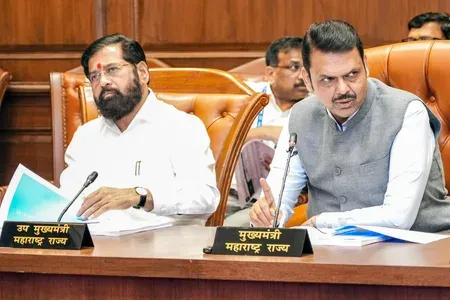
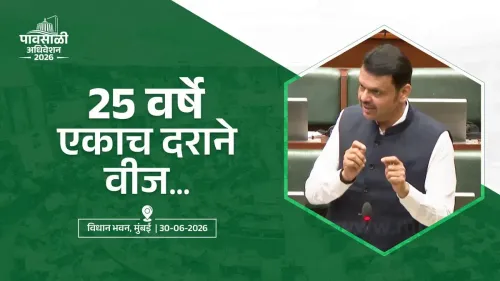
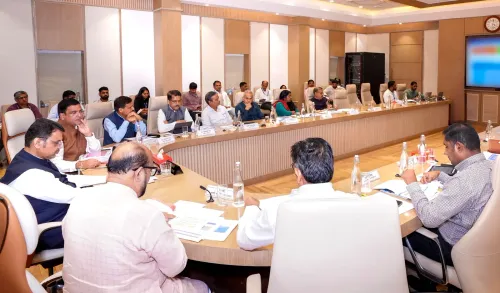
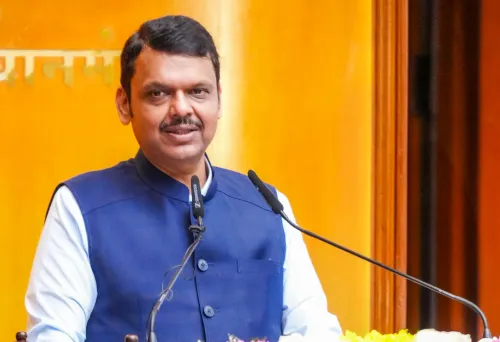
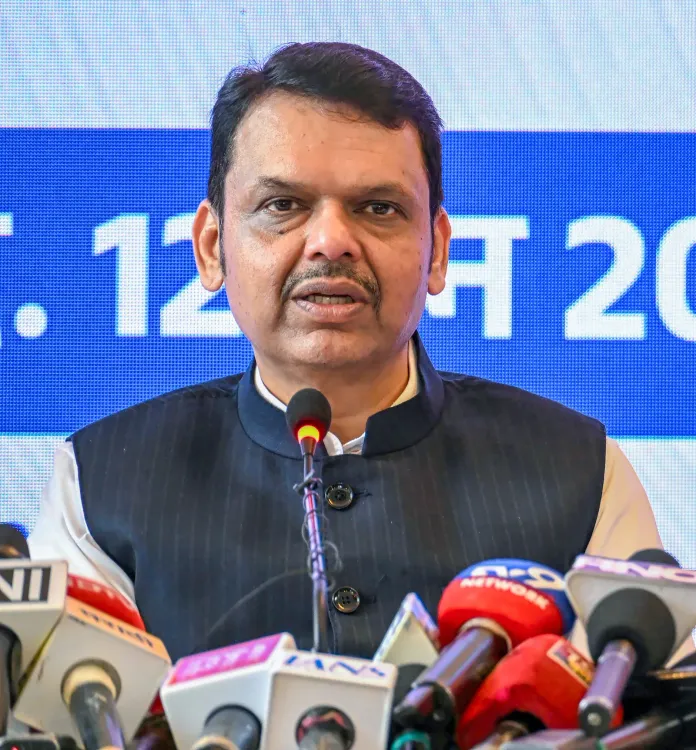
Maharashtra Chief Minister Devendra Fadnavis on Wednesday told the Legislative Council that the Grid Support Charge was introduced specifically to prevent the financial burden of rising solar energy usage on the power grid from being passed on to ordinary electricity consumers. Speaking during a session in Mumbai, Fadnavis emphasised that the charge affects only 0.13 per cent of consumers and amounts to a modest reduction in excess profits — not an additional tax on the public.
What the Grid Support Charge Is
The Grid Support Charge was implemented on 1 February 2016 and has not been applied retrospectively, the Chief Minister clarified. Fadnavis was responding to a query raised by Legislative Council member Satej Patil regarding the increase in electricity sales tax for industrial and commercial consumers in Maharashtra. Members Bhai Jagtap, Eknath Khadse, and Dr Neelam Gorhe also participated in the discussion.
MERC Double-Counting Error and Fresh Hearing
Following the state government's intervention flagging a double-counting error of ₹40,000 crore in certain calculations by the Maharashtra Electricity Regulatory Commission (MERC), the commission has stayed its earlier decision and initiated a fresh hearing. This development signals that the final tariff framework remains under review and could be revised.
Maharashtra's Power Tariffs Among Most Competitive
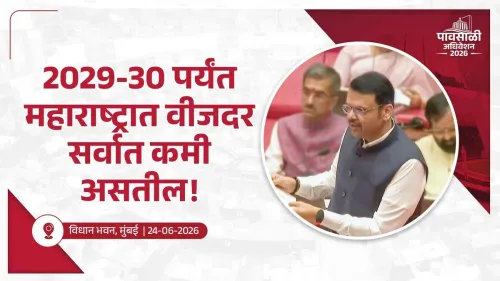
Refuting claims of high electricity rates, Fadnavis noted that Maharashtra's industrial tariff at ₹8.19 per unit in 2025-26 remains lower than rates in Tamil Nadu, Telangana, and Madhya Pradesh. Under the Multi-Year Tariff (MYT) framework, rates have been locked in until 2029-30, providing long-term certainty for industry. Power demand in the state has surged by 20 per cent over the last two years, which Fadnavis cited as evidence of Maharashtra's industrial attractiveness. 'If Maharashtra's power rates were truly high, industries would have moved to other states. On the contrary, major industries are heavily investing in Maharashtra,' he said.
Solar Energy Challenge and Battery Storage Push
The Chief Minister explained the technical challenge underpinning the Grid Support Charge: currently, only about 35 per cent of generated solar power is consumed during the day, while 65 per cent is demanded back at night through energy banking — placing extra load on the distribution system. To address this, the government is aggressively building large-scale Battery Energy Storage Systems (BESS).
Renewable energy accounted for 15 per cent of Maharashtra's total power generation in 2022. The government aims to scale this to 52 per cent by 2029-30, with renewable energy projects of 38,000 MW capacity currently under development.
Maharashtra Leads on Solar Agricultural Pumps
Under the PM Surya Ghar and Solar Agricultural Pump schemes, empanelled vendors and a dedicated grievance redressal mechanism have been set up. Maharashtra has installed nearly 60 per cent of India's solar agricultural pumps — a performance the Central Government has reportedly cited as a model for other states. Agricultural pumps under the scheme come with insurance coverage and a guaranteed five-year maintenance contract, according to the energy department.
Fadnavis reiterated that the state government remains open to fresh discussions with solar power producers on both the Grid Support Charge and the Time of Day (ToD) policy, with minimising the financial burden on common consumers as the government's stated top priority.
Point of View
The cost of grid balancing rises — and someone has to pay. Fadnavis is right that the burden should not fall on low-income consumers, but the 0.13% figure also means the charge is currently too narrow to fund the large-scale BESS infrastructure Maharashtra actually needs. The MERC double-counting controversy is the more consequential story here: a ₹40,000 crore calculation error in a regulatory order suggests institutional capacity gaps that go well beyond this single charge. Maharashtra's tariff competitiveness is real, but locking rates till 2029-30 under the MYT framework leaves little room to absorb the capital costs of the renewable energy build-out the state has committed to.
NationPress
23 Sept 2026
Frequently Asked Questions
What is the Grid Support Charge in Maharashtra?
The Grid Support Charge is a levy introduced on 1 February 2016 to prevent the cost of managing solar energy's load on the power grid from being passed to ordinary consumers. According to CM Fadnavis, it applies to only 0.13% of electricity consumers — primarily those with significant solar installations — and is not retrospective.
Why did MERC stay its decision on electricity tariffs?
The Maharashtra Electricity Regulatory Commission (MERC) stayed its earlier tariff decision after the state government pointed out a double-counting error of ₹40,000 crore in the commission's calculations. A fresh hearing has been initiated to reassess the figures.
How does Maharashtra's electricity tariff compare with other states?
Maharashtra's industrial electricity tariff stands at ₹8.19 per unit in 2025-26, which CM Fadnavis says is lower than rates in Tamil Nadu, Telangana, and Madhya Pradesh. Under the Multi-Year Tariff framework, this rate is locked until 2029-30.
What is the solar energy challenge driving the Grid Support Charge?
Only about 35% of generated solar power is consumed during the day; the remaining 65% is drawn back from the grid at night through energy banking, creating extra load on the distribution system. The Grid Support Charge is intended to fund the grid balancing costs this creates.
What is Maharashtra's renewable energy target?
Maharashtra aims to raise renewable energy's share of total power generation from 15% (as of 2022) to 52% by 2029-30. Renewable energy projects totalling 38,000 MW capacity are currently under development in the state.