FCRA Bill faces opposition bloc resistance as Monsoon Session nears end

Synopsis
With only four days left in the Monsoon Session, the FCRA Amendment Bill has become the latest battleground between the ruling BJP and a united opposition front. TMC, SP, and Congress have all declared resistance — but Congress has gone further, making its cooperation conditional on Home Minister Amit Shah addressing Delhi student unrest in Parliament, a demand that could stall the entire legislative agenda.
Key Takeaways
TMC , Samajwadi Party , and Congress have declared opposition to the FCRA Amendment Bill during the Monsoon Session .
TMC MP Saugata Roy called the Bill part of the BJP's communal agenda ; SP MP Dimple Yadav alleged it targets NGO properties .
Venugopal linked cooperation to a demand for Home Minister Amit Shah to make a statement in Parliament on alleged atrocities against Delhi students .
The FCRA Bill , women's reservation , and delimitation Bills are all unscheduled in the Lok Sabha with only four days remaining in the session.
Some opposition parties have indicated a more flexible position on women's reservation and delimitation , signalling the bloc is not fully unified.
Opposition parties intensified their pushback against the proposed Foreign Contribution (Regulation) Amendment Bill on 10 August, with leaders from the All India Trinamool Congress (TMC), Samajwadi Party (SP), and Indian National Congress accusing the Bharatiya Janata Party (BJP)-led government of weaponising the legislation against NGOs and political adversaries. The development adds a fresh flashpoint to an already fractious Monsoon Session of Parliament, with only four days remaining and the fates of several key Bills still uncertain.
Opposition Voices and Key Allegations
TMC MP Saugata Roy declared his party's unequivocal opposition to the Bill, alleging it formed part of a broader communal strategy. 'We will strongly oppose it. The FCRA Bill is part of the BJP's communal agenda,' Roy said.
Samajwadi Party MP Dimple Yadav echoed those concerns, contending the amendment was designed to intimidate civil society and target assets registered under NGOs. 'The FCRA Bill is being brought to intimidate people. Somewhere, this is a way of targeting properties registered under NGOs and organisations,' Yadav said.
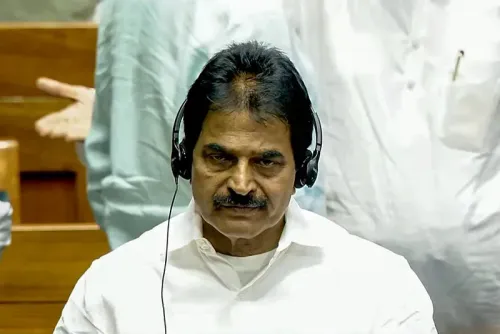
Congress MP K.C. Venugopal confirmed his party's opposition but attached a precondition — demanding that Union Home Minister Amit Shah appear in Parliament and make a statement on the alleged atrocities against students in Delhi. 'Without a statement on that issue, we are not going to allow him to proceed with these matters,' Venugopal said.
Legislative Uncertainty in the Final Stretch
The FCRA amendment is not the only Bill caught in political limbo. Proposed legislation on women's reservation and delimitation also remains unscheduled, with none of the three Bills listed for consideration in the Lok Sabha on Monday. The legislative calendar is thinning fast, and the government has yet to signal a firm path forward on any of these measures.
Notably, while the Congress and its principal allies have maintained blanket opposition, some other opposition parties have signalled a more flexible stance specifically on women's reservation and delimitation — suggesting the bloc is not monolithic on every contested Bill.
Congress Links FCRA Debate to Delhi Student Unrest
The Congress's conditional opposition adds a layer of political complexity to the proceedings. By tying its cooperation on the FCRA Bill to a demand for ministerial accountability on the Delhi student atrocities issue, the party is effectively using the legislative floor as leverage — a tactic that could further delay proceedings in the session's closing days.
This comes amid a broader pattern of opposition disruptions that have periodically stalled business in the current session, with treasury benches and the opposition trading accusations over parliamentary conduct.
What Happens Next
With the Monsoon Session set to conclude shortly, the government faces a narrowing window to advance its legislative agenda. The FCRA Bill, women's reservation legislation, and delimitation proposals are all at risk of being deferred to the next session if the current deadlock persists. Political observers note that the government's ability to push through even one of these Bills will depend on its willingness to engage opposition demands — or its capacity to outvote them on the floor.
Point of View
TMC and SP are speaking to their core constituencies — minority communities and civil society organisations that have historically faced FCRA scrutiny. Congress's conditional approach is more calculated: by tethering FCRA debate to the Delhi student issue, it is attempting to force a ministerial statement that could embarrass the government. What mainstream coverage underplays is the fragmentation within the opposition itself — the flexible positions on women's reservation and delimitation reveal that the bloc's unity is issue-specific, not structural. If the government chooses to call that bluff and press the women's reservation Bill, it may find the opposition less cohesive than it currently appears.
NationPress
24 Sept 2026
Frequently Asked Questions
What is the FCRA Amendment Bill and why is it controversial?
The Foreign Contribution (Regulation) Amendment Bill proposes changes to the law governing foreign funding received by NGOs and other organisations in India. Opposition parties allege it is being used by the BJP-led government to target civil society groups and political adversaries, though the government has not publicly detailed its rationale in the source material.
Which opposition parties are opposing the FCRA Bill?
The All India Trinamool Congress, Samajwadi Party, and Indian National Congress have all declared opposition to the Bill. TMC MP Saugata Roy and SP MP Dimple Yadav have alleged communal intent and intimidation of NGOs respectively, while Congress MP K.C. Venugopal has made his party's cooperation conditional on a separate demand.
What is Congress's precondition for engaging on the FCRA Bill?
Congress MP K.C. Venugopal has demanded that Home Minister Amit Shah appear in Parliament and make a statement on the alleged atrocities against students in Delhi before the party will allow legislative business including the FCRA Bill to proceed.
Which other Bills face uncertainty in the Monsoon Session?
Alongside the FCRA Amendment Bill, proposed legislation on women's reservation and delimitation also remains unscheduled in the Lok Sabha. None of the three Bills was listed for consideration on Monday, with only four days left in the session.
Is all of the opposition united against these Bills?
Not entirely. While Congress and its major allies have maintained opposition across the board, some opposition parties have indicated a more flexible position specifically on the women's reservation and delimitation Bills, suggesting the bloc is divided on those issues.