Ashok Gehlot Critiques Central Government Amid Global Tensions
Synopsis
Ashok Gehlot, former Chief Minister of Rajasthan, criticizes the Indian government for its delayed response to global crises. He emphasizes the need for transparency and peace, warning of the dangers of escalating conflicts.
Key Takeaways
Ashok Gehlot expresses concern over the handling of global crises.
Calls for transparency from the Central Government.
Critiques Pakistan's role in geopolitical mediation.
Warns against escalating global conflicts .
Reflects on India's historical military victories .
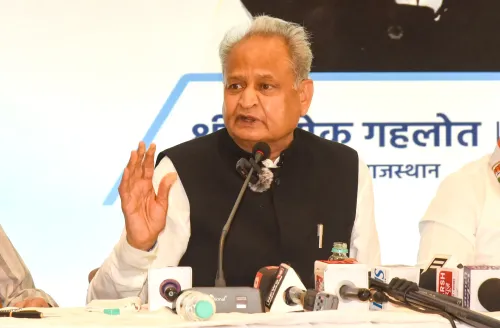
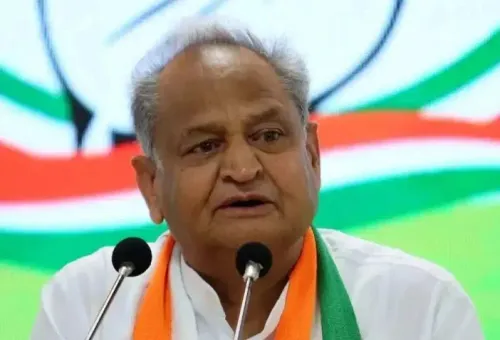
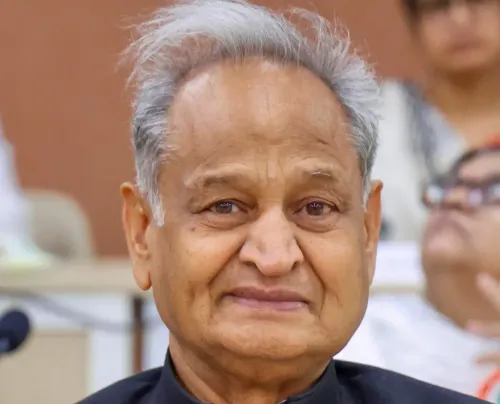
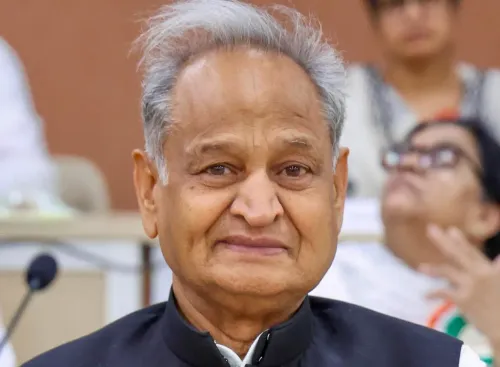
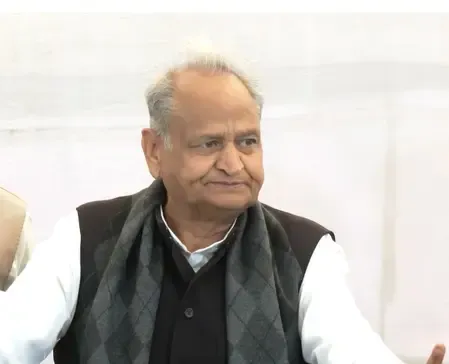
Jaipur, March 26 (NationPress) Former Rajasthan Chief Minister and seasoned Congress figure Ashok Gehlot raised alarm over the shifting global landscape on Thursday, criticizing the Central Government's approach to international matters and calling for increased transparency with citizens.
In statements made to the press at Jaipur Airport, Gehlot remarked that the present global situation, especially concerning oil and gas, is "highly precarious" and demands prompt readiness.
"The Union administration has been sluggish in managing this crisis; necessary preparations should have been executed in a timely manner to prevent the public from encountering hardships. The trajectory of war is unpredictable," he asserted.
Gehlot further stated, "The global environment is extremely sensitive. Timely action was required. When wars break out, governments must engage the populace and clearly communicate the challenges while minimizing their suffering."
The former Chief Minister accused the Union government of delayed actions and insufficient readiness for the repercussions of international disputes.
He also critiqued Prime Minister Narendra Modi's recent remarks, implying that they showcased a lack of foresight and attracted scrutiny.
Regarding comments made by former US President Donald Trump, Gehlot observed that Trump's assessments of world leaders, including PM Modi, were both inconsistent and unprecedented.
"Sometimes he (Trump) refers to PM Modi as a friend, while at other times he makes statements that are perplexing. I've never witnessed a US President speak about other nation's leaders in such a manner," he added.
Discussing the recent coup in Venezuela, Gehlot stated: "Trump demonstrated that he could 'abduct' President Nicolas Maduro of Venezuela—imagine one country kidnapping the leader of another! It's alarming that no country has condemned this act. This sends a deeply troubling message worldwide. Everyone knows what has occurred."
When addressing Pakistan's role in current geopolitical shifts, Gehlot dismissed its significance, referencing India's historical military successes.
"We've witnessed their (Pakistan's) standing in the wars of 1965, 1971, and the Kargil conflict in 1999. There remains a significant disparity between India and Pakistan, yet they continue to propose mediation," he commented.
On the topic of Operation Sindoor, Gehlot remarked: "No nations allied with us (India), while Turkey sided with Pakistan. We must recognize Pakistan's position in contrast to that of India, yet they are still advocating for mediation."
Gehlot also criticized the use of the term "brokerage" in foreign policy discussions, calling it inappropriate.
"No Foreign Minister (referring to S. Jaishankar's comment) should employ such terminology. If it was an accidental slip, it needs clarification. Otherwise, it warrants criticism," he stated.
Warning of escalating tensions, Gehlot urged for a global emphasis on peace.
"If violence continues unabated, where will the world end up? There is a looming threat of a larger conflict. Every nation must strive for peace during such times," he added.
In conclusion, Gehlot expressed apprehension regarding India's current global standing, reflecting on historical comparisons and calling for a reassessment of the country’s foreign policy trajectory.
He reminisced, "People are anxious about our current position compared to where we once stood. During Indira Gandhi's leadership, 90,000 individuals, including soldiers and high-ranking officials, were brought back to India—today's circumstances are evident to all."
Point of View
It's crucial to analyze Ashok Gehlot's statements in light of the current geopolitical climate. His critique of the government's approach to international relations highlights a significant discourse on accountability and preparedness amidst global uncertainties.
NationPress
26 Sept 2026
Frequently Asked Questions
What did Ashok Gehlot criticize about the Central Government?
Gehlot criticized the Central Government for its delayed response to international crises and called for greater transparency with the public.
What was Gehlot's stance on Pakistan's role in global mediation?
He dismissed Pakistan's relevance in mediation, citing India's historical military successes over Pakistan.
How did Gehlot react to Donald Trump's comments?
Gehlot found Trump's remarks about world leaders inconsistent and unprecedented, highlighting the unusual nature of such statements from a US President.
What warning did Gehlot issue regarding global conflicts?
He warned that unchecked violence could lead to larger conflicts and urged nations to prioritize peace.
What historical context did Gehlot provide?
He compared India's current standing to its past, recalling significant events during Indira Gandhi's tenure.