U.S. Lawmakers and Experts Raise Alarm Over Global Shipping Risks
Synopsis
U.S. lawmakers are sounding the alarm over the increasing risks in the global shipping industry. As foreign carriers dominate, costs are expected to rise, impacting supply chains and international trade. This article explores the critical issues addressed during a recent House Judiciary subcommittee hearing.
Key Takeaways
Rising concentration in global shipping poses threats to U.S. businesses.
Federal Maritime Commission's inaction raises concerns over market dominance.
Outdated antitrust exemption for ocean carriers needs reevaluation.
Exporters face dependencies on foreign carriers, affecting supply chains.
Political divisions exist regarding the urgency of addressing these issues.
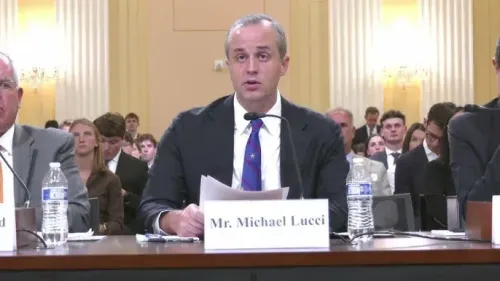
Washington, March 17 (NationPress) U.S. legislators expressed concerns on Tuesday that increasing concentration and inadequate oversight within the global maritime shipping sector could lead to elevated costs and disrupt supply chains globally, potentially affecting international trade and exporters outside the U.S. shores.
During a House Judiciary subcommittee meeting, members investigated whether a century-old antitrust exemption for ocean carriers still serves consumer interests, as three dominant global alliances now control a substantial portion of international shipping.
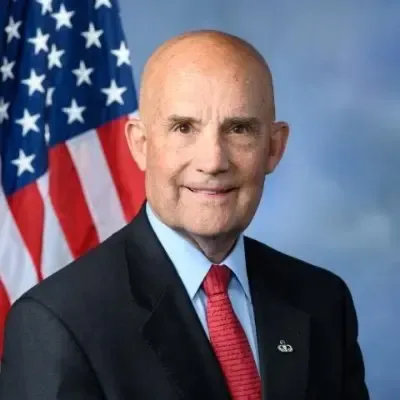
Subcommittee Chairman Scott Fitzgerald noted that the industry has evolved significantly since Congress's original vision in 1916, prompting new worries regarding competition and national interests.
“The outcome of the Shipping Act, as we’ve observed, may have regrettably resulted in the very scenario Congress aimed to prevent: the concentration of foreign shipping firms harming U.S. businesses and consumers,” he remarked.
Fitzgerald highlighted increasing consolidation, revealing that the top 20 shipping carriers managed about 50% of global capacity in 1998, which surged to nearly 90% by 2018.
“Currently, three global shipping alliances dominate almost all transatlantic and Trans-Pacific commerce,” he stated.
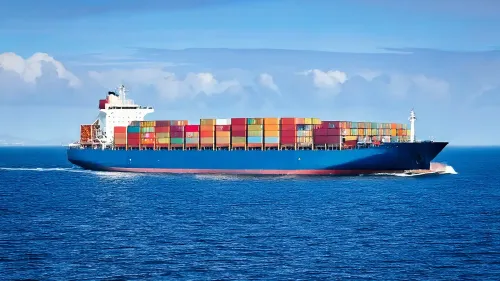
He also pointed out the overwhelming presence of foreign-owned carriers, noting that the U.S. relies on foreign-flagged vessels for 97% of its maritime trade, which raises economic and national security concerns.
A significant focus of the hearing was the Federal Maritime Commission's (FMC) oversight role in shipping agreements, as the agency has yet to take enforcement action against carrier alliances.
Fitzgerald said, “The FMC has never initiated a case against the powerful ocean shipping firms that control the shipping markets,” despite having the authority to do so.
Erika Douglas, an associate law professor at Temple University, informed lawmakers that the exemption protecting ocean carriers from antitrust regulations is outdated. “This exemption is one of the most archaic in antitrust legislation. Its justification is unclear, and it certainly isn’t applicable today,” she stated.
She noted that the industry exhibits “three classic signs of antitrust risk,” including high concentration, significant coordination among competitors, and previous instances of collusion where exemptions did not apply.
“These conditions create an ideal scenario for anti-competitive behavior,” she argued.
Renowned economist Richard Sicotte from the University of Vermont explained that alliances enable carriers to coordinate capacity and operations, which can still impact market power.
“If agreements collectively determine capacity, they can exert market power even without explicitly colluding on rates,” he stated.
Industry representatives shared the tangible effects of these dynamics on exporters. Tony Rice from the National Milk Producers Federation explained that U.S. dairy exporters heavily rely on foreign carriers due to limited domestic capacity.
“With U.S.-flagged ocean vessels constituting only 2.3% of global shipping capacity, U.S. dairy exporters are almost entirely reliant on foreign entities to ship their products,” he noted.
Rice informed lawmakers that the COVID pandemic revealed significant vulnerabilities in the system, with exporters encountering delays, canceled shipments, and soaring costs.
“Our industry incurred losses exceeding $1.5 billion due to missed sales opportunities, diminished product values, and sharply increased costs linked to unreliable shipping services,” he remarked.
He added that the limited number of carrier options diminishes exporters’ bargaining power and creates scheduling uncertainties, particularly for perishable items.
Democrats on the panel questioned the timing of the hearing, asserting that broader economic pressures like tariffs, fuel prices, and inflation were more pressing issues.
Ranking member Jerrold Nadler commented, “A hearing focused on maritime shipping regulations doesn’t quite address the current situation,” highlighting the rising costs affecting American households.
Despite political divisions, witnesses generally concurred that the existing framework requires more scrutiny. Douglas indicated that repealing the exemption would enable antitrust authorities to intervene where regulators have failed to act.
Point of View
It is vital to recognize the implications of the testimonies presented by lawmakers and experts at the recent subcommittee hearing. The increasing concentration of power within the shipping industry raises significant concerns for both economic stability and national security, warranting immediate attention and regulatory scrutiny.
NationPress
27 Sept 2026
Frequently Asked Questions
What are the main concerns regarding the global shipping industry?
Lawmakers are worried about increasing concentration and weak oversight, which could lead to higher costs and supply chain disruptions.
How has the shipping landscape changed over the years?
In 1998, the top 20 carriers controlled about 50% of global capacity, which surged to nearly 90% by 2018.
What role does the Federal Maritime Commission play?
The FMC oversees shipping agreements but has not taken enforcement actions against major carrier alliances.
Why is the antitrust exemption for ocean carriers considered outdated?
Experts argue it no longer serves consumer interests and allows anti-competitive behavior to flourish.
How have exporters been affected by recent challenges in shipping?
Exporters faced significant losses due to delays and increased shipping costs, especially highlighted during the COVID pandemic.