Greece and Germany Confirm Non-Involvement in Strait of Hormuz Operations
Synopsis
Greece and Germany have firmly stated their non-participation in military operations in the Strait of Hormuz, emphasizing a commitment to peace amidst rising tensions in the region. This decision reflects their stance on avoiding escalation in ongoing conflicts.
Key Takeaways
Greece and Germany have ruled out military involvement in the Strait of Hormuz.
Greece's role in Operation Shield is limited to the Red Sea.
Both nations emphasize diplomatic solutions over military action.
US pressures NATO allies to support operations in the region.
Australia warns citizens against travel through several Middle Eastern nations.
Athens, March 16 (NationPress) - Greece has officially declared that it will not engage in any military operations in the Strait of Hormuz, as stated by government spokesperson Pavlos Marinakis on Monday. He emphasized that Greece aims to remain uninvolved in any form of conflict.
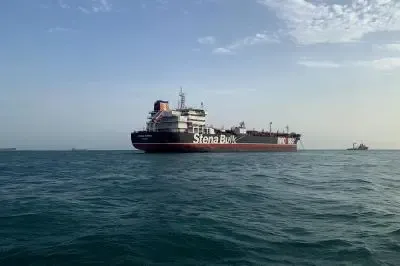
During a routine press briefing, Marinakis clarified that Greece's current role in the European Union's Operation Shield is strictly limited to the Red Sea and does not extend to the Strait of Hormuz. He mentioned that participation in this operation is exclusively by vessels from Greece and Italy, whose mission centers around protecting commercial shipping in that area.
Marinakis reiterated Greece's commitment to the universal enforcement of international law, as reported by Xinhua. He firmly stated, "Under no circumstances do we intend to get involved in war."
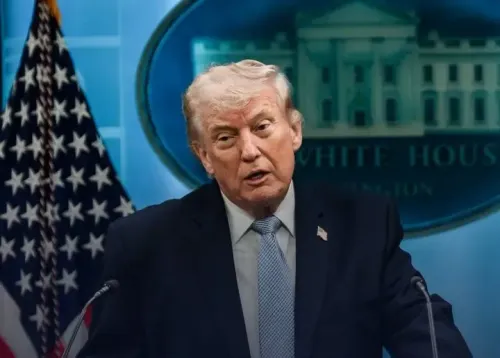
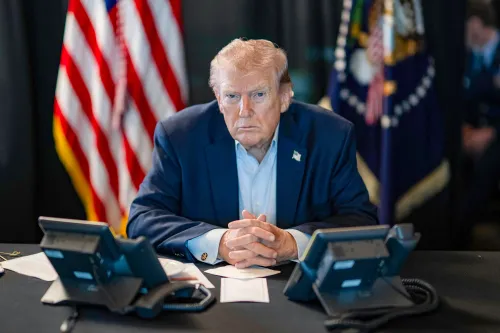
On Sunday, US President Donald Trump indicated that he had urged several countries reliant on Middle Eastern oil to form a coalition for escorting vessels in the Strait of Hormuz, although he did not specify which nations were under negotiation with the White House.
In a similar vein, on Monday, German Defence Minister Boris Pistorius also dismissed a US request for military assistance in the Strait of Hormuz, asserting that Germany would not partake in any military actions in the area. During a press conference in Berlin after discussions with his Latvian counterpart Andris Spruds, Pistorius expressed Germany's willingness to support diplomatic initiatives to ensure safe navigation through the strait but stressed that the country would not engage militarily, questioning the necessity for European involvement. "It is not our war. We did not start it," he stated.
Trump warned on Sunday that NATO faces a "very bad" future if its allies do not act to assist the US in keeping the Strait of Hormuz accessible, according to the Financial Times.
Earlier on Monday, Australia announced its preparedness for the potential "economic crisis" stemming from the ongoing Middle Eastern conflict and confirmed that it would not deploy a warship to the area. According to the Australian Broadcasting Corporation (ABC), Catherine King, Australia’s Minister for Infrastructure, Transport, Regional Development and Local Government, noted that the nation’s fuel reserves are currently at 37 days of petrol, 30 days of diesel, and 29 days of jet fuel after the government adjusted minimum stockholding requirements and temporarily altered fuel quality standards to allow for higher sulfur levels. "We're well-prepared here in this country to weather the economic crisis that is occurring as a result of the Middle East," she commented.
On Saturday, the federal government cautioned citizens against traveling through Bahrain, Iran, Iraq, Israel, Kuwait, Lebanon, Palestine, Qatar, Syria, Yemen, and the United Arab Emirates (UAE). The Department of Foreign Affairs and Trade had previously issued travel warnings for all these countries through its Smartraveller service but specified on Saturday that Australian citizens should avoid transiting through them even if they do not intend to leave the airport. The department indicated that the conflict is likely to escalate further, and flights may change or be canceled unexpectedly.
Point of View
The statements by Greece and Germany highlight a cautious approach towards international military engagements, particularly in volatile regions. Both nations prioritize diplomatic solutions and the adherence to international law, indicating a desire to maintain peace and stability.
NationPress
19 Sept 2026
Frequently Asked Questions
What is the current stance of Greece regarding military operations in the Strait of Hormuz?
Greece has stated that it will not participate in any military operations in the Strait of Hormuz, emphasizing its commitment to avoiding involvement in conflict.
How is Greece involved in Operation Shield?
Greece's involvement in Operation Shield is geographically limited to the Red Sea and does not extend to the Strait of Hormuz.
What was the response of Germany to US military support requests?
German Defence Minister Boris Pistorius rejected the US request for military support in the Strait of Hormuz, stating that Germany would not engage militarily in the region.
What did US President Trump say about the situation in the Strait of Hormuz?
Trump warned that NATO would face serious challenges if allies do not assist in keeping the Strait of Hormuz open.
What precautions has Australia taken regarding travel in the Middle East?
Australia has advised its citizens to avoid transiting through several Middle Eastern countries due to potential escalations in conflict.