Gujarat scraps mandatory bank loan rule for MSME incentives, disburses ₹1,100 crore
Synopsis
Gujarat has quietly redrawn the rules for MSME access to state incentives — removing the mandatory bank loan condition that had long shut out self-funded entrepreneurs. Paired with a ₹1,100 crore single-click disbursement to nearly 15,000 units and a 16-document paperwork cut, the move signals a structural shift in how the state courts small industry, with 27 companies reportedly returning from other states under the new policy.
Key Takeaways
Gujarat has abolished the mandatory bank loan requirement for MSMEs to qualify for state industrial incentives, opening access to self-funded entrepreneurs.
Deputy CM Harsh Sanghavi announced the transfer of ₹1,100.19 crore to 14,853 industrial units via a single-click direct-benefit mechanism on 14 October 2026 .
The largest share — ₹444.03 crore — went to 11,052 MSME beneficiaries; the textile sector received ₹290.42 crore .
Around 16 documentation requirements have been eliminated to speed up incentive processing.
GIDC allotted 407 plots through an online lucky draw from 4,665 applications at Shekhpat, Khirsara-2, and Sanand-2.
27 large companies that had previously moved to other states have reportedly returned to Gujarat under the new industrial policy.
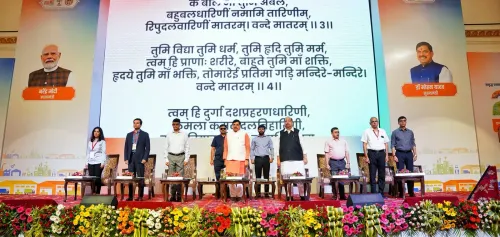
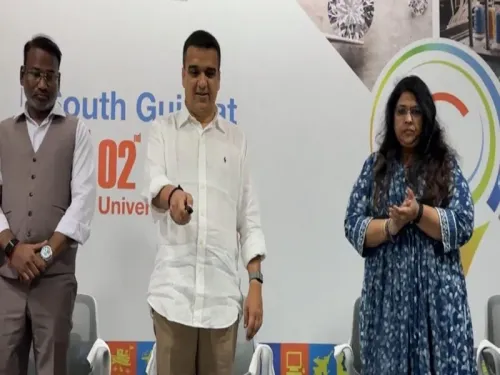
The Gujarat government has abolished the mandatory bank loan condition for micro, small and medium enterprises (MSMEs) seeking industrial incentives, a move that allows entrepreneurs investing their own capital to qualify for state benefits. Deputy Chief Minister Harsh Sanghavi announced the reform on Wednesday, 14 October 2026, at a programme in Gandhinagar, where ₹1,100.19 crore was transferred directly to 14,853 industrial units through a single-click disbursement mechanism.
Key Policy Changes
Until now, MSMEs were required to demonstrate a bank loan as part of their qualifying criteria for industrial incentives — a condition that effectively excluded self-funded entrepreneurs. The Gujarat government has now removed this requirement, widening the eligibility net considerably. Alongside this, the state has streamlined the process by eliminating around 16 paperwork and documentation requirements, aiming to speed up administrative clearances and reduce compliance burden on small business owners.
Breakdown of the ₹1,100 Crore Disbursement
Of the total amount disbursed, ₹444.03 crore was transferred to 11,052 beneficiaries under various MSME incentive schemes. The textile sector received ₹290.42 crore, benefiting 3,591 units. Large industries accounted for ₹360.89 crore distributed among 196 beneficiaries, while ₹4.85 crore was provided to 14 beneficiaries under other schemes. All transfers were executed directly into beneficiaries' bank accounts via the state's single-click mechanism, which officials said enhances transparency and cuts processing delays.
Industrial Land and New Policy Traction
In a parallel transparency measure, the Gujarat Industrial Development Corporation (GIDC) allotted 407 plots through an online lucky draw from 4,665 applications received. The plots — each measuring less than 3,000 square metres — are spread across 85 acres at Shekhpat, Khirsara-2, and Sanand-2, all earmarked for MSME units. Sanghavi said the new industrial policy had attracted more than 346 applications from large industries, of which 27 came from companies that had relocated back to Gujarat from other states — a notable indicator of renewed investor confidence.
Focus on Employment and Smart Infrastructure
Sanghavi underlined the government's intent to provide special encouragement to first-generation young entrepreneurs and women-led startups, with a specific focus on industries generating employment for women in tribal areas. On infrastructure, he said approvals for Smart GIDC industrial estates would henceforth require integrated planning covering drainage, streetlights, and service lines — not just road construction. He also noted that file disposal speed had increased threefold over the past six months. A state government team is set to visit Japan and South Korea to explore technology partnerships and global investment opportunities for Gujarat.
Point of View
And whether the 16-document reduction translates to measurably faster disbursals or merely shifts bottlenecks elsewhere. The 27 large companies returning to Gujarat is a headline worth watching, but the state's MSME story will be written by the 11,000-plus smaller beneficiaries whose unit economics this policy is supposed to strengthen.
NationPress
14 Oct 2026
Frequently Asked Questions
What is the mandatory bank loan condition that Gujarat has abolished for MSMEs?
Previously, MSMEs in Gujarat had to show evidence of a bank loan to qualify for state industrial incentives. The government has now removed this condition, allowing entrepreneurs who fund their ventures with their own capital to access the same benefits.
How much money did the Gujarat government disburse to industrial units on 14 October 2026?
The state disbursed ₹1,100.19 crore to 14,853 industrial units through a single-click direct-benefit transfer mechanism at a programme in Gandhinagar. The largest share — ₹444.03 crore — went to MSME beneficiaries.
What is the GIDC online lucky draw, and who is it for?
The Gujarat Industrial Development Corporation conducted an online lucky draw to allot 407 industrial plots to MSME units, from 4,665 applications received. The plots, each under 3,000 square metres, are located across 85 acres at Shekhpat, Khirsara-2, and Sanand-2.
How has Gujarat simplified the MSME incentive application process?
The state has eliminated around 16 paperwork and documentation requirements from the incentive application process. Deputy CM Sanghavi also said file disposal speed has increased threefold over the past six months.
Who are the priority groups under Gujarat's new industrial policy?
The policy gives special focus to first-generation young entrepreneurs and women-led startups, with particular emphasis on industries that create employment for women in tribal areas. Large industry applicants and returning companies from other states are also among the policy's beneficiaries.