HIV Cases Surge at PIMS: Children Among Most Alarming Victims
Synopsis
At least 331 children in Taunsa, Pakistan tested HIV-positive between November 2024 and October 2025 — mostly hospital-acquired. A BBC undercover investigation exposed nurses reusing contaminated syringes and unqualified staff injecting children, even after a government-announced crackdown. With 189 new PIMS registrations since October, Pakistan's HIV crisis is deepening while accountability remains elusive.
Key Takeaways
189 individuals have been registered as HIV-positive at PIMS HIV Centre since October 2024 , with 11 new cases in the first 20 days of April 2025.
At least 331 children in Taunsa, Punjab tested HIV-positive between November 2024 and October 2025 , with fewer than 1 in 20 of their parents testing positive — indicating hospital-acquired infections.
A BBC Eye Investigations undercover documentary captured nurses reusing dirty syringes, injecting patients through clothing, and unqualified workers using blood-contaminated medicine vials in the children's ward.
Punjab authorities suspended the Medical Superintendent of THQ Taunsa in March 2024 , but infections continued after the announced crackdown — exposing the action as insufficient.
Current Medical Superintendent Dr Qasim Buzdar has denied wrongdoing, claiming BBC footage may have been recorded before his tenure or "possibly staged." Pakistan's HIV crisis mirrors the 2019 Larkana outbreak in Sindh, where over 900 children were infected through reused syringes, suggesting systemic failures remain unaddressed.
Islamabad, April 24: A troubling surge in HIV cases at the HIV Centre of Pakistan Institute of Medical Sciences (PIMS) has alarmed medical professionals, with health experts flagging the detection of the virus among children as particularly concerning. As of April 2025, 189 individuals have been registered as HIV-positive since October 2024, with 11 new cases reported in just the first 20 days of April alone, according to data from Pakistan's Ministry of National Health Services, Regulations, and Coordination.
Rising Numbers and What They Reveal
Programme Manager of the AIDS Control Programme, Zubair Abdullah, attributed the apparent spike in registered cases largely to increased public willingness to come forward for testing. He underlined the urgent need for widespread HIV prevention education, calling the rise in testing across health facilities a "positive development" rather than purely a sign of worsening spread.
However, the numbers tell a more complex story. Male patients outnumber female patients in the current data, with cases also identified among transgender individuals. Health officials have simultaneously warned that social stigma, concealment of the disease, and reluctance to seek testing continue to pose grave public health risks — meaning actual case counts may be significantly higher than reported.
Children in the Crosshairs: The Taunsa Hospital Scandal
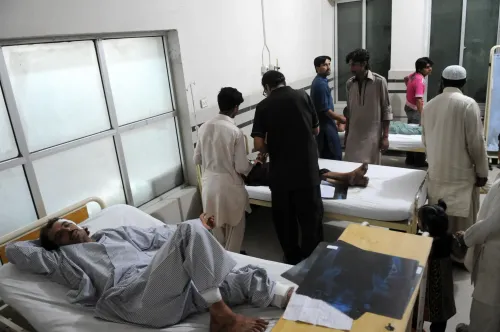
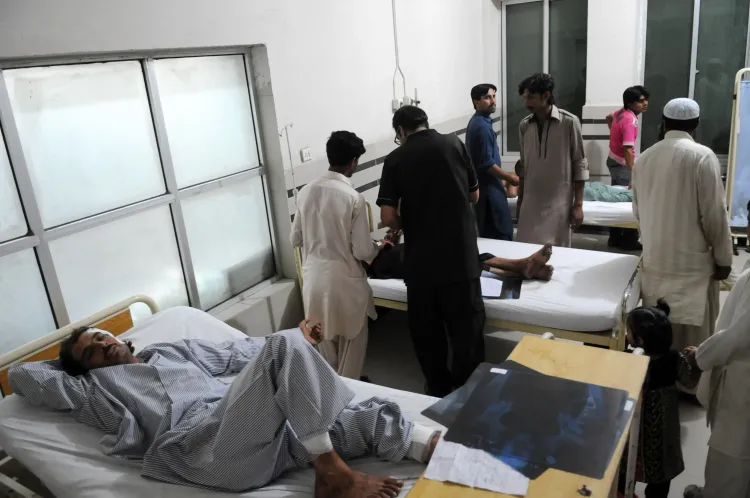
The most disturbing dimension of Pakistan's HIV crisis centres on children. Tehsil Headquarters Hospital (THQ) in Taunsa, Punjab province, was linked to a large-scale HIV outbreak among children as early as 2024. At least 331 children in Taunsa tested positive for HIV between November 2024 and October 2025. Crucially, fewer than one in 20 parents who agreed to be tested returned a positive result — strongly suggesting the infections were acquired inside the hospital, not transmitted from family members.
Punjab province authorities announced a crackdown in March 2024 and suspended the Medical Superintendent of THQ Taunsa. Yet infections continued well after that announcement, exposing the crackdown as largely performative.
BBC Undercover Investigation Exposes Systemic Failures
A bombshell investigative documentary by BBC Eye Investigations, filmed secretly over several weeks, has now laid bare what authorities failed to fix. The footage captures nurses injecting patients through their clothing, dirty syringes being reused, and unqualified workers administering injections to multiple children from a single blood-contaminated vial of liquid medicine.
The BBC also documented broader institutional failures: medical waste handled with bare hands, exposed syringes and needles left unattended, and unqualified volunteers — officially banned from the children's ward — operating without any supervision. Staff shortages and chronic supply chain failures appear to be systemic drivers. In several documented cases, families were asked to purchase their own medicines, while under-resourced staff resorted to sharing medication between patients or reusing equipment to stretch limited supplies.
Despite the visual evidence, current Medical Superintendent Dr Qasim Buzdar has denied wrongdoing, claiming the footage may have been captured before his tenure or was "possibly staged" — a denial that has drawn sharp criticism from public health advocates.
Systemic Accountability Gap and Broader Implications
This crisis reflects a deeply entrenched accountability vacuum in Pakistan's public healthcare infrastructure. The government's March 2024 crackdown — announced with considerable fanfare — failed to protect a single additional child from hospital-acquired HIV infection. The BBC's undercover evidence, gathered months after the suspension of a senior official, demonstrates that symbolic administrative action without structural reform achieves nothing.
Notably, Pakistan has historically struggled with HIV outbreaks linked to unsafe medical practices. The 2019 Larkana HIV outbreak in Sindh, where over 900 children tested positive — largely attributed to a single quack doctor reusing syringes — drew international attention but produced limited systemic change. The Taunsa crisis suggests the lessons of Larkana were not institutionalised.
Critics argue that chronic underfunding of public hospitals, a culture of impunity for medical staff, and weak infection control oversight create conditions where such outbreaks are not aberrations but predictable outcomes. The burden falls disproportionately on Pakistan's most vulnerable — poor rural children whose families have no alternative to government hospital care.
What Comes Next
With international scrutiny now intensified following the BBC documentary, pressure is mounting on Punjab provincial authorities and the federal Ministry of National Health Services to move beyond suspensions and announce binding infection control reforms with independent oversight. Public health experts are calling for mandatory training, supply chain guarantees, and criminal accountability for those found responsible for the children's infections. The coming weeks will test whether Pakistan's government can translate international embarrassment into genuine structural change — or whether, as before, the crisis quietly fades from official attention.
Point of View
Declared a crackdown, and did nothing that actually protected children; the BBC's cameras proved it. What makes this particularly damning is the echo of the 2019 Larkana outbreak, where over 900 children were infected under near-identical conditions of reused syringes and zero oversight — and where, again, no meaningful systemic reform followed. Until Pakistan's health authorities face criminal consequences rather than administrative reshuffles, these outbreaks will recur with grim regularity, and the most vulnerable children will keep bearing the cost of elite indifference.
NationPress
8 Oct 2026
Frequently Asked Questions
How many children tested HIV-positive in Taunsa, Pakistan?
At least 331 children in Taunsa, Punjab tested positive for HIV between November 2024 and October 2025, according to BBC Eye Investigations. Fewer than one in 20 of their parents who agreed to testing also tested positive, strongly suggesting hospital-acquired infections.
What did the BBC investigation reveal about Taunsa hospital?
A BBC Eye Investigations undercover documentary found nurses injecting patients through their clothing, reusing dirty syringes, and unqualified workers administering injections from blood-contaminated vials in the children's ward. The footage also showed medical waste handled with bare hands and officially banned volunteers operating without supervision.
How many new HIV cases have been registered at PIMS in 2025?
Pakistan's Ministry of National Health Services data shows 189 individuals have been registered as HIV-positive at PIMS since October 2024, with 11 new cases reported in just the first 20 days of April 2025. Male patients outnumber female patients, and cases have also been identified among transgender individuals.
Did Pakistan's government take action against Taunsa hospital?
Punjab province authorities announced a crackdown and suspended the Medical Superintendent of THQ Taunsa in March 2024. However, the BBC's subsequent undercover filming confirmed that unsafe practices and new infections continued well after the government's announced intervention.
Why are HIV cases rising in Pakistan?
Health officials like Programme Manager Zubair Abdullah attribute part of the rise to more people coming forward for testing, which is considered a positive trend. However, unsafe medical practices in public hospitals, staff shortages, supply chain failures, and social stigma that discourages testing are all identified as contributing factors to Pakistan's broader HIV crisis.