IHRC condemns Ahmadi persecution in Pakistan, urges UN action
Synopsis
A UK-based international rights body has documented a sweeping pattern of anti-Ahmadi persecution in Pakistan — from childhood indoctrination and police-disrupted funerals in Sindh to grave desecrations and targeted killings — and is now calling on the UN and democratic governments to force Islamabad's hand on religious freedom.
Key Takeaways
The International Human Rights Committee (IHRC) condemned Pakistan's treatment of the Ahmadiyya Muslim community on 1 July .
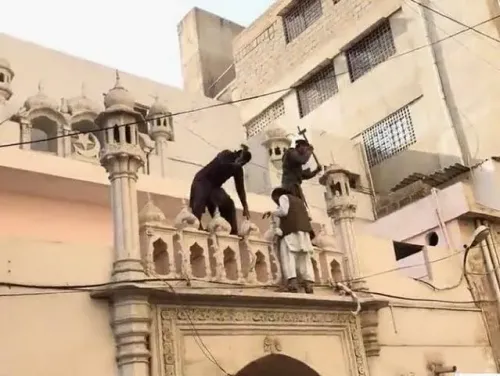
Documented violations include targeted killings, mosque demolitions, grave desecrations, arbitrary arrests, and prosecutions under Pakistan's blasphemy and anti-Ahmadi laws .
Police in Badin, Sindh reportedly disrupted Ahmadi funeral rites following pressure from extremist clerics.
The IHRC warned that children are being indoctrinated with sectarian ideology centred on Khatme Nabuwwat , entrenching discrimination across generations.
The rights body has appealed to the UN , UN Special Rapporteurs , and democratic governments to press Pakistan to honour its international human rights obligations.
The International Human Rights Committee (IHRC), a UK-based rights body, has strongly condemned the systematic persecution of the Ahmadiyya Muslim community in Pakistan, documenting a pattern of targeted killings, mosque demolitions, grave desecrations, criminal prosecutions, and economic boycotts carried out under the country's blasphemy and anti-Ahmadi laws. The condemnation, issued on 1 July, calls on the United Nations and democratic governments to press Islamabad to fulfil its obligations under international human rights law.
Key Developments Cited
The IHRC flagged two incidents as emblematic of the broader crisis. The first involves what it described as the public indoctrination of children with sectarian ideology centred on Khatme Nabuwwat — a doctrine used to justify anti-Ahmadi discrimination. The second concerns police interference in the funeral and mourning arrangements of deceased Ahmadis in Badin, Sindh, reportedly following pressure from extremist clerics.
According to the IHRC, Pakistani police prevented Ahmadi families in Badin from conducting funeral-related religious practices free from 'intimidation and interference.' The rights body noted that persecution of Ahmadis increasingly extends beyond their lifetime, with authorities reportedly overseeing or permitting the desecration of Ahmadi graves, blocking burials in public cemeteries, and even exhuming deceased Ahmadis solely on the basis of religious identity.
A Documented Pattern, Not Isolated Incidents
The IHRC stated that its documentation reveals a continuing pattern of violations across Pakistan, encompassing targeted killings, attempted murders, arbitrary arrests, restrictions on religious worship, demolition of mosques, denial of burial rights, criminal prosecutions under the Pakistan Penal Code, and sustained hate campaigns. The organisation described recent developments as reflecting the 'continuing institutionalisation and normalisation of anti-Ahmadi hatred.'
Notably, the rights body raised alarm over what it called the growing role of extremist organisations in shaping administrative and policing decisions. 'Rather than protecting vulnerable religious minorities, state institutions frequently appear to act in response to pressure from groups promoting sectarian intolerance,' the IHRC said. Critics argue this dynamic effectively places state power at the service of persecution.
The Indoctrination of Children
The IHRC warned that the indoctrination of children with narratives of religious hostility is entrenching discrimination across generations, cultivating an environment in which targeting Ahmadis is portrayed as 'socially or religiously acceptable.' The organisation urged Pakistani authorities to ensure that children are educated in accordance with principles of religious tolerance, peaceful coexistence, and respect for fundamental human rights, and to prevent educational or religious platforms from being used to promote sectarian hatred.
What the IHRC Is Demanding
The IHRC called on the government of Pakistan to protect the Ahmadiyya community from violence, intimidation, and discrimination. It also appealed to UN Special Rapporteurs, international human rights organisations, and democratic governments to closely monitor the deteriorating situation and apply pressure on Islamabad to uphold freedom of religion or belief without discrimination.
The appeal comes amid longstanding international concern over Pakistan's blasphemy laws, which rights groups say are disproportionately weaponised against religious minorities including Ahmadis, Christians, and Hindus. Whether the latest international pressure translates into policy change in Pakistan remains to be seen.
Point of View
Not merely negligent. That distinction matters. When police act on the instructions of extremist clerics rather than the law, the problem is not a failure of enforcement but a capture of enforcement. The indoctrination finding is equally significant; discrimination that is taught to children is discrimination that outlasts any single government. International appeals to Pakistan on religious freedom have a long and largely unproductive history, and without binding mechanisms or trade or aid conditionality, this statement risks joining a long queue of unanswered condemnations.
NationPress
29 Sept 2026
Frequently Asked Questions
What has the IHRC condemned regarding Pakistan and the Ahmadiyya community?
The UK-based International Human Rights Committee (IHRC) has condemned Pakistan's systematic persecution of the Ahmadiyya Muslim community, citing targeted killings, mosque demolitions, grave desecrations, economic boycotts, and criminal prosecutions under blasphemy and anti-Ahmadi laws. The condemnation was issued on 1 July and calls for urgent international intervention.
What happened to Ahmadis in Badin, Sindh?
Pakistani police reportedly interfered with the funeral and mourning arrangements of deceased Ahmadis in Badin, Sindh, following pressure from extremist clerics. The IHRC said this prevented Ahmadi families from conducting religious funeral practices free from intimidation.
Why are Ahmadis targeted under Pakistan's blasphemy laws?
Ahmadis are a Muslim minority sect whose theological beliefs are considered heretical by Pakistan's dominant religious establishment. Pakistan's Penal Code contains specific anti-Ahmadi provisions that criminalise their religious practices, and the broader blasphemy laws are frequently used against them, according to international rights organisations.
What is the IHRC asking the United Nations to do?
The IHRC has appealed to the UN, UN Special Rapporteurs, international human rights organisations, and democratic governments to closely monitor the situation facing Ahmadis in Pakistan and to press the Pakistani government to fulfil its obligations under international human rights law, including protecting freedom of religion or belief without discrimination.
What concern has the IHRC raised about children in Pakistan?
The IHRC warned that children in Pakistan are being publicly indoctrinated with sectarian ideology centred on Khatme Nabuwwat, normalising discrimination against Ahmadis from an early age. It called on Pakistani authorities to ensure education upholds religious tolerance and to prevent educational or religious platforms from being used to promote hatred.