Pralhad Joshi Flags India's Education Surge on Independence Day
Synopsis
On Independence Day 2026, Union Minister Pralhad Joshi quoted PM Modi highlighting that India now has 650+ universities, nearly 850 medical colleges — both roughly double pre-2014 figures — and over 10,000 Atal Tinkering Labs, framing the decade since 2014 as a structural shift in education.
Key Takeaways
India now has 650+ universities , nearly double the count during 2004–2014 , according to the government.
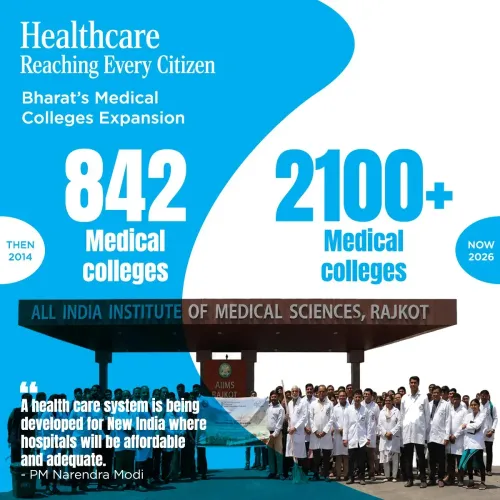
Medical colleges have grown from roughly 400 before 2014 to nearly 850 today.
Foreign universities are establishing campuses in India under provisions of the National Education Policy 2020 .
More than 10,000 Atal Tinkering Labs have been set up in schools under the Atal Innovation Mission launched in 2016 .
The post was shared on Independence Day, 15 August 2026 , tagged #IndiaAt80 , as part of a broader BJP communication effort on a decade of reforms.
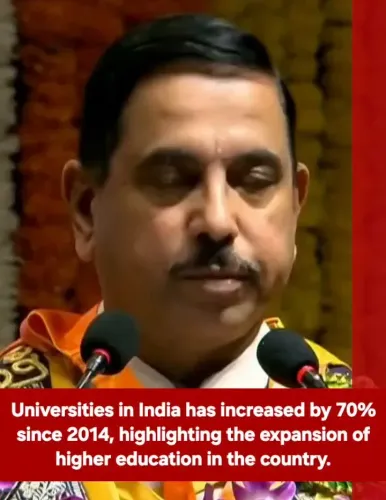
On Independence Day, 15 August 2026, Union Consumer Affairs Minister Pralhad Joshi amplified a striking set of numbers that frame a decade of change in Indian education — quoting Prime Minister Narendra Modi to argue that the country's higher-education and school-innovation landscape has been fundamentally redrawn since 2014.
From 400 to 850: The Medical College Surge
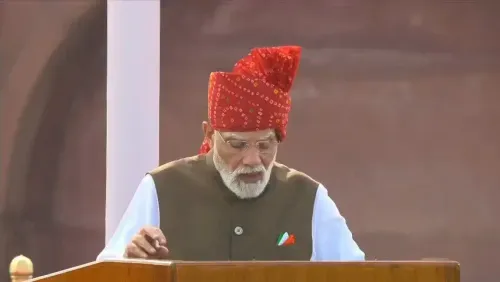
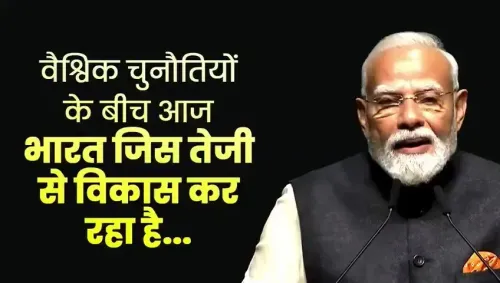
The headline figure is in healthcare education. India now has nearly 850 medical colleges, more than double the roughly 400 that existed before 2014 — a doubling that, if sustained in graduate output, carries direct consequences for the country's doctor-to-population ratio. On universities, the count stands at 650-plus, again close to double the tally of the 2004–2014 period. The post quotes PM Modi directly: 'Indu Bharata 650kku hecca vishvavidyalayagalannu hondiddu' — 'Today India has 650-plus universities' — presenting the expansion as a structural shift, not incremental growth.
Foreign Campuses and the NEP 2020 Opening
Alongside domestic expansion, the government's National Education Policy 2020 opened the door to foreign universities establishing full campuses inside India. The policy shift means Indian students can now pursue globally recognised degrees without leaving the country — a pitch aimed squarely at the outbound-student drain that costs Indian families billions in foreign exchange annually. Foreign institutions have begun exploring regulatory approvals, though the number of campuses that have actually opened remains a closely watched data point.
10,000 Atal Tinkering Labs and the School-Level Bet
The third pillar in the post is the Atal Tinkering Labs programme — a component of the Atal Innovation Mission launched in 2016 — which has now seeded more than 10,000 school-based labs across the country. The labs are designed to give children hands-on exposure to robotics, electronics, and design thinking from an early age. The government's argument is straightforward: the pipeline for India's next generation of innovators and entrepreneurs has to start well before college. Whether that pipeline is producing measurable outputs — student patents, early startups, science-olympiad results — is the metric that will determine whether the programme is transformation or theatre.
Independence Day as the Backdrop for a Decade's Scorecard
Joshi's post, tagged #IndiaAt80 and #VandeMataram, is part of a broader BJP communication push on Independence Day to present the decade since 2014 as a period of structural reform rather than routine administration. Education — universities, doctors, and school innovation — is among the most politically resonant metrics because it touches every family. The numbers cited in the post are government figures; independent verification of the precise current counts is pending from regulatory bodies.
The real test of India's education surge will not be counted in campuses — it will be counted in the careers, discoveries, and companies that emerge from them.
Point of View
Tying institutional growth to national pride. The doubling of medical colleges is the sharpest political asset in the data set — healthcare access is visceral in ways that university counts are not. The Atal Tinkering Labs figure signals a longer-term bet: the BJP is arguing it is not just building institutions for today but engineering an innovation culture for the next generation. The NEP 2020 foreign-university provision, however, remains the most consequential and least delivered element — actual campus openings will determine whether that promise becomes a talking point or a legacy.
NationPress
15 Aug 2026
Frequently Asked Questions
How many universities does India have in 2026?
The government states India has 650-plus universities as of 2026, citing this as nearly double the number that existed during the 2004–2014 period.
How many medical colleges are there in India now?
According to the government, India now has nearly 850 medical colleges , up from around 400 before 2014 — representing more than a doubling in roughly a decade.
What are Atal Tinkering Labs and how many exist?
Atal Tinkering Labs are school-based innovation spaces set up under the Atal Innovation Mission launched in 2016 , designed to give students hands-on exposure to STEM and design thinking. More than 10,000 have been established across India.
Can foreign universities open campuses in India?
Yes. The National Education Policy 2020 permits foreign higher educational institutions to establish campuses in India, allowing students to earn globally recognised degrees without studying abroad.
Why did Pralhad Joshi post about education on Independence Day?
Pralhad Joshi shared the post on 15 August 2026 — tagged #IndiaAt80 — quoting PM Modi's figures to present the decade since 2014 as a period of structural reform in education, aligning policy achievements with the national occasion.