India at UN slams Pakistan's 'Form 47 rulers' for sponsoring terrorism to mask Kashmir repression
Synopsis
India didn't just rebut Pakistan at the UN — it went on the offensive. Invoking the 'Form 47' jibe against Pakistan's military-installed government, India's envoy accused Islamabad of sponsoring terrorism to cover up over 90 civilian deaths in PoK and the jailing of Imran Khan. The intervention signals India's intent to make Pakistan's internal repression — not just cross-border terrorism — part of the global conversation.
Key Takeaways
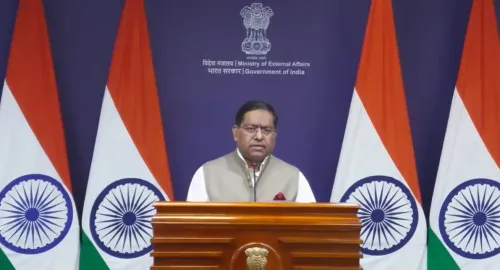
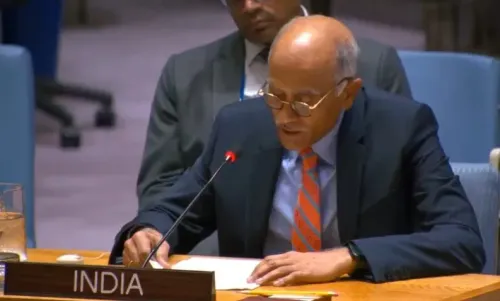
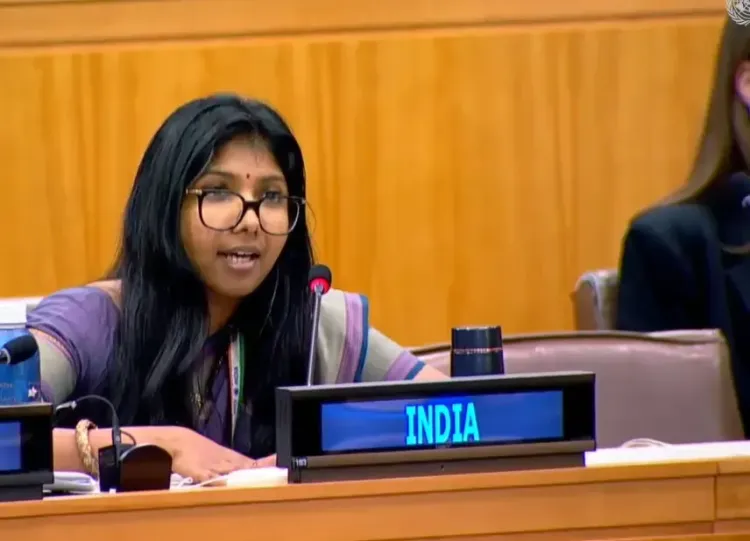
Bhavika Mangalanandan , First Secretary at India's UN Mission , addressed the UN General Assembly's Third Committee on 3 October .
India accused Pakistan of sponsoring cross-border terrorism against India 'for more than three decades' to distract from domestic unrest.
Human rights groups report over 90 civilians killed in Pakistan-occupied Kashmir (PoK) in recent months amid a crackdown on economic rights protests.
India invoked the 'Form 47' term, alleging Pakistan's military manipulated elections in 2024 to install a proxy civilian government under Prime Minister Shehbaz Sharif .
Former PM Imran Khan remains jailed with reportedly deteriorating health; his party PTI has been barred from elections.
India highlighted the 2024 Jammu and Kashmir assembly elections as a contrast, citing massive voter turnout and peaceful transfer of power.
India has accused Pakistan's military establishment — derisively termed the 'Form 47 rulers' — of deliberately weaponising cross-border terrorism to divert international attention from violent crackdowns on civilians in Pakistan-occupied Jammu and Kashmir (PoK) and within Pakistan itself. The remarks were delivered on 3 October at the United Nations General Assembly's Third Committee in New York, which handles social, humanitarian, and cultural affairs.
India's Charge at the UN
Bhavika Mangalanandan, First Secretary at India's UN Mission, exercised the right of reply to Pakistan's allegations against India in the committee. She stated that Pakistan, 'instead of addressing domestic discontent, seeks to distract by fomenting instability in India and sponsoring, inciting, abetting, and financing cross-border terrorism' in India 'for more than three decades.'
Mangalanandan also invoked the term 'Form 47' — a reference to an election document that, according to India's position, was manipulated by Pakistan's military to install the government of Prime Minister Shehbaz Sharif as a proxy in Islamabad in 2024. The term has since become a widely recognised meme of political ridicule in the region.
Civilian Killings in PoK: India's Core Allegation
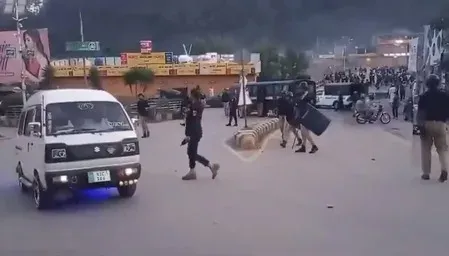
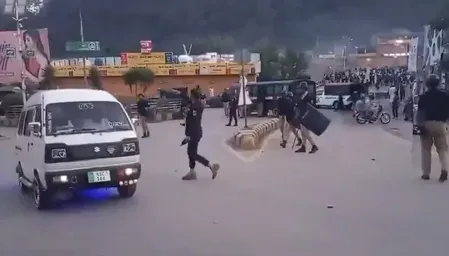
Mangalanandan described Pakistan's accusations against India as 'a desperate attempt... to mask the ongoing tragedy in Rawalakot and its other cities, the killing of hundreds of civilians, and the brutal crackdown across Pakistan-occupied Jammu and Kashmir, for merely demanding bread, electricity, and human dignity.'
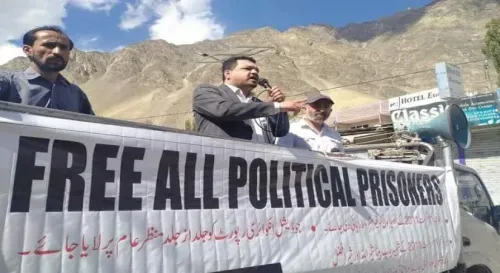
According to human rights groups, over 90 people have been killed in recent months in PoK alone, where a popular movement for economic rights and against demographic changes and election manipulation has been forcibly suppressed. India's representative asserted that 'the only human rights violation taking place in Kashmir is perpetrated by the armed forces of Pakistan and their terrorist proxies.'
Media Blackout and Imran Khan's Detention
Mangalanandan pointed to the banning of free media coverage in Pakistan as further evidence of the military's control, stating that 'the evidence becomes undeniable for the global community that only the writ of the Form 47 government and their masters in the army headquarters runs large.' She also noted that former Prime Minister Imran Khan remains imprisoned, with his health reportedly deteriorating rapidly, while his party, Pakistan Tehreek-e-Insaf (PTI), has been barred from contesting elections.
India's Democratic Contrast
India's envoy drew a pointed contrast between the two sides of Kashmir. She noted that Jammu and Kashmir held assembly elections in 2024 with a 'massive turnout,' followed by a 'peaceful transfer of power to an elected government.' She added that civilian governments in Pakistan 'serve at the mercy of their army and rarely complete their terms.'
Mangalanandan concluded by reaffirming India's sovereignty claim: 'The union territories of Jammu, Kashmir, and Ladakh were, are, and will always remain integral and inalienable parts of India.' India's intervention at the Third Committee signals a sharper diplomatic offensive to reframe the Kashmir narrative at multilateral forums.
Point of View
But the Third Committee setting — focused on humanitarian affairs — is a calculated choice to shift the Kashmir debate from territorial claims to human rights accountability. The question is whether India can sustain this offensive at future multilateral forums and build a coalition of voices willing to scrutinise PoK conditions independently.
NationPress
3 Oct 2026
Frequently Asked Questions
What did India say at the UN General Assembly Third Committee on 3 October?
India's First Secretary at the UN Mission, Bhavika Mangalanandan, accused Pakistan's military-backed government of sponsoring terrorism against India to distract from violent crackdowns in Pakistan-occupied Kashmir and within Pakistan itself. She exercised the right of reply to Pakistan's allegations against India in the committee, which handles social, humanitarian, and cultural issues.
What is the 'Form 47' reference India used at the UN?
'Form 47' refers to an election document that India alleges was manipulated by Pakistan's military to install Prime Minister Shehbaz Sharif's government as a proxy in 2024. The term has become a widely used meme of political ridicule, and India's use of it at a formal UN forum was a pointed dig at Pakistan's democratic credentials.
What is the situation in Pakistan-occupied Kashmir that India raised?
According to human rights groups cited by India's envoy, over 90 civilians have been killed in Pakistan-occupied Kashmir (PoK) in recent months. The killings reportedly followed a popular movement demanding economic rights, affordable electricity, and basic dignity, which Pakistan's armed forces are alleged to have brutally suppressed.
What did India say about Imran Khan at the UN?
India's representative noted that former Pakistani Prime Minister Imran Khan remains imprisoned, with his health reportedly deteriorating fast, and that his party Pakistan Tehreek-e-Insaf (PTI) has been barred from contesting elections. India cited this as evidence of the military's grip over Pakistan's political process.
How did India contrast Jammu and Kashmir with Pakistan-occupied Kashmir?
India's envoy pointed out that Jammu and Kashmir held assembly elections in 2024 with a massive voter turnout, followed by a peaceful transfer of power to an elected government — in contrast to PoK, where popular protests have been met with lethal force. India reiterated that the union territories of Jammu, Kashmir, and Ladakh are integral and inalienable parts of India.