Has India Become the World’s Largest Rice Producer, Surpassing China?
Synopsis
India has officially outpaced China to emerge as the world's largest rice producer, with impressive production figures. This advancement is a testament to the country's agricultural innovation and commitment to enhancing food security.
Key Takeaways
India has become the world's largest rice producer.
Production reached 150.18 million tonnes.
184 new crop varieties launched by ICAR.
Focus on self-sufficiency in pulses and oilseeds.
Addressing agricultural challenges through innovation.
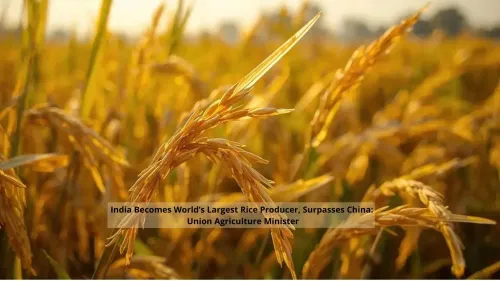
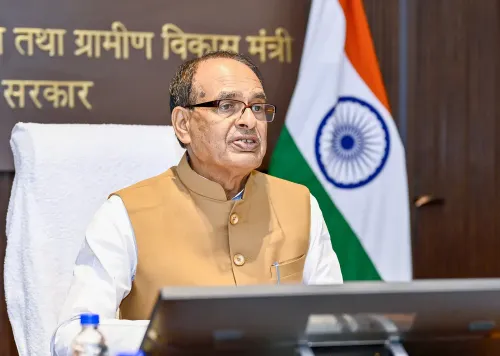
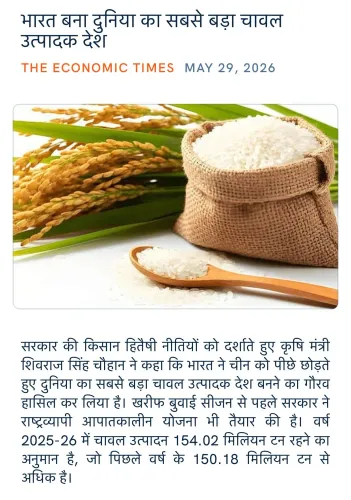
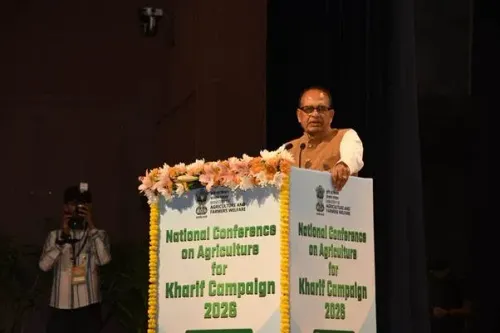
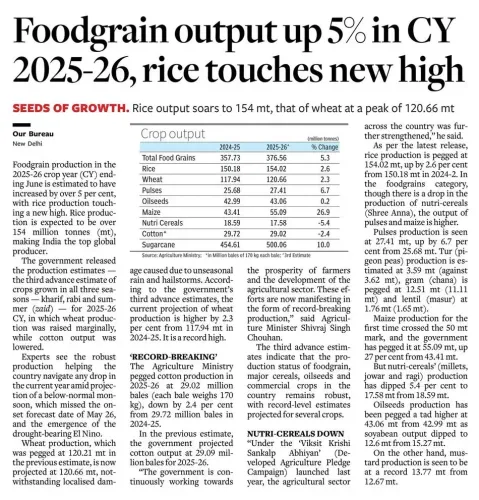
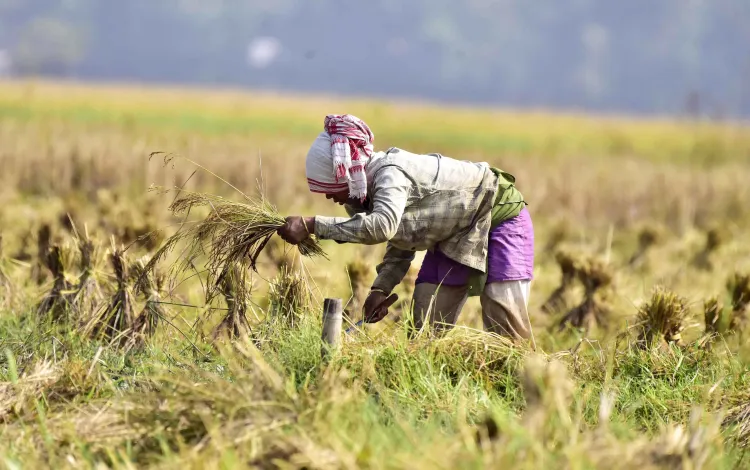
New Delhi, Jan 5 (NationPress) India has officially overtaken China as the leading rice producer globally, achieving a remarkable production figure of 150.18 million tonnes, as announced by Union Agriculture Minister Shivraj Singh Chouhan.
The minister revealed that China's rice production is at 145.28 million tonnes. India’s success can be attributed to advancements in the development of high-yielding seeds, making the nation a prominent rice exporter in international markets.
During an event in the national capital, Chouhan unveiled 184 improved varieties of 25 field crops developed by the Indian Council of Agricultural Research (ICAR). These include 122 cereals, 6 pulses, 13 oilseeds, 11 fodder crops, 6 sugarcane, 24 cotton, and one each of jute and tobacco.
The Agriculture Minister urged officials to prioritize the quick distribution of these new varieties to farmers. He emphasized that these advancements would enhance yields and improve the quality of agricultural produce. Furthermore, he instructed farm scientists to concentrate on boosting the production of pulses and oilseeds to achieve self-sufficiency.
Chouhan noted that since the inception of Prime Minister Narendra Modi's government, 3,236 high-yielding varieties have been approved over 11 years, in contrast to 3,969 varieties approved from 1969 to 2014.
The newly introduced varieties are designed to tackle challenges in agriculture such as climate change, soil salinity, drought, and other stresses, while also supporting natural and organic farming practices.
The minister highlighted India's evolution from a food-deficient nation to a leading agricultural supplier in global markets.
Chouhan stated that the country is entering a new phase of agricultural revolution thanks to the development of high-yielding and climate-resilient seeds. This milestone is a result of collaborative efforts among ICAR’s all-India coordinated projects on crops, state and central agricultural universities, and private seed companies.
Point of View
This achievement underscores India's growing agricultural prowess. The focus on innovative seed development and self-sufficiency reflects a forward-thinking approach vital for the nation's food security and economic strength. It is a clear indicator of India’s commitment to becoming a global leader in agriculture.
NationPress
7 Sept 2026
Frequently Asked Questions
What is India's rice production for 2023?
India has achieved a rice production of 150.18 million tonnes in 2023, surpassing China's 145.28 million tonnes.
Who announced India's rice production achievement?
Union Agriculture Minister Shivraj Singh Chouhan announced India's achievement in rice production.
What are the new varieties of crops introduced?
184 improved varieties of 25 field crops, including cereals, pulses, and oilseeds, were introduced.
How many high-yielding varieties have been approved recently?
Since 2014, 3,236 high-yielding varieties have been approved under the current government.
What challenges do the new crop varieties address?
The new varieties aim to tackle issues like climate change, soil salinity, and drought.