India-UAE 7th JCCA meeting reaffirms safety, dignity of 4.5 mn Indian diaspora
Synopsis
At the 7th India-UAE JCCA meeting in New Delhi, both sides went beyond standard diplomatic assurances — a dedicated session on integrating India's DigiLocker with UAE platforms could eliminate one of the biggest day-to-day headaches for the 4.5 million Indians living and working in the Emirates: document attestation.
Key Takeaways
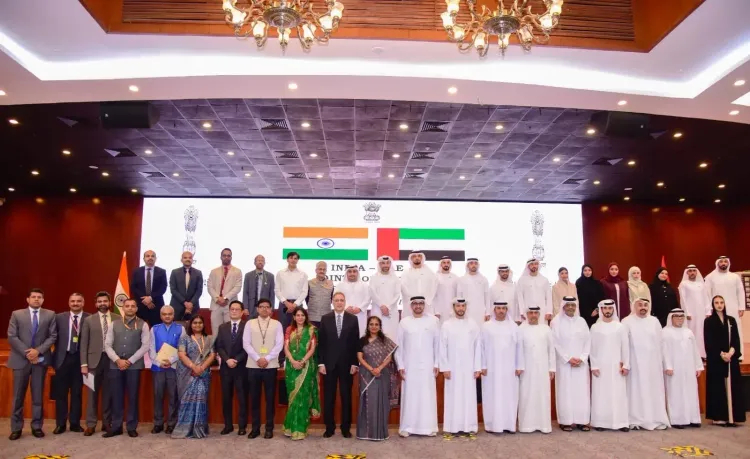
The 7th India-UAE Joint Committee on Consular Affairs (JCCA) meeting was held in New Delhi on 22 July 2025 .
Co-chaired by Sripriya Ranganathan (MEA) and Omar Obaid Mohammed Alhesan Alshamsi (UAE Ministry of Foreign Affairs).
Discussions covered consular issues, labour and mobility, and extradition and mutual legal assistance.
A separate session focused on integrating India's DigiLocker with UAE platforms for seamless authentication of Indian academic credentials.
The 4.5 million-strong Indian community in the UAE was highlighted as a cornerstone of bilateral people-to-people ties.
The Comprehensive Economic Partnership Agreement (CEPA) was cited as a key driver of expanded bilateral cooperation since 2022 .
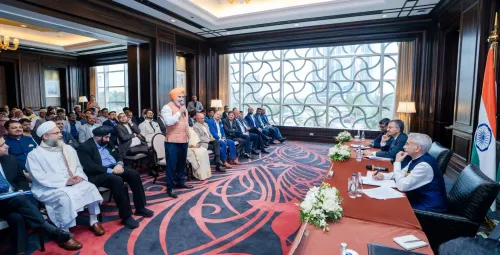
India and the United Arab Emirates (UAE) on 22 July 2025 reaffirmed their commitment to ensuring the safety, dignity, and well-being of citizens living in each other's countries, at the 7th Meeting of the India-UAE Joint Committee on Consular Affairs (JCCA) held in New Delhi. The high-level dialogue addressed consular affairs, labour mobility, and legal cooperation frameworks that directly affect the 4.5 million-strong Indian community in the UAE.
Key Developments at the JCCA Meeting
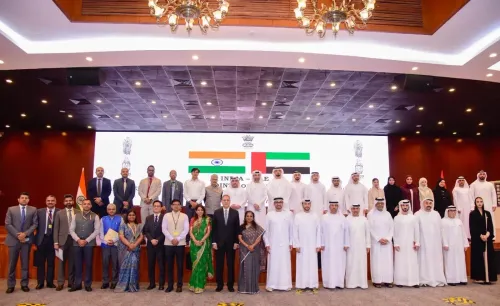
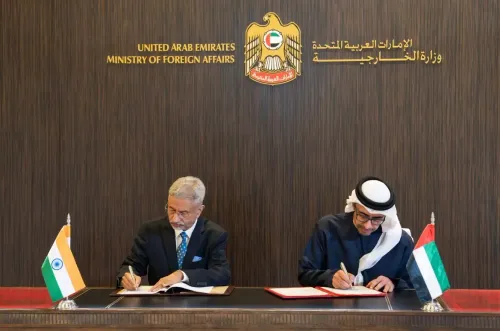
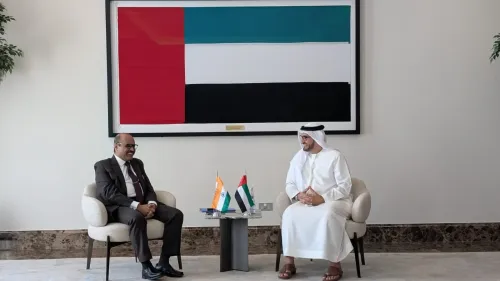
The meeting was co-chaired by Sripriya Ranganathan, Secretary (CPV & OIA), and Omar Obaid Mohammed Alhesan Alshamsi, Undersecretary of the UAE Ministry of Foreign Affairs. According to the Ministry of External Affairs (MEA), the formal session was preceded by technical-level discussions covering consular issues, labour and mobility matters, and extradition and mutual legal assistance arrangements.
Notably, a dedicated meeting was also convened to advance the integration of India's DigiLocker platform with UAE digital systems, aimed at enabling seamless authentication of Indian academic degrees and documents. The MEA indicated this initiative would directly benefit Indian professionals working in the UAE and open greater economic and educational pathways.
What Both Sides Said
The MEA described India-UAE ties as 'warm and cordial,' spanning economic, political, defence, technology, cultural, and energy domains. It credited the 'visionary leadership' of Prime Minister Narendra Modi and His Highness President Sheikh Mohamed bin Zayed for relations that have 'continued to scale new heights.'
Alhesan Alshamsi highlighted that the exchange of high-level visits, alongside the Comprehensive Economic Partnership Agreement (CEPA), has expanded avenues for bilateral cooperation and contributed to the prosperity of both nations. He further underscored that people-to-people ties remain a cornerstone of the relationship.
The UAE's Ministry of Foreign Affairs noted that 'the Indian community continues to play an integral role in the UAE's development journey,' while the number of UAE nationals travelling to India for tourism, education, and medical treatment is also on the rise.
DigiLocker Integration: A Practical Milestone
The push to link DigiLocker with UAE platforms marks a concrete step beyond diplomatic rhetoric. For Indian professionals — particularly in healthcare, engineering, and education — credential verification has historically been a bureaucratic bottleneck. A digital bridge between the two systems could significantly reduce processing times and costs associated with document attestation.
This comes amid a broader trend of India digitising its consular services, with the MEA having already rolled out e-migration and online attestation tools in recent years.
Context and What Comes Next
The JCCA is a structured bilateral mechanism that meets periodically to resolve consular and labour issues affecting Indian nationals in the UAE and Emirati citizens in India. The 7th edition of this committee signals continuity in an engagement that has deepened considerably since the signing of the CEPA in 2022. Bilateral trade between the two countries has grown substantially under that agreement.
Follow-up action on the DigiLocker integration and any updates to extradition or mutual legal assistance frameworks are expected to be tracked through subsequent technical-level engagements between the two sides.
Point of View
Consuming time and money in attestation queues. If the digital bridge is actually built and operationalised, it would represent a rare instance of bilateral diplomacy delivering a direct, measurable benefit to working-class migrants. The broader question is pace: India-UAE digital cooperation has been announced in principle before, and the gap between MoU and implementation has often been wide. Tracking whether this moves from 'meeting to work towards' to a live system will be the real test of this round of engagement.
NationPress
22 Oct 2026
Frequently Asked Questions
What is the India-UAE Joint Committee on Consular Affairs (JCCA)?
The JCCA is a structured bilateral mechanism between India and the UAE that meets periodically to address consular affairs, labour mobility, and legal cooperation issues affecting citizens of both countries living in each other's territory. The 7th edition of this committee was held in New Delhi on 22 July 2025.
What was decided at the 7th JCCA meeting?
Both sides reaffirmed their commitment to the safety, dignity, and well-being of their respective diaspora communities. A key outcome was a dedicated session on integrating India's DigiLocker platform with UAE systems to enable seamless authentication of Indian academic degrees and documents for professionals working in the UAE.
How does the DigiLocker-UAE integration benefit Indians in the UAE?
It is intended to eliminate the need for manual document attestation by allowing UAE authorities to digitally verify Indian academic credentials directly through the DigiLocker platform. This would benefit Indian professionals — particularly in healthcare, engineering, and education — by reducing bureaucratic delays and costs.
Who co-chaired the 7th JCCA meeting?
The meeting was co-chaired by Sripriya Ranganathan, Secretary (CPV & OIA) at India's Ministry of External Affairs, and Omar Obaid Mohammed Alhesan Alshamsi, Undersecretary of the UAE Ministry of Foreign Affairs.
What role does the CEPA play in India-UAE relations?
The Comprehensive Economic Partnership Agreement (CEPA), signed in 2022, has significantly expanded bilateral trade and cooperation between India and the UAE. At the 7th JCCA meeting, the UAE side cited CEPA as a key driver of increased opportunities for collaboration and shared prosperity.