India, UK near defence deals on Navy electric propulsion and Martlet missiles
Synopsis
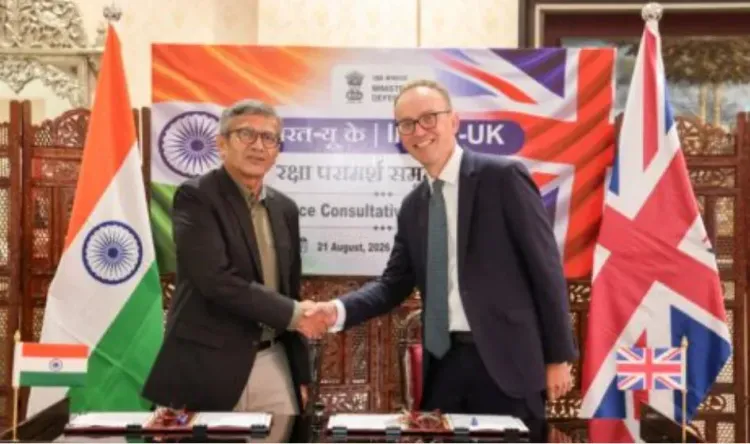
India and the UK are on the verge of two landmark defence IGAs — one to electrify Indian Navy warships, another to co-produce Martlet missiles. Add Rolls-Royce's full-IP offer for the AMCA engine and a freshly minted FTA, and this is the most substantive India-UK defence convergence in decades.
Key Takeaways
India and the UK are close to signing two inter-government agreements on Integrated Full Electric Propulsion (IFEP) for Navy ships and Martlet LMM co-production.
The IFEP deal covers the Indian Navy's four Landing Platform Docks (LPDs) , with potential retrofits for existing vessels.
The Indian Navy is targeting a 200-ship force by 2035 in response to China's expanding naval presence in the Indian Ocean Region.
Rolls-Royce has offered full Intellectual Property rights for a 120kN engine to power the AMCA-Mk2 , and announced a partnership with Reliance Industries on 14 August .
The Starstreak MANPADS contract between Thales UK and BDL — covering 16 launchers, 56 missiles, and one simulator — is valued at approximately $35 million .
The India-UK Free Trade Agreement came into effect on 15 July , reinforcing the broader strategic partnership.
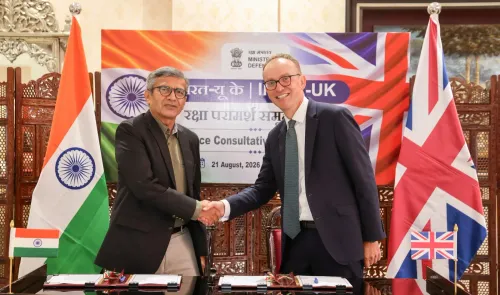
India and the United Kingdom are close to finalising two inter-government agreements (IGAs) covering the integration of electric propulsion on Indian Navy ships and the co-production of Martlet Lightweight Multirole Missiles (LMM), according to a report in The Diplomat. The agreements mark a significant step toward long-term defence industrial cooperation between the two nations and reflect deepening bilateral strategic ties.
Electric Propulsion for Indian Navy Ships
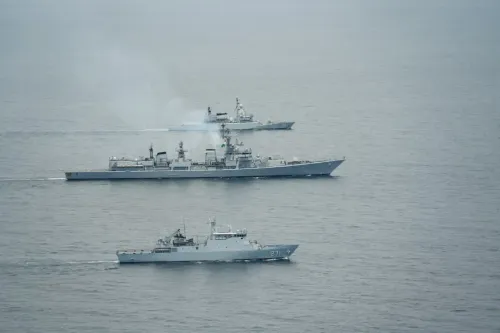
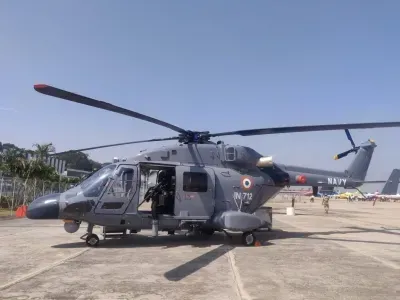
The first IGA targets the development and integration of Integrated Full Electric Propulsion (IFEP) technology for the Indian Navy's four Landing Platform Docks (LPDs), for which a separate tender is already underway. Beyond the LPDs, existing ships could reportedly be retrofitted from diesel to electric propulsion as part of a broader modernisation drive.
This comes amid the Indian Navy's stated ambition of building a 200-ship force by 2035, a target shaped in large part by the expanding footprint of the Chinese naval fleet in the Indian Ocean Region.
AMCA Jet Engine: Rolls-Royce Enters the Race
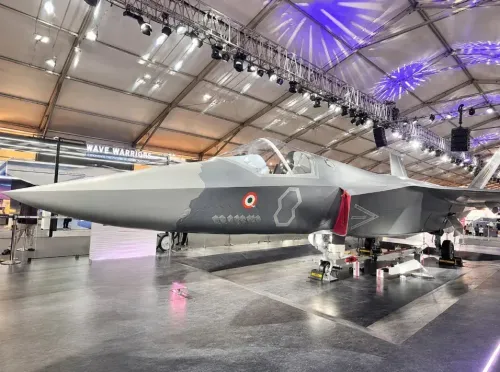
The UK has also emerged as a contender in the high-stakes competition to design and develop a 120kN jet engine for India's fifth-generation Advanced Medium Combat Aircraft (AMCA-Mk2). While negotiations between Safran of France and India's Gas Turbine Research Establishment (GTRE) have been ongoing for several years, delays have opened the door for Rolls-Royce and General Electric of the United States.
Rolls-Royce has reportedly tabled an offer that includes full Intellectual Property (IP) rights for the engine once developed — a significant concession that could tilt the balance in its favour. On 14 August, Rolls-Royce announced a partnership with Reliance Industries Limited to explore establishing a dedicated Aerospace Gas Turbine Complex in India, positioning it as a centre of excellence for power and propulsion technology.
Key Agreements Already in Place
The two IGAs under negotiation build on a series of defence agreements concluded over the past year. At Aero India in February 2025, the UK formally launched 'Defence Partnership–India' (DP-I), a dedicated cell within the UK Ministry of Defence aimed at deepening bilateral cooperation.
Separately, Thales UK and Bharat Dynamics Limited (BDL) signed a contract under the Emergency Procurement route for laser beam-riding Starstreak Man-Portable Air-Defence Systems (MANPADS) — covering 16 launchers, 56 missiles, and one simulator at an estimated cost of around $35 million. The deal carries the potential to scale to thousands of missiles in future orders.
Strategic Convergence in the Indo-Pacific
Beyond hardware, the two countries share overlapping concerns in the Indo-Pacific, where Britain regards India as one of the most important stabilising forces. Expanding military-to-military cooperation, joint exercises, and research collaborations have added further depth to the relationship.
As The Diplomat noted: 'With this slew of agreements, Britain is looking to regain lost space in India's growing defence sector. For India, the UK is one of the important stabilising vectors in its multilateral alignment strategy to safeguard its interests.'
The defence momentum is also reinforced by the recently concluded India-UK Free Trade Agreement (FTA), which came into effect on 15 July this year, against the backdrop of US tariff pressures and a shifting global geopolitical order.
With the two IGAs expected to be formalised soon, India-UK defence cooperation appears set to deepen further across platforms, propulsion, and precision weaponry.
Point of View
Where France, the US, and Russia have historically held the upper hand. The Rolls-Royce IP offer on the AMCA engine is particularly striking — full technology transfer is a concession few partners have offered India, and it could reshape the AMCA procurement calculus. However, India's track record of extended engine negotiations (the Safran-GTRE talks have dragged for years) suggests that even compelling offers can stall at the implementation stage. The real test will be whether DP-I translates into faster clearances and genuine industrial co-production rather than becoming another layer of diplomatic architecture.
NationPress
17 Oct 2026
Frequently Asked Questions
What are the two India-UK inter-government agreements being finalised?
The two IGAs cover the integration of Integrated Full Electric Propulsion (IFEP) technology on Indian Navy Landing Platform Docks and the co-production of Martlet Lightweight Multirole Missiles (LMM). Both are aimed at deepening long-term defence industrial cooperation between India and the UK, according to a report in The Diplomat.
Why does the Indian Navy want electric propulsion for its ships?
The Indian Navy is pursuing IFEP as part of a broader modernisation drive toward a 200-ship force by 2035, driven in part by China's expanding naval presence in the Indian Ocean Region. Electric propulsion offers advantages in efficiency, noise reduction, and operational flexibility over conventional diesel systems.
What is Rolls-Royce's offer for India's AMCA jet engine?
Rolls-Royce has reportedly offered full Intellectual Property rights for a 120kN engine to power the AMCA-Mk2, India's fifth-generation fighter. The company also announced a partnership with Reliance Industries on 14 August to establish an Aerospace Gas Turbine Complex in India, significantly strengthening its bid.
What is the Starstreak MANPADS deal between India and the UK?
Thales UK and Bharat Dynamics Limited (BDL) signed a contract under the Emergency Procurement route for 16 Starstreak laser beam-riding air-defence launchers, 56 missiles, and one simulator at an estimated cost of around $35 million. The contract carries potential for future expansion to thousands of missiles.
How does the India-UK Free Trade Agreement relate to defence ties?
The India-UK Free Trade Agreement, which came into effect on 15 July this year, provides a broader economic framework that reinforces the two countries' strategic partnership. It is seen as complementing the expanding defence cooperation, particularly as both nations navigate shifting geopolitical alignments.