India's Vision for a Sustainable Future: Climate Action and Conservation

Synopsis
India is redefining its approach to climate action and conservation, showcasing that environmental protection and economic growth can coexist. As a global leader in sustainability, the nation is making significant strides toward a greener future by preserving biodiversity and promoting renewable energy.
Key Takeaways
India is a global advocate for climate justice and sustainable development.
Expansion of protected biodiversity areas from 745 in 2014 to 1,134 by 2025.
Significant engagement of citizens in environmental conservation efforts.
India aims to achieve 50% of electricity capacity from non-fossil sources ahead of its 2030 target.
Leadership in global conservation initiatives, including the International Solar Alliance.
New Delhi, April 7 (NationPress) India has positioned itself as a significant advocate for climate justice, equity, and sustainable development on the global stage. The nation is showcasing that conservation and climate action are essential elements of growth, enabling both the prosperity of its people and the safeguarding of its planet to progress in tandem.
As one of the 17 mega-biodiverse nations globally, India represents nearly 8% of all documented species, despite covering only 2.4% of the Earth's land area, as noted in an official document.
The country hosts over 96,000 animal species and 47,000 plant species, including nearly half of the world's aquatic plants.
Given this rich natural heritage, conservation transcends mere environmental concern to become a national obligation, as highlighted by a Press Information Bureau statement on energy and environment.
India's green trajectory signifies a thorough transformation, which includes expanding protected regions, restoring ecosystems, enhancing renewable energy, and integrating climate action into governance.
By synchronizing domestic initiatives with international collaboration, India is not only preserving its natural heritage but also paving the way for a resilient, low-carbon future.
The aspiration of coexisting harmoniously with nature by 2050 has evolved from a mere ideal into a tangible roadmap, supported by measurable advancements in various sectors.
The governance of biodiversity is rooted in the Biological Diversity Act of 2002, which is backed by the National Biodiversity Action Plan and aligns with the Convention on Biological Diversity, signed by India in 1992. The number of protected areas in India has seen a substantial increase from 745 in 2014 to 1,134 by 2025.
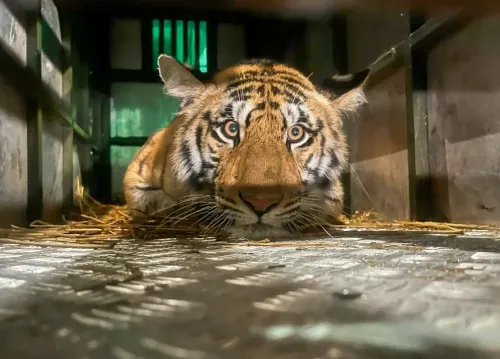
Iconic initiatives such as Project Tiger, Project Elephant, and Project Dolphin have made remarkable progress, while Project Cheetah and Project Snow Leopard signify new milestones in species recovery, according to the Press Information Bureau report. India also spearheads the International Big Cat Alliance, reinforcing its leadership in global conservation efforts.
Acknowledging the challenges posed by climate change, forest fires, and habitat loss, India has embraced a multi-faceted approach to ecosystem restoration.
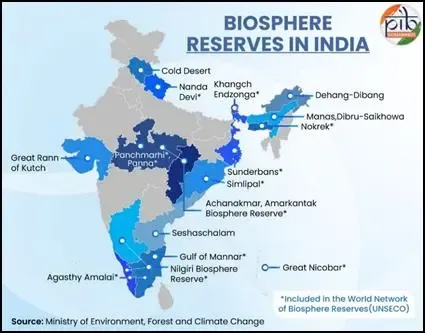
The biosphere reserve network now spans over 91,000 square kilometers, with 13 reserves recognized by UNESCO’s World Network.
In addition, the National Coastal Mission has been extended until 2031, with a budget of Rs 767 crore, to bolster coastal resilience.
People's engagement initiatives like “Ek Ped Maa Ke Naam” (One Tree in Mother’s Name) motivate citizens to plant a tree in tribute to their mothers, thereby contributing to environmental conservation.
This movement has grown to be one of the largest public-focused environmental initiatives, with 262.4 crore saplings planted by the end of last year.
Moreover, the Mission LiFE (Lifestyle for Environment) has rallied over six crore citizens towards climate-conscious actions, illustrating how behavioral changes can enhance structural reforms.
India's endeavors are closely aligned with the Sustainable Development Goals. The SDG India Index score climbed to 71 in 2023-24, showcasing advancements in clean energy, climate action, and inclusive growth.
Improvements in energy efficiency, increased recycling, and enhanced biodiversity governance collectively reaffirm the nation’s commitment to sustainable development.
The conservation strategy also encompasses wetlands and coastal areas, which are vital for biodiversity conservation, water security, and climate adaptation.
The Mangrove Initiative for Shoreline Habitats and Tangible Incomes has restored 4,536 hectares of mangroves by 2025, with India now home to 98 Ramsar wetlands, the highest number in Asia.
India's climate strategy is guided by the National Action Plan on Climate Change and its updated Nationally Determined Contributions under the Paris Agreement.
India has successfully reduced emissions intensity by 36% from 2005 to 2020 and achieved more than 50% of its installed electricity capacity from non-fossil sources, surpassing its 2030 target by five years.
The National Green Hydrogen Mission, launched in 2023, aims to establish India as a global hub for green hydrogen, with a goal of producing five million metric tonnes annually by 2030.
In conjunction with this, renewable energy capacity has skyrocketed to 263 GW, placing India third globally in solar power and fourth in wind and overall renewable capacity.
Groundbreaking projects such as Gujarat's Modhera, the nation’s first 24/7 solar-powered village, and Madhya Pradesh's Omkareshwar Floating Solar Park exemplify progressive approaches to clean energy.
India's environmental governance also tackles pressing issues related to pollution and waste. The National Clean Air Programme has improved air quality in 103 out of 130 targeted cities, with 25 cities achieving a 40% reduction in PM10 levels. Fly ash utilization has reached 97%, with applications in road construction, cement, and brick production.
The waste recycling infrastructure has expanded from 829 plants in 2019-20 to over 3,000 by 2025. Extended Producer Responsibility frameworks for plastics, e-waste, tires, and batteries have registered more than 71,000 producers, facilitating the recycling of 375 million tonnes of waste.
India's domestic achievements are bolstered by proactive international engagement. At COP30 in Brazil, India stressed the necessity for enhanced climate finance and technology transfer.
The country continues to lead the International Solar Alliance under the guiding principle of “One World, One Sun, One Grid,” and has made notable progress under the Montreal Protocol, achieving a 67.5% reduction in hydrochlorofluorocarbons by 2025, according to the report.
Point of View
It is crucial to acknowledge India's significant strides in climate action and biodiversity conservation. These efforts underscore a commitment to sustainable development, positioning India as a proactive player on the global stage while addressing pressing environmental issues.
NationPress
16 Sept 2026
Frequently Asked Questions
What is India's approach to climate justice?
India emphasizes climate justice by advocating for equity and sustainable development, ensuring that both environmental protection and economic growth go hand in hand.
How has India's biodiversity been impacted?
India, home to a vast array of species, has implemented various conservation programs to protect its unique biodiversity, expanding protected areas significantly over the years.
What initiatives are in place to combat climate change?
India has launched several flagship programs like Project Tiger and Project Dolphin, alongside the National Clean Air Programme, aimed at tackling climate change and promoting sustainable practices.
How does India plan to achieve its renewable energy goals?
With a target of producing five million metric tonnes of green hydrogen by 2030 and enhancing its renewable energy capacity significantly, India is on track to become a global leader in sustainable energy.
What role do citizens play in India's environmental initiatives?
Public participation campaigns, such as Ek Ped Maa Ke Naam, encourage citizens to contribute to environmental conservation, leading to the planting of over 262 crore saplings.