India's maritime model: Lessons South Africa can learn for Blue Economy growth
Synopsis
A new report positions India's maritime build-up — including four freshly inducted indigenous warships — as a template for South Africa's Blue Economy ambitions. With over 90% of South Africa's trade moving by sea and threats like piracy and illegal fishing rising, the case for linking naval strength to economic growth has rarely been stronger.
Key Takeaways
A report has identified India's maritime strategy as a key reference model for South Africa's Blue Economy development.
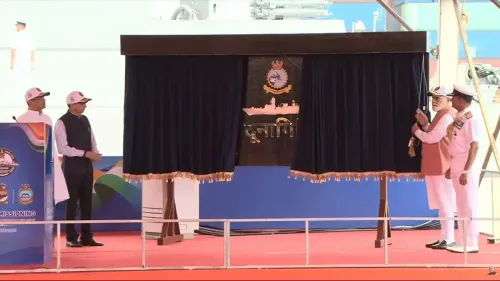
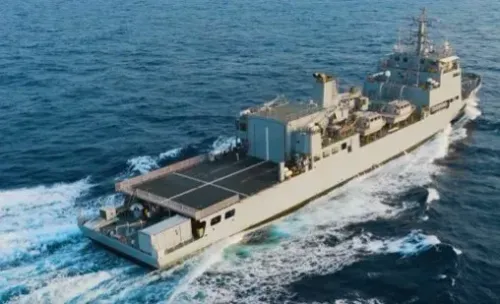
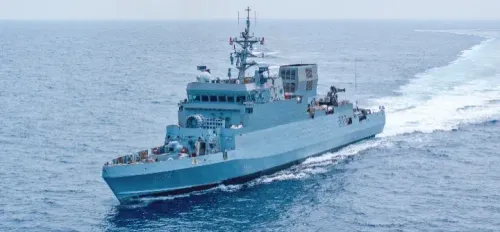
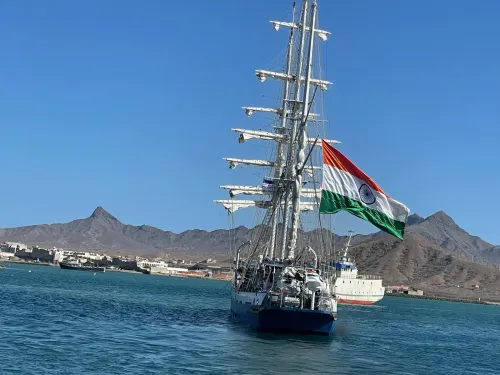
India recently inducted four indigenous naval platforms — INS Mahendragiri , INS Dunagiri , INS Sanshodhak , and INS Agray — significantly boosting its maritime defence capability.
Over 90 per cent of South Africa's trade by volume depends on secure Sea Lines of Communication .
Operation Phakisa is driving targeted investment in marine aquaculture, fish processing, and port upgrades at Durban and Cape Town .
President Cyril Ramaphosa has called for exploiting South Africa's natural resources to make the country a global ocean economy hub .
South Africa is cooperating with neighbouring nations via the SADC Integrated Maritime Security Strategy to counter maritime crime.
A recent report has outlined how South Africa can draw significant lessons from India's maritime strategy as it works to unlock the full potential of its Blue Economy, arguing that stronger maritime security is a direct enabler of economic growth and regional influence. The report highlights India's rapid induction of indigenous naval platforms as a benchmark for maritime nations seeking to combine defence capability with economic ambition.
India's Naval Build-Up as a Reference Point
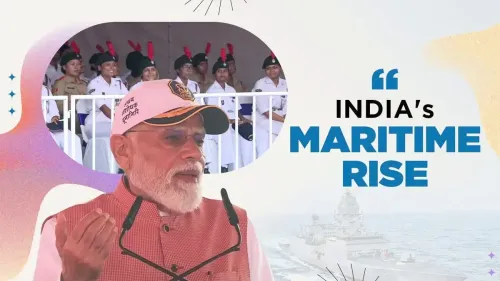
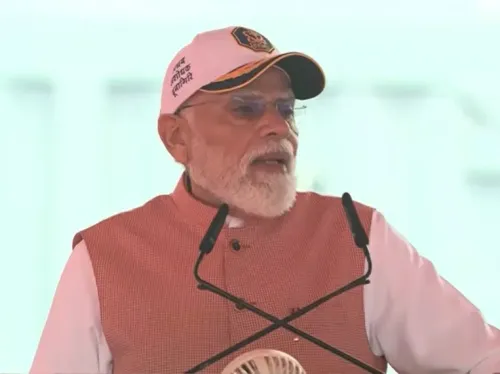
The report pointed to India's recent commissioning of four new-generation indigenous naval platforms — INS Mahendragiri, INS Dunagiri, INS Sanshodhak, and INS Agray — as a concrete example of how a nation can meaningfully upgrade its maritime defence posture. Speaking at the induction ceremony, Prime Minister Narendra Modi stated that the new vessels would 'significantly strengthen the country's operational capabilities, enhance domain awareness, and bolster the security of its coastal waters amid growing geopolitical threats.'
The parallel drawn for South Africa is clear: a credible naval presence is not merely a security expenditure but a precondition for sustained Blue Economy growth.
South Africa's Maritime Security Challenges
Threats including piracy, human trafficking, and illegal fishing have sharpened the urgency for South Africa to integrate maritime security with its economic agenda. With over 90 per cent of the country's trade by volume dependent on secure Sea Lines of Communication, the South African Navy is actively bolstering its Maritime Domain Awareness through integrated coastal radar networks and satellite monitoring systems, according to the report.
South Africa is also working through the SADC Integrated Maritime Security Strategy to conduct joint patrols with neighbouring African nations and harmonise standards against maritime crime — a multilateral approach that mirrors regional cooperation frameworks adopted elsewhere.
Blue Economy Investments and Port Upgrades
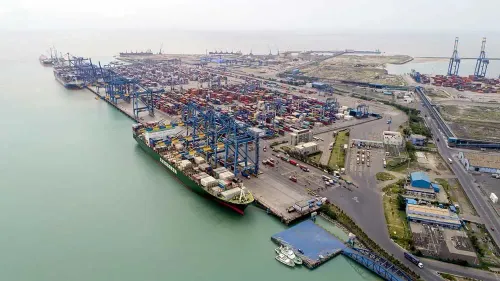
On the economic side, South Africa is upgrading port infrastructure and ship-repair facilities at major hubs including Durban and Cape Town. Operation Phakisa, the government's flagship initiative focused on unlocking the economic potential of the country's oceans, is channelling targeted investment into marine aquaculture and fish processing to generate coastal employment and strengthen food security.
The country has also expanded its Marine Protected Areas to help replenish fish stocks and support coastal tourism — twin pillars of a long-term Blue Economy strategy. Notably, this combination of conservation and commerce reflects a broader global shift in how maritime nations are structuring their ocean economies.
Ramaphosa's Vision for an Ocean Economy Hub
South African President Cyril Ramaphosa has publicly underscored the strategic importance of the maritime domain. Following a guided tour of the Port of Ngqura's operations in April, Ramaphosa was quoted as saying: 'South Africa has got huge and wonderful natural resources, which we need to exploit to a higher level… we can grow our economy enormously and make South Africa a hub as far as the ocean economy is concerned.'
The report observed that both India and South Africa are increasingly recognising the maritime sector not as an isolated industry but as a broad catalyst for employment and economic expansion — a framing that positions ocean policy at the centre of national development strategy.
What Comes Next
As South Africa deepens its Blue Economy investments and aligns security with economic goals, the India model — built on indigenous naval capability, coastal surveillance, and sector-linked incentives — offers a replicable framework. Whether Pretoria can translate policy intent into measurable maritime outcomes will depend on sustained investment, regional cooperation, and the institutional capacity to enforce maritime law at scale.
Point of View
The more immediate lesson may not be the hardware but the institutional integration — how India has linked coastal surveillance, naval presence, and trade corridor security into a coherent doctrine. South Africa's Operation Phakisa has the right framing, but execution has lagged ambition since its 2014 launch. The real question is whether Ramaphosa's rhetoric at Port of Ngqura translates into budget allocations and enforcement capacity, or remains another vision document.
NationPress
16 Sept 2026
Frequently Asked Questions
What lessons can South Africa learn from India's maritime model?
According to the report, South Africa can learn from India's approach of integrating indigenous naval capability, coastal surveillance, and maritime security to support Blue Economy growth. India's recent induction of four new warships is cited as evidence that domestic naval investment directly enhances both defence posture and economic confidence.
Which Indian naval vessels were recently commissioned?
India inducted four new-generation indigenous platforms — INS Mahendragiri, INS Dunagiri, INS Sanshodhak, and INS Agray. Prime Minister Narendra Modi said the vessels would strengthen operational capabilities and enhance coastal security amid growing geopolitical threats.
What is South Africa's Blue Economy and why does it matter?
South Africa's Blue Economy refers to the sustainable use of ocean resources for economic growth, including shipping, marine aquaculture, fish processing, port services, and coastal tourism. Over 90 per cent of the country's trade by volume moves by sea, making maritime security a direct economic priority.
What is Operation Phakisa?
Operation Phakisa is South Africa's government initiative to unlock the economic potential of its oceans. It channels investment into marine aquaculture, fish processing, and port infrastructure at hubs like Durban and Cape Town, with the goal of creating coastal jobs and supporting food security.
What did President Ramaphosa say about South Africa's ocean economy?
Following a tour of the Port of Ngqura in April, President Cyril Ramaphosa said South Africa has 'huge and wonderful natural resources, which we need to exploit to a higher level,' adding that the country can 'grow our economy enormously and make South Africa a hub as far as the ocean economy is concerned.'