Impact of Iran Conflict on India's Oil Imports: Key Insights from Amitabh Kant
Synopsis
As geopolitical tensions rise due to the Iran conflict, India's oil import costs may surge, affecting the economy and the rupee, warns Amitabh Kant. He stresses the importance of energy independence and reliable clean power delivery in India's energy transition.
Key Takeaways
Geopolitical tensions may raise India's oil import costs.
Every $10 increase in crude prices could add $13-14B to imports.
India imports over 85% of its crude oil needs.
Strategic reserves will help cushion against price spikes.
Energy independence is vital for economic stability.
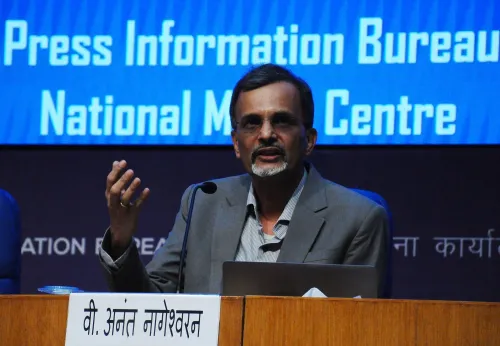
New Delhi, March 5 (NationPress) Heightened geopolitical tensions arising from the Iran conflict may substantially escalate India's oil import expenses and put pressure on the rupee, asserted Amitabh Kant, former CEO of NITI Aayog, on Thursday.
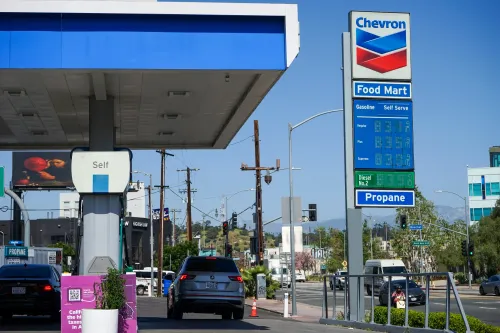
In a message on X, Amitabh Kant, who now advises global financial institutions, including Fairfax Financial Holdings and Sumitomo Mitsui Banking Corporation, highlighted that a $10 increase per barrel in global crude oil prices could lead to an additional $13-14 billion in India's annual import costs, exacerbate the current account deficit, and devalue the rupee.
He stated, "A $10 rise per barrel in crude prices has the potential to inflate India's annual import bill by $13–14 billion, widen the current account deficit, and exert pressure on the rupee. Geopolitical disturbances will continually challenge our energy security."
Kant underscored that India's forthcoming energy transition phase should not solely concentrate on augmenting renewable energy capacity but also on guaranteeing the dependable delivery of clean energy.
"The next step for India isn't just to increase clean energy capacity, but to ensure reliable clean energy delivery domestically: high-PLF solar-wind hybrids, momentum in electric vehicles, modern grid systems, large-scale batteries, pumped hydro storage, and consistent low-carbon baseload sources like nuclear. We require a comprehensive approach," he noted.
The former IAS officer, who has held roles as India's G20 Sherpa and NITI Aayog's CEO, further emphasized that the nation must concentrate on execution and reliability during its energy transition.
He pointed out that achieving energy independence is critical for economic resilience.
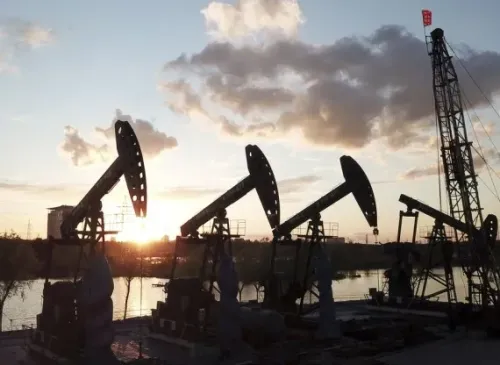
India currently relies on imports for over 85% of its crude oil needs, rendering the economy highly vulnerable to global price volatility, especially during geopolitical crises in key oil-producing areas.
Approximately 50% of these imports come from Middle Eastern nations via the Strait of Hormuz, a route that has faced disruptions due to the Iran conflict.
Nevertheless, the country has been diversifying its oil supply sources, increasing imports from Africa, Russia, and the United States, while building resilience through strategic reserves.
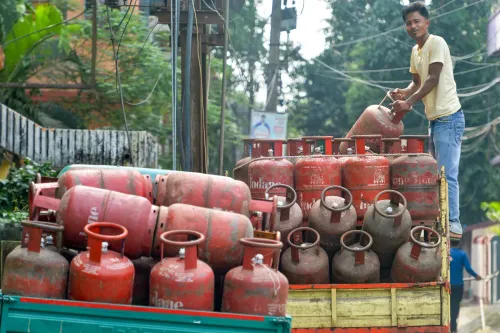
Presently, India maintains a relatively secure status regarding crude oil, LPG, and LNG, boasting a reserve stock that covers 25 days for crude and 25 days for products, including quantities in transit to the nation’s ports, as per government sources.
India's oil marketing companies, such as Indian Oil, Bharat Petroleum, and Hindustan Petroleum, have sufficient supply for several weeks and continue to receive energy supplies from various routes.
Additionally, the government has instructed oil marketing companies to refrain from exporting petroleum products to further bolster the buffer stock.
India's oil storage capacity includes 2.25 million metric tonnes (MMT) at Pudur, 1.33 MMT at the Visakhapatnam facility, and 1.5 MMT at Mangalore.
These strategic reserves can be tapped in emergencies or when global prices surge, providing a safety net for national oil companies.
Point of View
The implications of rising oil import costs due to geopolitical tensions are significant. Amitabh Kant's insights emphasize the need for energy security and diversified sources to mitigate risks. A focus on reliable clean energy delivery will be crucial for India's economic stability.
NationPress
6 Oct 2026
Frequently Asked Questions
How does the Iran conflict affect India's oil imports?
The Iran conflict may lead to increased global crude oil prices, significantly raising India's oil import bill and impacting the rupee's value.
What percentage of crude oil does India import?
India imports over 85% of its crude oil requirements, making it highly vulnerable to global price fluctuations.
What measures is India taking to secure its energy supply?
India is diversifying its oil sources, increasing imports from Africa, Russia, and the US, and building strategic reserves.
What is the importance of energy independence for India?
Energy independence is crucial for India's economic resilience, helping to mitigate the impacts of global market volatility.
How can India ensure reliable clean power delivery?
India can focus on high-PLF solar-wind hybrids, modern grid systems, and consistent low-carbon baseload sources like nuclear.