Strait of Hormuz will not reopen while US naval blockade persists, Iran says
Synopsis
Iran has made it unambiguous: the Strait of Hormuz stays shut until Washington lifts its naval blockade. With no active US-Iran negotiations and a parallel Iran-Oman maritime route deal still being finalised, the world’s most critical energy chokepoint remains in diplomatic limbo — and global oil markets are watching every word from Tehran.
Key Takeaways
Iran’s Foreign Ministry spokesperson Esmaeil Baqaei stated on 10 August that the Strait of Hormuz will not reopen while the US naval blockade against Iran persists.
Baqaei attributed the closure to US and Israeli military aggression and demanded Washington reverse its ‘destructive actions’ before any talks on next steps.
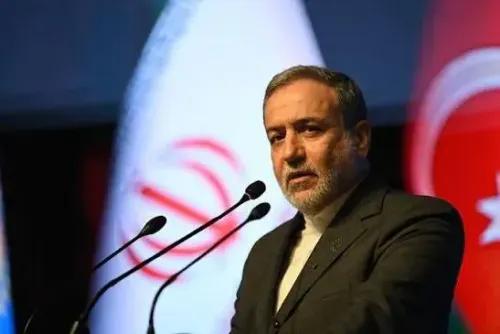
Foreign Minister Seyed Abbas Aragchi confirmed on Sunday that Iran has no active negotiations with the United States , with intermediaries still attempting to restart talks.
Iran is in the final stage of negotiations with Oman on an alternative sea route, but Aragchi stressed this would not automatically reopen the Strait of Hormuz.
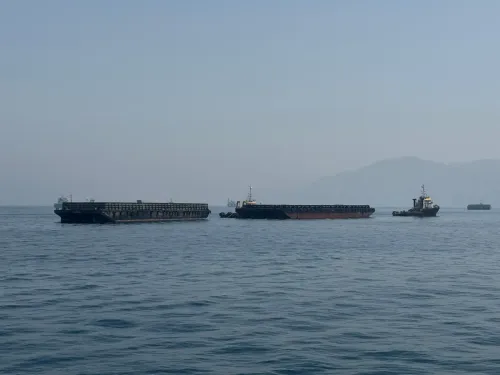
The strait is a key global energy corridor, carrying oil and LNG exports from major Gulf producers to international markets.
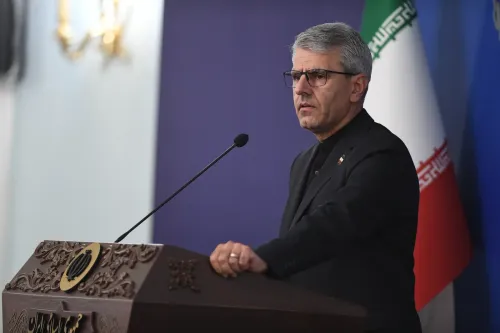
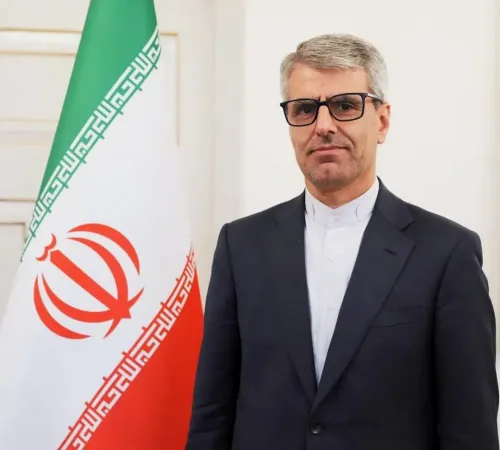
Iran's Foreign Ministry spokesperson Esmaeil Baqaei declared on Monday, 10 August that the Strait of Hormuz will remain closed for as long as the United States maintains its naval blockade against Tehran. Speaking at his weekly press briefing in Tehran, Baqaei attributed the closure directly to what he described as US and Israeli military aggression against Iran.
What Baqaei Said
“As long as the US naval blockade continues, the necessary conditions for the reopening of the Strait of Hormuz do not exist,” Baqaei said, according to Iran’s semi-official Tasnim News Agency. He added that Washington must halt and reverse its “destructive actions” before any discussion of next steps could take place.
Baqaei framed the waterway’s reopening as conditional on the removal of restrictions imposed by both US and Israeli authorities, making clear that Tehran views the closure as a direct consequence of external pressure rather than a unilateral Iranian decision.
Why the Strait of Hormuz Matters
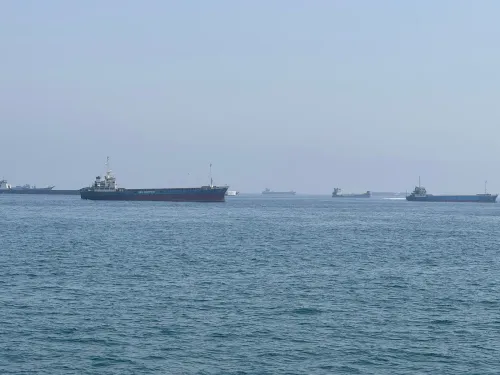
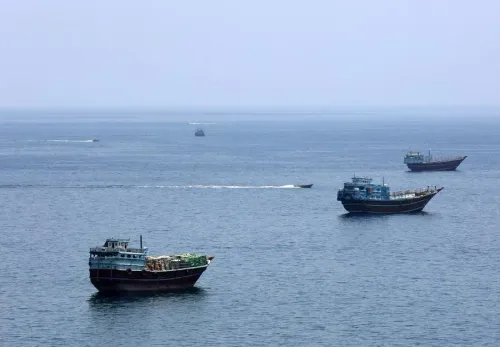
The Strait of Hormuz connects the Persian Gulf with the Gulf of Oman and the Arabian Sea, making it one of the world’s most critical energy corridors. A significant share of global oil and Liquefied Natural Gas (LNG) exports from major Gulf producers transit this narrow waterway en route to international markets. Any prolonged closure carries severe implications for global energy prices and supply chains.
Iran-Oman Shipping Route Talks
Baqaei noted that separate discussions between Iran and Oman regarding an alternative shipping route are a bilateral matter between the two nations and should not be conflated with the broader question of reopening the strait.
Iranian Foreign Minister Seyed Abbas Aragchi, speaking a day earlier on Sunday at the Centre for Political and International Studies of the Ministry of Foreign Affairs, confirmed that Iran is in the “final stage” of negotiations with Oman on determining a new sea route. However, he was explicit that such an agreement would not automatically translate into a reopening of the Strait of Hormuz.
“Of course, this does not mean the opening of the Strait of Hormuz. This agreement may be reached, but the opening of the Strait of Hormuz is subject to a series of conditions,” Aragchi said, according to reports.
No Negotiations With the US
Aragchi also confirmed on Sunday that Iran currently has no active negotiations with the United States. “We currently have no negotiations with the United States. Intermediaries are still making efforts to find ways to resume negotiations,” he said.
He stressed that any resumption of talks is contingent on Washington ending its violations of a Memorandum of Understanding (MoU) and making amends for what Iran characterises as breaches already committed. This comes amid a broader diplomatic deadlock between Tehran and Washington, with third-party intermediaries reportedly still attempting to bridge the gap.
What Happens Next
The closure of the Strait of Hormuz, if sustained, risks accelerating energy market volatility globally. The Iran-Oman maritime route discussions, while at an advanced stage, are unlikely to serve as a full substitute for the strait’s strategic throughput. Analysts will be watching whether intermediary diplomatic efforts yield any movement on the US-Iran MoU dispute in the coming weeks.
Point of View
Not a humanitarian gesture waiting to happen. By tying the reopening explicitly to the lifting of the US naval blockade and compliance with an MoU, Iran has set conditions that Washington has shown no sign of meeting. The parallel Oman channel is notable — it signals Tehran is managing economic pressure without ceding its primary leverage. What mainstream coverage underplays is the MoU dimension: the specific violations Iran cites remain undefined in public statements, giving both sides room to manoeuvre but also room to stall indefinitely. The longer the strait stays closed, the more Gulf energy producers and Asian importers will be forced into contingency planning that could structurally reduce dependence on the Hormuz route — an outcome that weakens Iran’s long-term leverage even as it maximises short-term pressure.
NationPress
24 Sept 2026
Frequently Asked Questions
Why is Iran keeping the Strait of Hormuz closed?
Iran says the strait was closed due to US and Israeli military aggression and has made its reopening conditional on the United States ending its naval blockade and reversing what Tehran describes as destructive actions. Foreign Ministry spokesperson Esmaeil Baqaei stated on 10 August that the necessary conditions for reopening do not exist as long as the blockade continues.
Are Iran and the US currently in negotiations?
No. Iranian Foreign Minister Seyed Abbas Aragchi confirmed on Sunday that there are currently no active negotiations between Iran and the United States. Intermediaries are reportedly still working to find a path to resuming talks, but Iran has set a precondition that the US must end violations of a Memorandum of Understanding (MoU) first.
What is the significance of the Strait of Hormuz?
The Strait of Hormuz connects the Persian Gulf with the Gulf of Oman and the Arabian Sea, and is one of the world’s most critical energy chokepoints. A large share of global oil and LNG exports from major Gulf producers passes through this waterway to reach international markets, making its closure a major risk for global energy supply and prices.
What is the Iran-Oman shipping route deal about?
Iran and Oman are in the final stages of negotiating an alternative sea route as a bilateral arrangement between the two countries. However, Foreign Minister Aragchi explicitly clarified that reaching this agreement does not mean the Strait of Hormuz will reopen, as that remains subject to a separate set of conditions tied to the US naval blockade.
What conditions has Iran set for reopening the Strait of Hormuz?
Iran has stated that the US must end its naval blockade and make amends for violations of a Memorandum of Understanding (MoU) before conditions for reopening the strait can exist. Aragchi also indicated that both sides would need to discuss next steps, suggesting a multi-stage diplomatic process would be required.