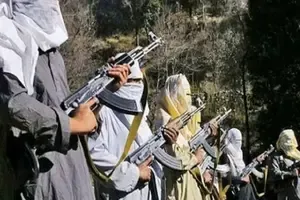
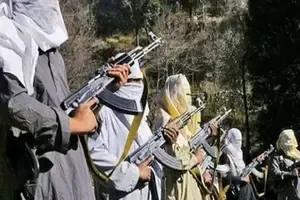
Agencies Warn of Increased ISKP Infiltration Attempts Amid Afghanistan Crisis

Synopsis
As Afghanistan's turmoil escalates, Indian agencies caution about heightened infiltration attempts into Jammu and Kashmir by ISKP terrorists. With over 500 militants ready at launch pads, the situation remains critical.
Key Takeaways
Over 500 terrorists are poised for infiltration from Pakistan-occupied Kashmir.
The ISKP is likely to exploit the Afghanistan crisis.
Indian security agencies are on high alert at the borders.
The situation in Afghanistan remains dire, affecting regional security.
New Delhi, March 17 (NationPress) The dire situation in Afghanistan has escalated, particularly after a recent attack on a hospital that resulted in 400 fatalities. As conditions are expected to deteriorate further, Indian intelligence agencies have issued a warning about possible new infiltration attempts into Jammu and Kashmir amid the chaos.
An official from the Intelligence Bureau indicated that communications intercepted reveal that the launch pads in Pakistan-occupied Kashmir (PoK) are operational again, with over 500 terrorists poised to cross into India.
While most of these terrorists are affiliated with Jaish-e-Mohammad and Lashkar-e-Taiba, the ongoing conflict in Afghanistan has added a new dynamic to the situation.
Recent intelligence suggests that the Islamic State Khorasan Province (ISKP) is planning to exploit the turmoil in Afghanistan to initiate infiltrations into Jammu and Kashmir, according to the official.
The Pakistani government, having enlisted the ISKP to counter the Balochistan Liberation Army (BLA) and the Tehreek-e-Taliban Pakistan (TTP), is unlikely to oppose ISKP's attempts to gain a foothold in Jammu and Kashmir.
Historically, there was a clear boundary regarding territorial claims, with Jammu and Kashmir being primarily viewed as the domain of Jaish and Lashkar.
However, the ISKP has made its intentions concerning Jammu and Kashmir known in the past, but lacked the necessary support from the ISI or the Pakistan Army to establish a presence.
Given the changing circumstances, there is now a heightened alert for potential infiltrations by ISKP militants.
Indian security agencies are on high alert along the borders of both Punjab and Jammu and Kashmir.
With the situation in Afghanistan deteriorating, these terror groups are likely counting on Indian agencies being distracted and potentially unprepared.
These organizations are attempting to capitalize on the current instability by increasing their infiltration efforts, hoping that Indian security forces may falter at least occasionally.
Intelligence agencies had previously warned that experienced terrorists could cross into India via the Afghan border, taking advantage of the compromised security.
Currently, India maintains good relations with Afghanistan, with Kabul assuring New Delhi that its territory will not be used as a staging ground for attacks.
While these improved ties bolster India's counter-terrorism efforts, the prevailing conditions in Afghanistan pose a significant risk, as the security apparatus there is under considerable strain, which could be exploited by terrorists, according to officials.
Another official cautioned about the potential for spillover effects from the ongoing conflict, suggesting that ISKP militants might enter Pakistan, exploiting the current security weaknesses, and subsequently move into India.
Earlier this month, Indian security forces thwarted a significant infiltration attempt in Jammu and Kashmir’s Uri. Officials report that infiltration attempts persistently remain a serious concern, keeping security agencies vigilant.
However, the Army asserts that it is fully equipped to counter any such infiltration attempts.
Regarding the situation in Afghanistan, experts predict no immediate improvement. Pakistan is expected to intensify its military operations, with the Afghan Taliban vowing to avenge the attack that claimed 400 civilian lives and may launch strikes on border posts. Increased cross-border guerrilla assaults targeting Pakistani security forces are also anticipated, according to analysts.
Point of View
The current situation is alarming. The potential for increased terrorist activity in Jammu and Kashmir, fueled by the chaos in Afghanistan, demands urgent attention and strategic responses from Indian security forces to safeguard national integrity.
NationPress
8 Sept 2026
Frequently Asked Questions
What triggered the recent warnings from Indian agencies?
The warnings stem from the escalating situation in Afghanistan, particularly following a devastating attack that killed 400 people, leading to concerns over increased infiltration attempts into Jammu and Kashmir.
How many terrorists are reportedly waiting to infiltrate?
Reports indicate that over 500 terrorists are stationed at launch pads in Pakistan-occupied Kashmir, ready to cross into India.
What role is the ISKP playing in this situation?
The ISKP is expected to exploit the chaos in Afghanistan to initiate infiltration attempts into Jammu and Kashmir, taking advantage of the current distraction.
What measures are Indian security agencies taking?
Indian security agencies are maintaining a heightened state of alert along the Punjab and Jammu and Kashmir borders to counter potential infiltration attempts.
What are the implications of the deteriorating situation in Afghanistan?
The ongoing instability in Afghanistan poses a significant threat as it may allow terrorist groups to increase their activities, including infiltration into India.