Jaish-e-Mohammad's Shift to Criminal Networks in North India

Synopsis
In light of dwindling funds and heightened security, the Jaish-e-Mohammad has shifted strategies, directing its operatives in India to engage in criminal activities, including extortion and kidnapping, to finance operations in Jammu and Kashmir.
Key Takeaways
Jaish-e-Mohammad is adapting to new funding challenges.
Operatives are engaging in extortion and kidnappings.
Increased security measures are hindering infiltration efforts.
The organization is expanding its criminal operations into neighboring states.
Authorities are actively combating these evolving threats.
New Delhi, March 28 (NationPress) The Jaish-e-Mohammad is currently in a transitional phase, prompting its operatives in India to explore alternative funding avenues for their activities in Jammu and Kashmir.
This group suffered significant setbacks during Operation Indoor, with its headquarters in Bahawalpur destroyed and its leader, Masood Azhar, losing many close family members.
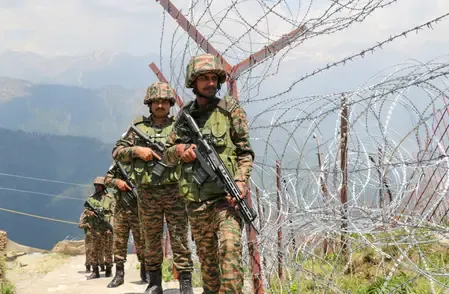
Although numerous Jaish-e-Mohammad operatives remain in Pakistan-occupied Kashmir (PoK) awaiting opportunities to infiltrate India, stringent security measures have hampered these attempts.
Consequently, Jaish-e-Mohammad members in Jammu and Kashmir have been instructed to gather funds and recruit local individuals for future attacks.
An official from the Intelligence Bureau reported the presence of several overground workers (OWGs) in Jammu and Kashmir who have been tasked with organizing an extortion scheme.
These OWGs are compiling a hit list targeting affluent individuals not only in Jammu and Kashmir but also in Punjab, Haryana, and New Delhi. The objective is to extort money from wealthy individuals, as well as to conduct kidnappings for ransom, the official noted.
Moreover, the Jaish-e-Mohammad is developing a spy network under the guidance of the ISI. The OWGs are encouraged to identify and recruit susceptible individuals in bordering states into this espionage network, according to officials.
The group continues to maintain hundreds of OWGs in Jammu and Kashmir, who have been advised to refrain from engaging in violent acts in the Valley for now. Instead, they are focusing on generating funds through extortion and kidnappings.
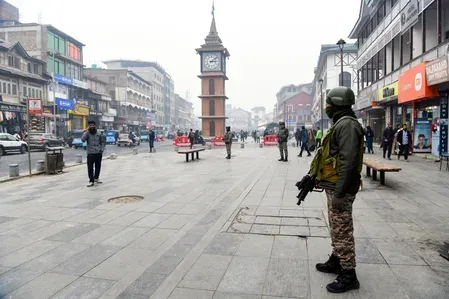
Another official pointed out a notable shift in strategy, as the organization faces escalating difficulties in operational activities. Following the Pahalgam attack, security measures have intensified at both borders and within Jammu and Kashmir, making infiltration increasingly challenging.
A pressing issue for the Jaish-e-Mohammad is funding, as financial resources have dwindled significantly. Consequently, operatives in the Valley have been directed to be self-sufficient in their fundraising efforts.
Officials indicate that the Jaish-e-Mohammad acknowledges the challenges of infiltration, leading them to adapt their strategy towards more localized operations.
For these plans to materialize, however, they require substantial funds. With cross-border financing severely restricted due to heightened security, OWGs are now compelled to generate their own revenue. Jaish-e-Mohammad-affiliated OWGs are expanding into Haryana and Delhi, in addition to Jammu and Kashmir.
Many OWGs have diversified their activities and are seeking to extort money from affluent individuals.
Officials warn that these groups may also attempt to kidnap wealthy individuals' children and demand ransom. The money generated is intended to support the establishment of modules and fund Jaish-e-Mohammad's operations in Jammu and Kashmir, the official added.
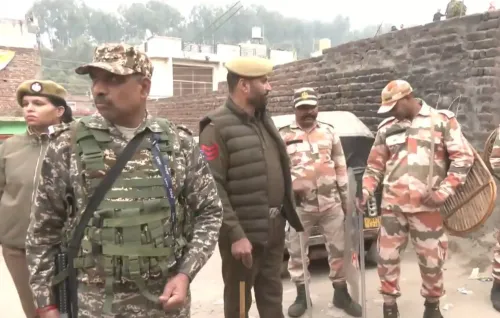
The shift in tactics became evident when police dismantled a module in Mohali, Punjab, resulting in the arrest of Sahil Bashir, 19, from Handwara, Jammu and Kashmir, along with two others for murder. The police allege they shot a driver, Anil Kumar, in a carjacking incident aimed at raising funds.
According to police reports, this illustrates a clear intent to generate funds through criminal activities. Bashir, who orchestrated the operation, was already a wanted individual under the Unlawful Activities (Prevention) Act (UAPA).
After murdering the driver, the assailants fled with his possessions, clearly indicating the motive behind the carjacking.
Intelligence agencies caution that this trend may extend to Haryana and Delhi, as the Jaish-e-Mohammad has already outlined significant plans for kidnapping and extortion. The incident in Punjab serves as an early warning of the group's broader intentions in other states, officials assert.
Point of View
It's imperative to highlight the alarming trend of terrorist organizations like Jaish-e-Mohammad adapting to operational challenges. Their shift towards criminal enterprises not only poses significant threats to public safety but also raises concerns about regional security dynamics.
NationPress
10 Oct 2026
Frequently Asked Questions
What is the Jaish-e-Mohammad?
The Jaish-e-Mohammad is a militant group based in Pakistan known for its involvement in terrorist activities, particularly in Jammu and Kashmir.
Why has the Jaish-e-Mohammad shifted its strategy?
Due to increased security measures and reduced funding, the Jaish-e-Mohammad is now focusing on local criminal activities such as extortion and kidnappings to finance its operations.
What are overground workers (OWGs)?
Overground workers are individuals who support militant organizations by performing non-combat roles, including fundraising and recruitment.
How does this impact security in North India?
The involvement of the Jaish-e-Mohammad in criminal activities raises significant security concerns, as it can lead to increased violence and instability in the region.
What actions are authorities taking?
Law enforcement agencies are actively monitoring and dismantling criminal networks associated with the Jaish-e-Mohammad to mitigate threats.