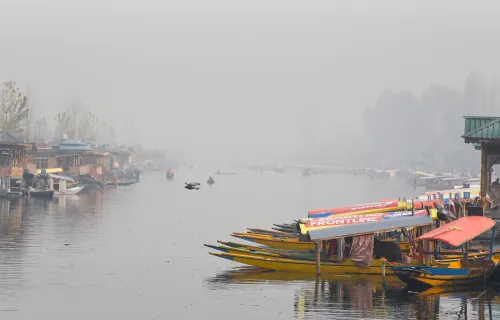
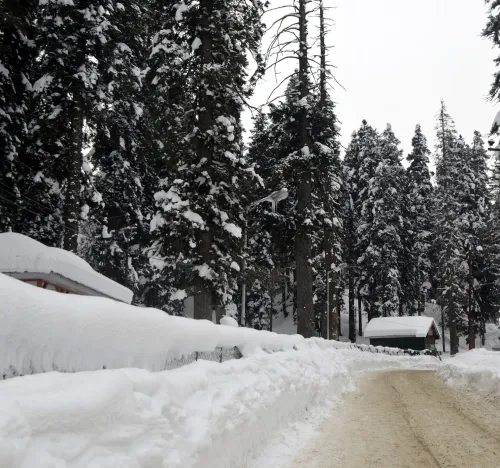
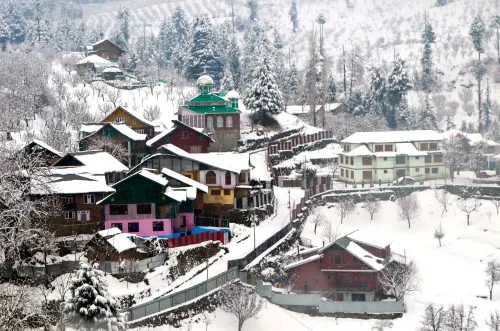
Has Fresh Snowfall Closed Highways and Disrupted Flights in Kashmir?
Synopsis
Recent heavy snowfall in Kashmir has led to the closure of the crucial Srinagar-Jammu national highway and the cancellation of numerous flights at Srinagar International Airport. With predictions of continued adverse weather, authorities are urging caution among travelers and farmers alike as the region experiences its harsh winter season.
Key Takeaways
Highway Closure: Srinagar-Jammu highway shut due to snowfall.
Flight Cancellations: Eight flights canceled at Srinagar Airport.
Weather Warnings: Continued adverse weather expected.
Travel Advisory: Avoid travel on affected roads.
Winter Significance: Snowfall vital for future water resources.
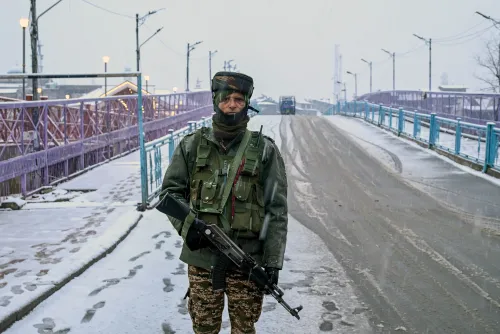
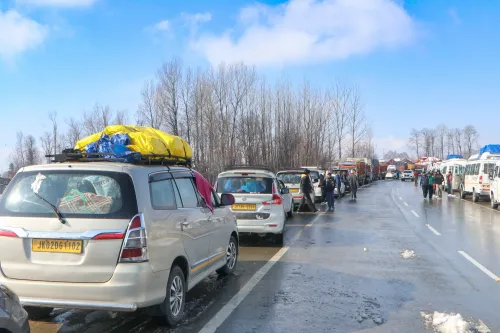
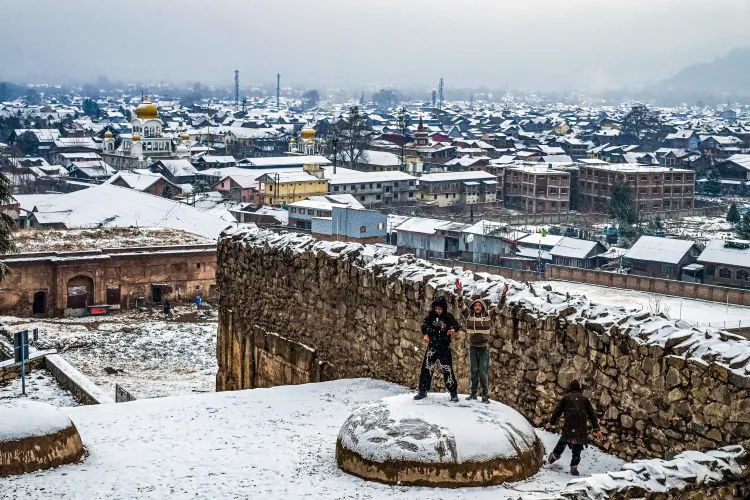
Srinagar, Jan 27 (NationPress) Recent snowfall on Tuesday resulted in the closure of the vital Srinagar-Jammu national highway for all vehicular traffic, while all morning flights at Srinagar International Airport faced cancellations.
Officials indicated that the Srinagar-Jammu national highway will be out of service until further notice as snow has accumulated at both ends of the Navyug Tunnel, located in the Qazigund area of Kulgam district and in Banihal, Ramban district.
A representative from the traffic department stated, “The Jammu-Srinagar National Highway (NH-44) is closed due to recent snowfall affecting the area around the NAVYUG Tunnel. No vehicular movement is permitted from Jammu to Srinagar and vice versa. Additionally, Mughal Road, SSG Road, and Sinthan Road are also closed.”
Travelers have been advised to refrain from using these roads until they are fully cleared and deemed safe for transit.
Officials at the airport reported that eight flights have been cancelled at Srinagar Airport due to adverse weather conditions.
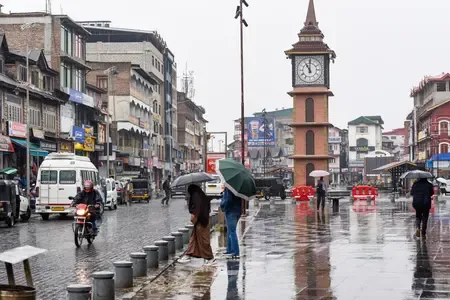
The Meteorological (MeT) Department has predicted light to moderate rain and snow across various locations on Tuesday, with a chance of heavy rain and snow accompanied by gusty winds in some areas of the union territory.
Forecasts also indicate light rain and snow for Wednesday. An advisory from the MeT Department urges travelers and transporters to verify the status of highways prior to embarking on journeys, as moderate to heavy rain, snow, thunder, and gusty winds are expected until the evening.
Farmers are advised to pause all agricultural activities until Wednesday, and residents in higher altitudes should avoid venturing into sloped and avalanche-prone regions.
The 40-day period of severe winter, known locally as 'Chillai Kalan', commenced on December 21 and will conclude on January 30.
The snowfall occurring towards the end of Chillai Kalan has alleviated concerns among Kashmiris regarding the sustainability of water bodies in the upcoming months.
The substantial snowfall during this 40-day span is crucial for replenishing the perennial water reservoirs in the mountains, which support various rivers, streams, springs, lakes, and other water bodies during the hot summer.
The current snowfall has eased local worries, leading to widespread joy among residents for nature's generous provision.
Point of View
It is crucial to provide a balanced perspective on the recent snowfall in Kashmir. While the closure of the Srinagar-Jammu highway and flight cancellations pose challenges for residents and travelers, the snowfall also holds significance for replenishing water resources, vital for the region's agriculture and ecosystems. Our coverage aims to inform and support the community during this winter season.
NationPress
22 Sept 2026
Frequently Asked Questions
Why was the Srinagar-Jammu highway closed?
The highway was closed due to fresh snowfall, which led to snow accumulation at critical points, making it unsafe for travel.
How many flights were canceled at Srinagar Airport?
A total of eight flights were canceled at Srinagar International Airport due to adverse weather conditions.
What is Chillai Kalan?
Chillai Kalan is a 40-day period of intense cold in Kashmir, which started on December 21 and ends on January 30.
What precautions should travelers take during heavy snowfall?
Travelers are advised to confirm the status of roads and avoid travel until conditions are safe.
How does snowfall impact water resources in Kashmir?
Snowfall during Chillai Kalan is essential for replenishing water reservoirs that sustain rivers and agriculture during the summer months.