Kuno National Park cheetah cubs: Botswana female births 4 in wild
Synopsis
For only the second time since India's cheetah reintroduction began in 2022, cubs have been born in the wild — and this time the mother is a Botswana-origin cheetah who had been living freely for over four months. With 43 of India's 62 cheetahs now born on home soil, the programme is quietly crossing the threshold from translocation exercise to self-sustaining wild population.
Key Takeaways
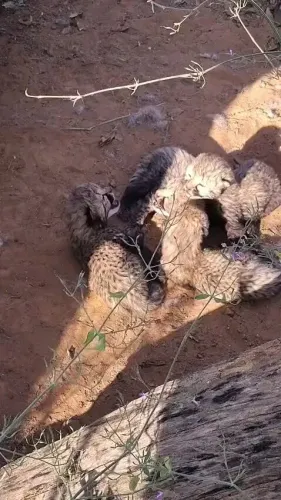
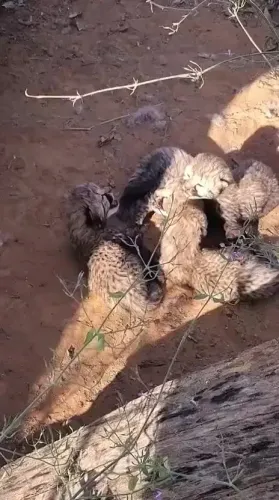
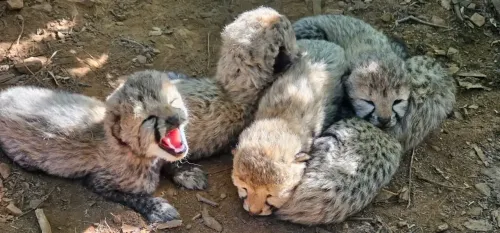
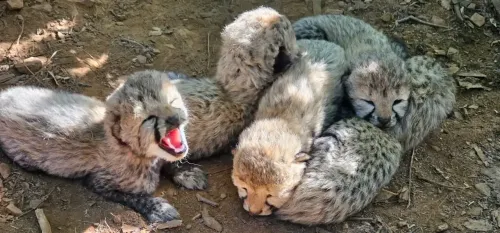
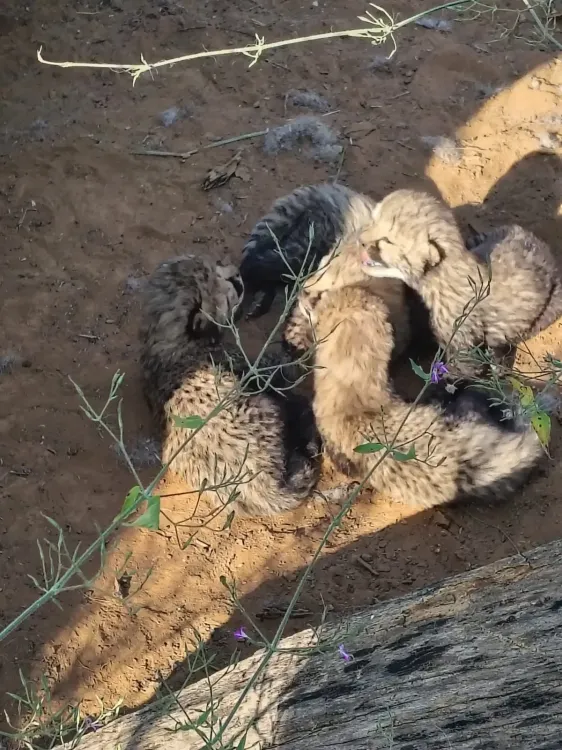
KOMG 3 , a two-and-a-half-year-old female cheetah from Botswana , gave birth to four cubs in the wild at Kuno National Park on 20 November 2026 .
India's total cheetah population now stands at 62 , with 43 born in the country.
This is only the second recorded instance of wild cheetah births since the reintroduction programme launched in September 2022 .
KOMG 3 had been living freely in the wild for more than four months before giving birth, indicating successful habitat adaptation.
India's cheetahs were declared extinct in 1952 ; the last documented individuals were shot in 1947 in present-day Chhattisgarh .
MP Chief Minister Mohan Yadav and Union Minister Bhupender Yadav both hailed the birth as a milestone for Project Cheetah .
A female cheetah translocated from Botswana, identified as KOMG 3, has given birth to four cubs in the open forest at Kuno National Park in Madhya Pradesh, officials confirmed on 20 November 2026. The development marks only the second recorded instance of cheetah cubs born in the wild since India's reintroduction programme began in September 2022, and brings the country's total cheetah population to 62, of which 43 have been born on Indian soil.
Key Details of the Birth
KOMG 3 is a two-and-a-half-year-old cheetah — the first female brought from Botswana to give birth in India. Kuno National Park Director Uttam Kumar Sharma confirmed that the birth took place under entirely natural conditions and that the mother had been living freely in the wild for more than four months before delivering the cubs, a strong indicator of successful habitat adaptation.
'This is a historic moment for Project Cheetah. The birth of four cubs in the wild reflects the successful adaptation of cheetahs to Indian conditions and marks progress towards establishing a viable population,' Sharma wrote on X.
What Government Officials Said
Madhya Pradesh Chief Minister Mohan Yadav congratulated wildlife experts, veterinarians, and forest personnel associated with Project Cheetah, calling the development a historic achievement and a matter of pride for the state. In a post on X, Yadav credited the milestone to India's commitment to wildlife conservation under Prime Minister Narendra Modi.
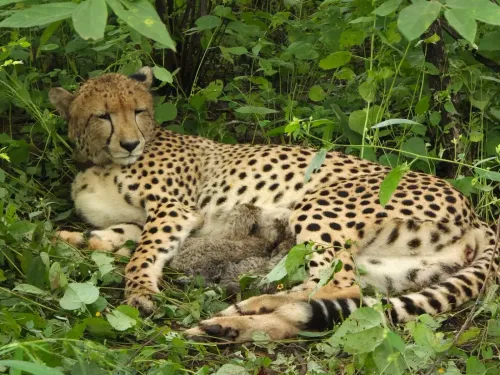
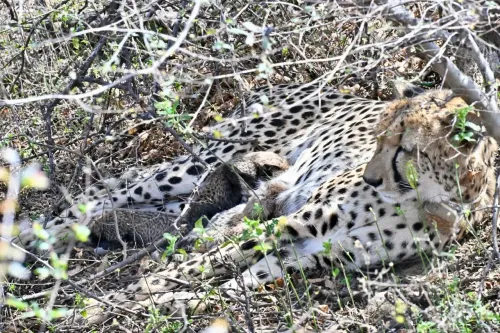
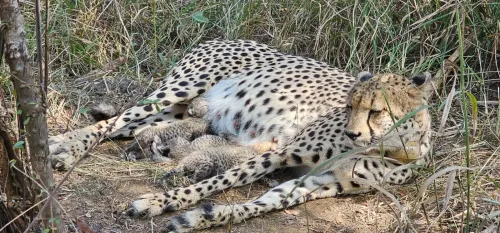
Union Environment, Forest and Climate Change Minister Bhupender Yadav also announced the birth on social media, sharing photographs of the mother and her four cubs, and described it as a proud milestone in India's efforts to restore a viable cheetah population.
Background: India's Long Road Back for the Cheetah
India's last documented cheetahs were shot in 1947 by Maharaja Ramanuj Pratap Singh Deo of Koriya in present-day Chhattisgarh. The species was officially declared extinct in India in 1952 — nearly eight decades before this latest birth.
The reintroduction effort was formally launched in September 2022 when eight cheetahs from Namibia arrived at Kuno. Subsequent batches were sourced from South Africa and Botswana. The programme aims to establish a self-sustaining population by enabling cheetahs to survive, hunt, and breed under natural Indian conditions.
Significance and What Comes Next
The survival and breeding of KOMG 3 after more than four months in free-ranging conditions demonstrates a qualitative leap in adaptation — a marker wildlife managers consider critical for long-term viability. Notably, with 43 of the 62 cheetahs now India-born, the demographic balance of the population is gradually shifting toward locally bred individuals, which conservationists regard as essential for genetic sustainability.
Officials from Kuno National Park said continuous monitoring by field staff will continue to ensure the safety of the mother and cubs in the weeks ahead, as the neonatal period remains the most vulnerable phase for wild cheetah populations.
Point of View
But whether imported animals could survive, adapt, and reproduce without human intervention — KOMG 3, living wild for four months before delivering, is the clearest proof of concept yet. With 43 of 62 cheetahs now India-born, the programme is approaching the demographic inflection point where natural increase outpaces attrition. The unresolved question is territory: Kuno's carrying capacity is finite, and the long-discussed second reintroduction site — Gandhi Sagar — has yet to receive animals. How quickly the government moves on expansion will determine whether this remains a conservation showcase or becomes a genuine population recovery.
NationPress
20 Nov 2026
Frequently Asked Questions
How many cheetah cubs were born at Kuno National Park and which cheetah is the mother?
Four cubs were born to KOMG 3, a two-and-a-half-year-old female cheetah translocated from Botswana. She is the first Botswana-origin female to give birth in India, and the birth took place under natural conditions in the open forest at Kuno National Park.
What is India's total cheetah population after this birth?
India's cheetah population has risen to 62 following the birth, with 43 of those having been born in the country. The remaining animals were brought from Namibia, South Africa, and Botswana as part of Project Cheetah.
When did India's cheetah reintroduction programme begin?
Project Cheetah was launched in September 2022 when eight cheetahs from Namibia arrived at Kuno National Park in Madhya Pradesh. Subsequent batches were sourced from South Africa and Botswana to build a genetically diverse founder population.
Why were cheetahs extinct in India in the first place?
India's last documented cheetahs were shot in 1947 by Maharaja Ramanuj Pratap Singh Deo of Koriya in present-day Chhattisgarh. The species was officially declared extinct in India in 1952, nearly eight decades before the current reintroduction programme.
Is this the first time cheetah cubs have been born in the wild in India?
No — this is the second recorded instance of cheetah cubs being born in the wild since the reintroduction programme began in 2022. The birth of KOMG 3's four cubs is notable because the mother had been living freely for more than four months before delivering, signalling a deeper level of adaptation than earlier births.