Lahore world's most polluted city again, AQI hits 537 on Sunday
Synopsis
Lahore hit an AQI of 537 on Sunday — 22 times over the WHO safe limit — reclaiming its grim title as the world's most polluted major city. Despite 84,370 brick-kiln inspections and PKR 178 million in fines this year, the air keeps getting worse. A new national report says this invisible crisis is already cutting Pakistani lives short by nearly four years.
Key Takeaways
Lahore recorded a hazardous AQI of 537 between 9 am and 10 am on Sunday, 22 November , topping global pollution rankings according to IQAir .
Other Punjab cities also ranked among the worst: Bahawalpur (536) , Sargodha (392) , Gujranwala (347) , Faisalabad (338) , and Sialkot (181) .
Lahore's annual average PM2.5 concentration exceeds 110 micrograms per cubic metre — more than 22 times the WHO annual guideline of 5 micrograms per cubic metre .
The Pakistan Air Quality Initiative (PAQI) estimates air pollution causes approximately 128,000 premature deaths per year and costs Pakistan 6.5% of GDP .
Prolonged exposure in Lahore could reduce life expectancy by up to 7 years , according to the PAQI report.
Punjab authorities conducted 84,370 brick-kiln inspections and imposed PKR 178 million in fines between January and 18 November , with limited visible impact on air quality.
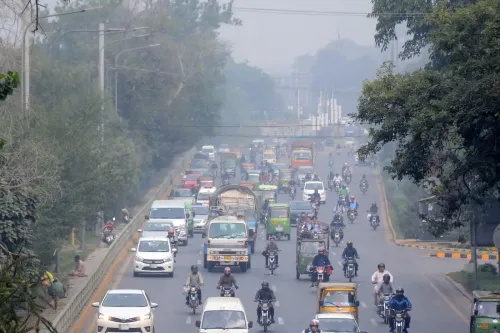
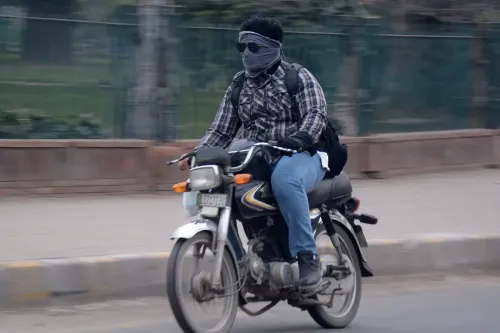
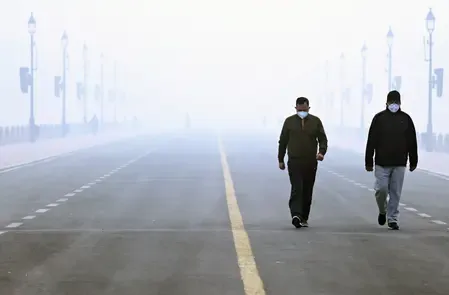
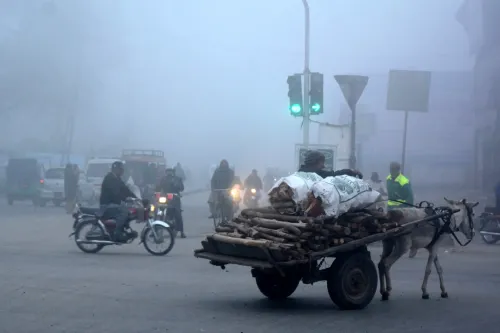
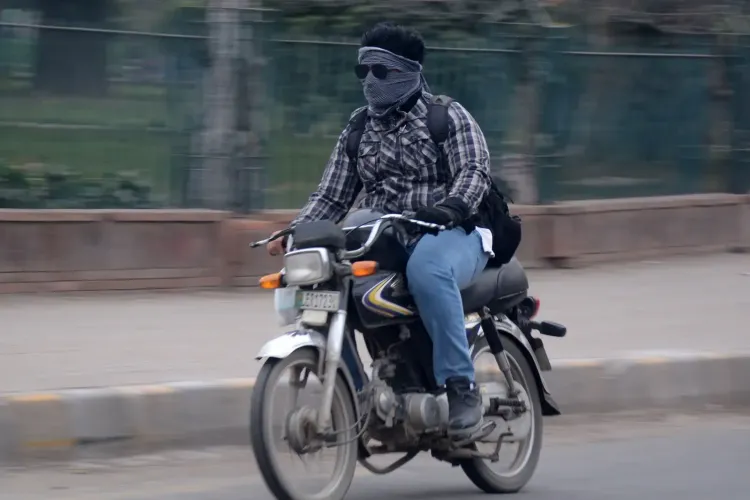
Lahore, Pakistan's second-largest city, was once again ranked the world's most polluted major city on Sunday, 22 November 2026, recording an Air Quality Index (AQI) of 537 between 9 am and 10 am local time — a level classified as 'hazardous' by global air quality standards. The reading was flagged by Swiss air quality monitoring firm IQAir and confirmed by Pakistan-based daily Dawn.
A Week of Hazardous Air
Sunday's peak of 537 was not an isolated spike. Lahore recorded an AQI of 465 on Friday and 266 on Saturday, underscoring a sustained, multi-day pollution crisis that has repeatedly pushed the city to the top of global pollution rankings in recent weeks. Winter weather conditions — which trap pollutants close to the ground — have further compounded the problem.
Other cities across Punjab province also featured prominently in IQAir's rankings. Bahawalpur recorded an AQI of 536, barely below Lahore, while Sargodha clocked 392, Gujranwala 347, Faisalabad 338, and Sialkot 181 — placing Punjab province among the most polluted regions in the world on this date.
Enforcement Steps That Have Not Moved the Needle
Despite aggressive crackdowns, air quality in Punjab has continued to deteriorate. The Punjab Environment Protection and Climate Change Department reported that enforcement teams conducted 84,370 inspections of brick kilns across the province between 1 January and 18 November. Authorities demolished 1,429 units, sealed 968, registered 1,248 FIRs against violators, and imposed fines totalling PKR 178 million. Yet the AQI data indicates these measures have not translated into measurable air quality improvement, at least not at the scale needed.
The Health and Economic Toll
A report released last month by the Pakistan Air Quality Initiative (PAQI), titled 'Unveiling Pakistan's Air Pollution: A National Landscape Report on Health Risks, Sources, and Solutions', estimated that air pollution cuts life expectancy in Pakistan by approximately 3.9 years and contributes to around 128,000 premature deaths annually. The report also assessed that pollution imposes an economic burden equivalent to 6.5% of Pakistan's GDP.
For Lahore specifically, the numbers are starker. The city's annual average PM2.5 concentration exceeds 110 micrograms per cubic metre — more than 22 times the World Health Organisation (WHO) annual guideline of 5 micrograms per cubic metre. Prolonged exposure at these levels, the report warned, could reduce life expectancy in Lahore by up to seven years.
What Is Driving the Pollution
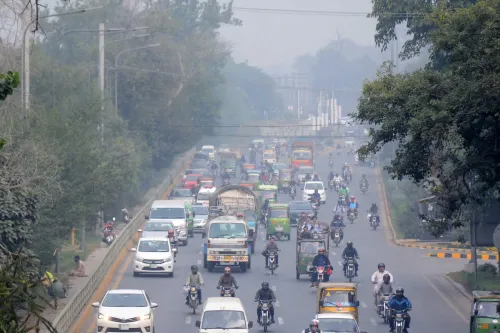
According to the PAQI report, transport is the single largest source of primary PM2.5 emissions in Lahore, followed by industry at 28% and brick kilns at 17%. The assessment — described as Pakistan's first harmonised, multi-sector emissions inventory — also covers carbon dioxide, nitrogen oxides (NOx), and sulphur dioxide (SO2), and examines pollution patterns across Karachi, Islamabad, Rawalpindi, Lahore, and Peshawar. It identified interventions that could reduce emissions by up to 50% if implemented.
What Comes Next
With winter deepening across the Indo-Gangetic plain — a geography that Lahore sits squarely within — meteorological conditions are unlikely to ease in the near term, and air quality may deteriorate further before improving. The PAQI report's proposed reduction pathways offer a roadmap, but meaningful improvement will require policy enforcement at a scale that Pakistan's authorities have not yet demonstrated.
Point of View
000 inspections, nearly 1,250 FIRs, PKR 178 million in fines. But if the city is still recording AQI readings above 500 after all that, the enforcement model itself needs interrogation. The PAQI report's finding that transport — not just brick kilns — is the primary PM2.5 driver points to a policy mismatch: Punjab has focused its crackdown on a source that accounts for 17% of emissions while the dominant contributor rolls freely through the streets. Until decarbonisation of transport and industry is treated as an emergency rather than a long-term aspiration, Lahore will keep topping the wrong rankings.
NationPress
22 Nov 2026
Frequently Asked Questions
What was Lahore's AQI on 22 November 2026?
Lahore recorded an AQI of 537 between 9 am and 10 am on Sunday, 22 November, according to Swiss air quality monitoring firm IQAir. This level is classified as 'hazardous' and placed Lahore at the top of global pollution rankings for major cities.
Why is Lahore's air quality so poor?
According to a report by the Pakistan Air Quality Initiative (PAQI), transport is the largest source of primary PM2.5 emissions in Lahore, followed by industry at 28% and brick kilns at 17%. Winter weather conditions trap pollutants near the ground, sharply worsening air quality between October and February.
How does Lahore's pollution compare to WHO safety standards?
Lahore's annual average PM2.5 concentration exceeds 110 micrograms per cubic metre, which is more than 22 times the WHO annual guideline of 5 micrograms per cubic metre. Prolonged exposure at these levels could reduce life expectancy in the city by up to seven years, the PAQI report warned.
What is the health and economic cost of air pollution in Pakistan?
The PAQI estimates that air pollution contributes to approximately 128,000 premature deaths in Pakistan each year and reduces average life expectancy by 3.9 years. The economic burden is assessed at 6.5% of Pakistan's GDP.
What steps has the government taken to address pollution in Punjab?
The Punjab Environment Protection and Climate Change Department conducted 84,370 inspections of brick kilns between 1 January and 18 November, demolishing 1,429 units, sealing 968, and registering 1,248 FIRs. Fines totalling PKR 178 million were also imposed, though the measures have not yet produced a measurable improvement in AQI readings.