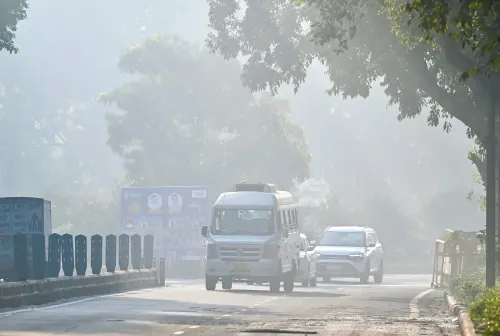
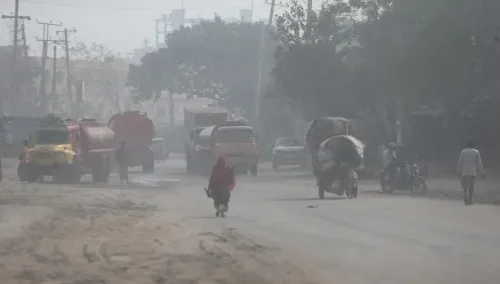
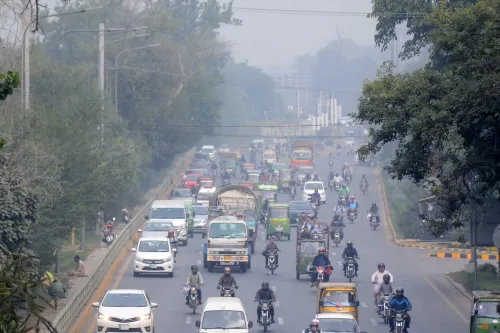
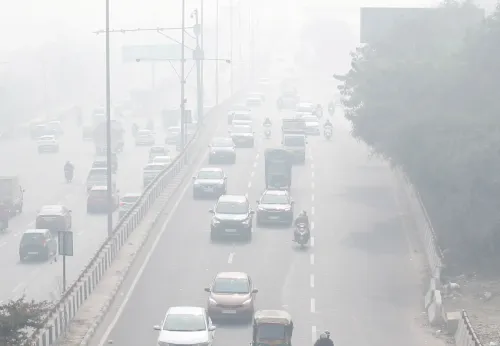
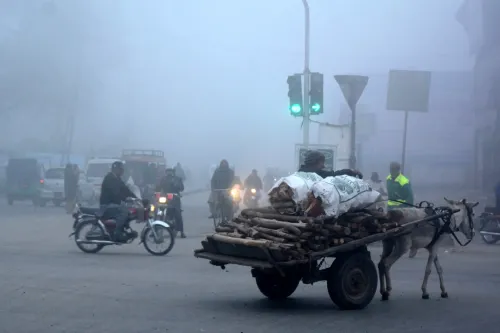
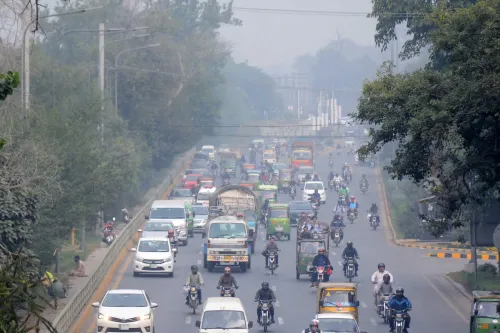
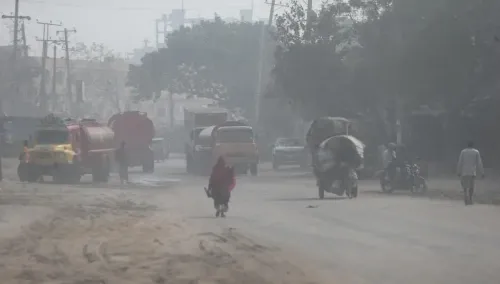
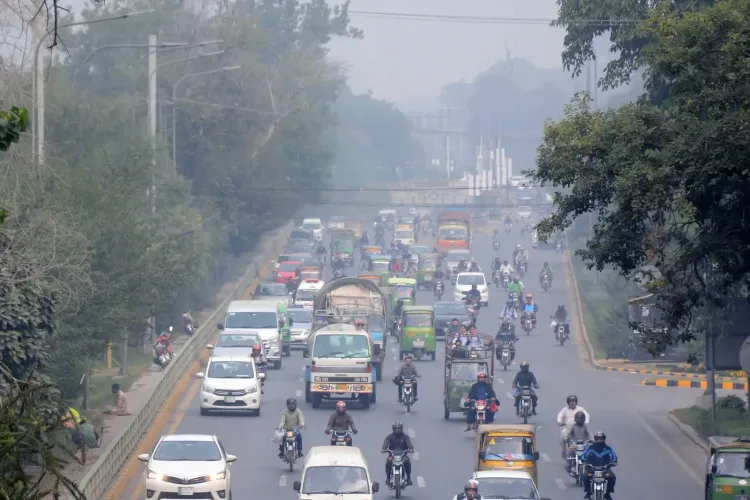
Lahore world's most polluted city with AQI 419; air pollution cuts Pakistan life expectancy by 3.9 years
Synopsis
Lahore's AQI hit 419 on 29 October — crowning it the world's most polluted city — while a new national report reveals air pollution is stealing 3.9 years off every Pakistani's life and killing 128,000 people prematurely each year. With PM2.5 levels more than 22 times WHO limits and winter conditions worsening the smog, Lahore's air has become a public health emergency with no emergency response in sight.
Key Takeaways
Lahore recorded an AQI of 419 on 29 October 2026 , making it the world's most polluted city per IQAir's global ranking.
Cairo ranked second with an AQI of 274 ; Karachi placed eighth at 165 .
Air pollution cuts life expectancy in Pakistan by an estimated 3.9 years and causes around 128,000 premature deaths annually, according to the PAQI report.
Lahore's annual average PM2.5 is over 110 micrograms per cubic metre — more than 22 times the WHO guideline of 5 micrograms per cubic metre .
Air pollution costs Pakistan an estimated 6.5 per cent of GDP annually; prolonged exposure could reduce life expectancy in Lahore by up to seven years .
Transport is the biggest source of PM2.5 in Lahore, followed by industry at 28% and brick kilns at 17% .
Lahore was ranked the world's most polluted city on Thursday, 29 October 2026, recording an Air Quality Index (AQI) of 419, according to IQAir's global real-time ranking. A landmark national report has simultaneously revealed that air pollution is cutting life expectancy across Pakistan by an estimated 3.9 years and contributes to approximately 128,000 premature deaths every year.
Lahore Tops Global Pollution Rankings
IQAir's global ranking for the 10 am to 11 am IST window on 29 October placed Lahore at the top of its worst-air-quality list, ahead of Egypt's Cairo, which recorded an AQI of 274. Karachi also featured in the rankings, placed eighth with an AQI of 165. An AQI above 300 is classified as 'hazardous' under standard air quality frameworks, meaning Lahore's reading places it in the most dangerous category for human health.
The Punjab government's own air quality monitoring dashboard corroborated the alarming picture, flagging hazardous pollution levels across several cities in the province. Kasur topped the provincial list, while Nankana Sahib recorded an AQI of 261, followed by Hafizabad at 250, Sahiwal at 210, Sheikhupura at 205, Jhang at 203, and Rajanpur at 201. Multan and Gujranwala both recorded AQI readings of 194, with Bhakkar at 186 and Vehari at 181.
The Health and Economic Toll
A report by the Pakistan Air Quality Initiative (PAQI), titled 'Unveiling Pakistan's Air Pollution: A National Landscape Report on Health Risks, Sources, and Solutions', presents the country's first harmonised, multi-sector emissions inventory. According to the report, air pollution imposes an economic burden equivalent to 6.5 per cent of Pakistan's GDP. Prolonged exposure to polluted air could reduce life expectancy in Lahore specifically by as much as seven years — nearly double the national average loss.
The report examines pollution patterns in Karachi, Islamabad, Rawalpindi, Lahore, and Peshawar, identifying the primary emission sources in each city and detailing measures that could cut emissions by up to 50 per cent.
PM2.5 Levels Over 22 Times WHO Guidelines
The PAQI report's assessment covers carbon dioxide, fine particulate matter (PM2.5), nitrogen oxides (NOx), and sulphur dioxide (SO2) across four urban airsheds. Lahore's annual average PM2.5 concentration stands at more than 110 micrograms per cubic metre — over 22 times the World Health Organisation's (WHO) annual guideline of 5 micrograms per cubic metre. This is among the widest exceedances of WHO standards recorded for any major city globally.
Key Pollution Sources and Winter Aggravation
Transport has been identified as the single largest source of primary PM2.5 emissions in Lahore, with industry contributing 28 per cent and brick kilns accounting for 17 per cent. Winter weather conditions — characterised by temperature inversions that trap pollutants close to the ground — further aggravate the situation, making October through January the most hazardous months for air quality in the region.
This comes amid a broader pattern of deteriorating air quality across South Asia, where rapid urbanisation, an ageing vehicle fleet, and unchecked industrial expansion have combined to push pollution to crisis levels each winter season. Pakistan's government is yet to announce emergency measures in response to Thursday's rankings.
Point of View
Unregulated brick kilns, and industrial sprawl. The PAQI report's figure of 128,000 annual premature deaths is not a future projection; it is a present-tense death toll. What is striking is the absence of a declared public health emergency from Islamabad, even as the economic cost is quantified at 6.5 per cent of GDP — a figure that dwarfs most proposed mitigation budgets. South Asia's winter smog crisis recurs annually, and each year the response is reactive at best. The real story is institutional failure, not meteorological bad luck.
NationPress
29 Oct 2026
Frequently Asked Questions
Why is Lahore the world's most polluted city right now?
Lahore recorded an AQI of 419 on 29 October 2026, the highest in IQAir's global real-time ranking, driven by transport emissions, industrial output, brick kilns, and winter temperature inversions that trap pollutants near ground level. The city's annual average PM2.5 concentration already exceeds 110 micrograms per cubic metre — more than 22 times the WHO guideline — and winter conditions push readings even higher.
By how much does air pollution reduce life expectancy in Pakistan?
According to the Pakistan Air Quality Initiative (PAQI), air pollution cuts average life expectancy in Pakistan by an estimated 3.9 years. In Lahore specifically, prolonged exposure to current pollution levels could reduce life expectancy by up to seven years.
How many deaths does air pollution cause in Pakistan each year?
The PAQI report estimates that air pollution contributes to approximately 128,000 premature deaths in Pakistan every year. It also places the economic burden of pollution at 6.5 per cent of Pakistan's GDP.
What are the main sources of air pollution in Lahore?
Transport has been identified as the largest source of primary PM2.5 emissions in Lahore, followed by industry at 28 per cent and brick kilns at 17 per cent. Winter weather conditions — which trap pollutants close to the ground — further worsen the city's air quality between October and January.
Which other Pakistani cities are among the most polluted?
Beyond Lahore, Karachi ranked eighth globally with an AQI of 165 on 29 October 2026. Within Punjab province, Kasur topped the provincial list, with Nankana Sahib (261), Hafizabad (250), Sahiwal (210), Sheikhupura (205), Jhang (203), and Rajanpur (201) also recording hazardous or very unhealthy levels.