Lakhpati Didi scheme transforms lives of 6 lakh women in Gujarat
Synopsis
More than six lakh women in Gujarat are now Lakhpati Didis — and stories from Navsari and Anand districts show what that means on the ground: a canteen run by ten women earning over ₹10 lakh a year, and a craft collective that grew from 10 to 70 members in a decade. Gujarat has become a national benchmark for the Centre's biggest rural women's livelihood push.
Key Takeaways
Gujarat has nearly six lakh Lakhpati Didis, making it one of the top-performing states under the Central scheme.
Nationally, more than three crore women are enrolled under the Lakhpati Didi initiative via DAY-NRLM .
Bhavnaben Patel of Navsari earns over ₹10 lakh annually through a canteen started with ₹10 lakh in government assistance.
Komalben Chauhan 's Aastha Sakhi Mandal in Anand district grew from 10 to 60–70 women since May 2014 , each earning up to ₹10,000 per month .
The scheme provides SHG women with technical training, loans, financial assistance, and market access under the Ministry of Rural Development .
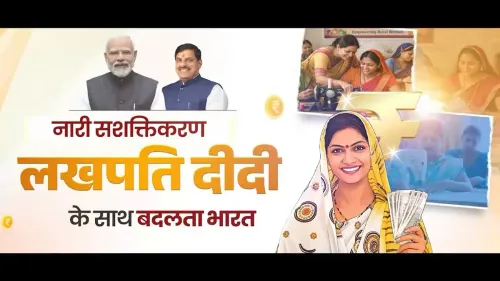
The Lakhpati Didi scheme, a Central government initiative under the Deendayal Antyodaya Yojana-National Rural Livelihood Mission (DAY-NRLM), is reshaping the financial lives of lakhs of women across Gujarat, turning subsistence households into self-sustaining enterprises. With nearly six lakh Lakhpati Didis now active in the state, Gujarat has emerged as one of the leading states in the country under this pan-India programme.
From Village to Viable Business
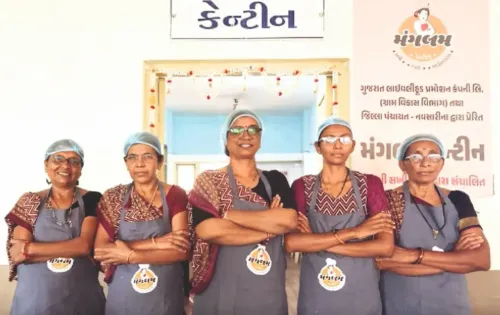
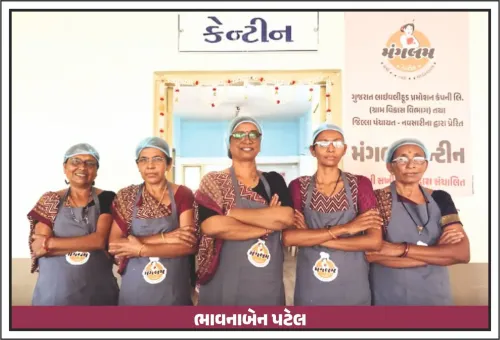
Bhavnaben Patel, a Lakhpati Didi from Nogama village in Chikhli Taluka of Navsari district, began her entrepreneurial journey through government assistance several years ago. Affiliated with the Gayatri Sakhi Mandal Self-Help Group (SHG), she entered the canteen and catering business under the National Rural Livelihood Mission (NRLM) and the Gujarat government's Mission Mangalam initiative. Today, she runs a successful canteen at the District Panchayat in Navsari, generating an annual income exceeding ₹10 lakh.
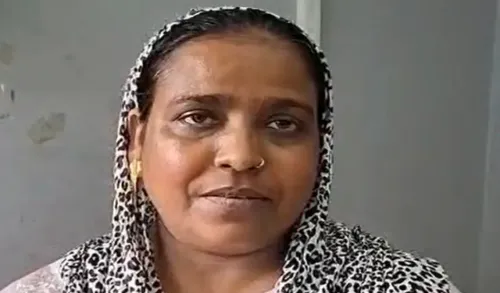
Patel said, “My self-help group is named ‘Gayatri Sakhi Mandal’; ten of us sisters work in this group. We have been running a canteen at the District Panchayat for three years. We started the canteen with ₹10 lakh in assistance received from the government. Today, all ten of us sisters are self-reliant; I sincerely thank the government and GLPC for this.”
Craft and Community: A Village Transforms
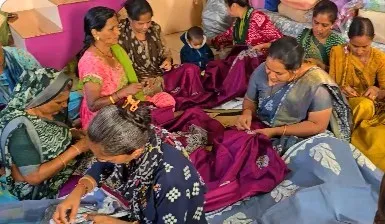
Komalben Chauhan from Gamdi village in Anand district founded Aastha Sakhi Mandal in May 2014 with just 10 women. The group now crafts earthen lamps, Ganesha idols, patch-work products, torans (door hangings), and bedsheets. By 2024, between 60 and 70 women from the village are associated with the group, each earning up to ₹10,000 per month.
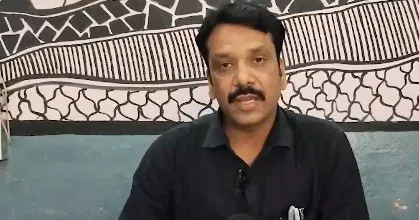
Chauhan said, “Whenever I go out now, people say – Lakhpati Didi has arrived. It is a matter of great pride for me to have gained this new identity.”
Another beneficiary, Rekhaben, who has been part of the Aastha group for 10 years, said the programme gave her a livelihood where none existed before. “Previously, we didn’t do any work at home, but after joining the group, we handle all these tasks. We are now standing on our own feet,” she said.
How the Scheme Works
The Lakhpati Didi initiative operates under DAY-NRLM, administered by the Ministry of Rural Development. Women in SHGs receive technical training, financial assistance, loans, and market access — a bundled support structure designed to move beneficiaries beyond subsistence. The scheme's goal is to ensure each enrolled woman earns a sustainable annual income of at least ₹1 lakh.
Nationally, more than three crore Lakhpati Didis are currently active across India, a figure that reflects the programme's scale since it was significantly expanded in recent years.
Gujarat's Leading Role
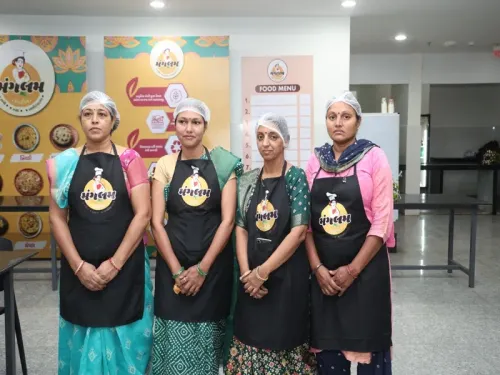
Gujarat's tally of nearly six lakh Lakhpati Didis places it among the top-performing states under the scheme. The state's Mission Mangalam programme, which runs in parallel, has provided an additional institutional layer — connecting SHG members to government infrastructure contracts such as canteen operations, which Bhavnaben's group exemplifies. This combination of Central and state-level support has accelerated the pace of financial inclusion for rural women in the state.
As the programme scales further, the experiences of women like Bhavnaben, Komalben, and Rekhaben illustrate both the reach and the ground-level impact of what is now one of India's largest rural women's livelihood initiatives.
Point of View
But the more revealing detail is the mechanism: it is the bundling of Central DAY-NRLM support with Gujarat's own Mission Mangalam infrastructure contracts that appears to have accelerated outcomes. States that lack a parallel institutional layer may find replication harder than the headline figures suggest. The programme's real test will be whether the income gains persist beyond the initial assistance period — and whether the three-crore national figure reflects sustained earnings or enrolment counts.
NationPress
27 Sept 2026
Frequently Asked Questions
What is the Lakhpati Didi scheme?
The Lakhpati Didi scheme is a Central government programme under the Deendayal Antyodaya Yojana-National Rural Livelihood Mission (DAY-NRLM), run by the Ministry of Rural Development. It provides women in Self-Help Groups with technical training, loans, financial assistance, and market access, with the goal of ensuring each enrolled woman earns at least ₹1 lakh annually.
How many Lakhpati Didis are there in Gujarat?
Gujarat has nearly six lakh Lakhpati Didis, placing it among the leading states in India under the scheme. Nationally, more than three crore women are currently enrolled across the country.
Who are some beneficiaries of the Lakhpati Didi scheme in Gujarat?
Bhavnaben Patel from Navsari district runs a canteen at the District Panchayat with nine other women, earning over ₹10 lakh annually after starting with ₹10 lakh in government assistance. Komalben Chauhan from Anand district founded Aastha Sakhi Mandal in 2014, which has grown from 10 to 60–70 women, each earning up to ₹10,000 per month through craft products.
What is Mission Mangalam and how does it relate to Lakhpati Didi?
Mission Mangalam is the Gujarat government's parallel SHG initiative that complements the Central DAY-NRLM framework. It connects SHG members to government infrastructure opportunities — such as canteen contracts at district panchayats — providing an additional institutional layer that has helped accelerate financial inclusion for rural women in the state.
What support do women receive under the Lakhpati Didi scheme?
Women enrolled in Self-Help Groups under the scheme receive technical skill training, financial assistance, access to loans, and market linkages. This bundled support is designed to help participants move beyond subsistence and build sustainable livelihoods, as seen in examples from Navsari and Anand districts in Gujarat.