Madhya Pradesh's CM Mohan Yadav Leads Protest for Women's Quota Bill
Synopsis
In a powerful demonstration, Madhya Pradesh's Chief Minister Mohan Yadav rallied citizens in Bhopal, asserting that injustices against women will not go unpunished. He accused Congress of obstructing vital women's rights legislation, igniting a vibrant political debate on women's representation.
Key Takeaways
Mohan Yadav led a significant protest in Bhopal advocating for women's rights.
The protest was a response to the defeat of the Women's Reservation Bill in the Lok Sabha.
Yadav criticized the Congress party for blocking legislative progress for women.
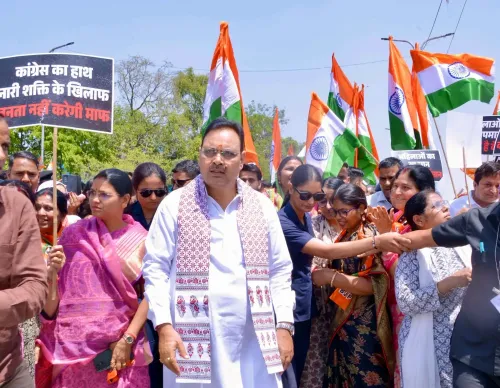
Participation from women was notably high during the padyatra.
The debate on women's reservation continues to escalate in Indian politics.
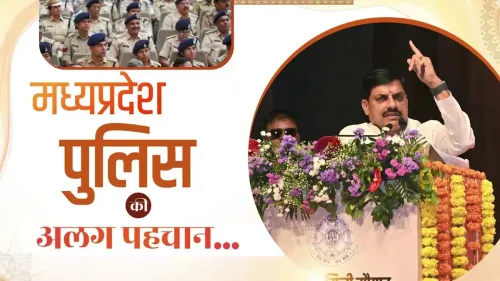
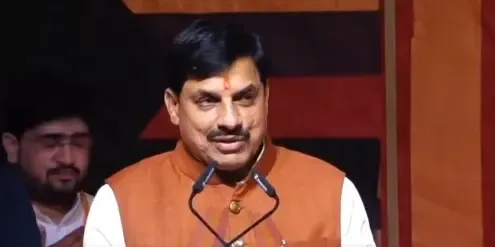
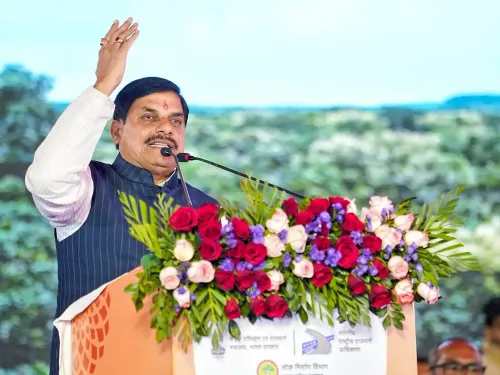
Bhopal, April 20 (NationPress) Madhya Pradesh Chief Minister Mohan Yadav stated on Monday that individuals attempting to stifle women's aspirations would face consequences, asserting that even those who are "hiding in their graves" will not evade justice.
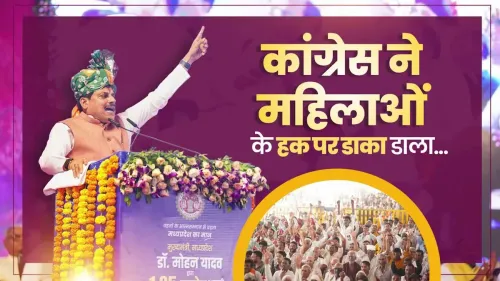
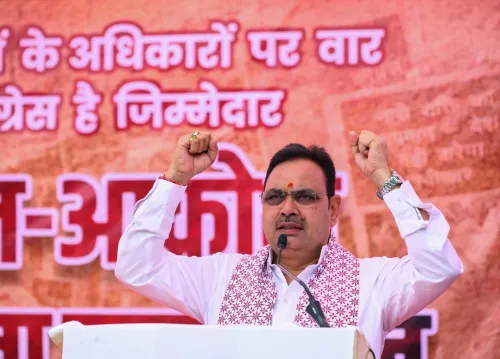
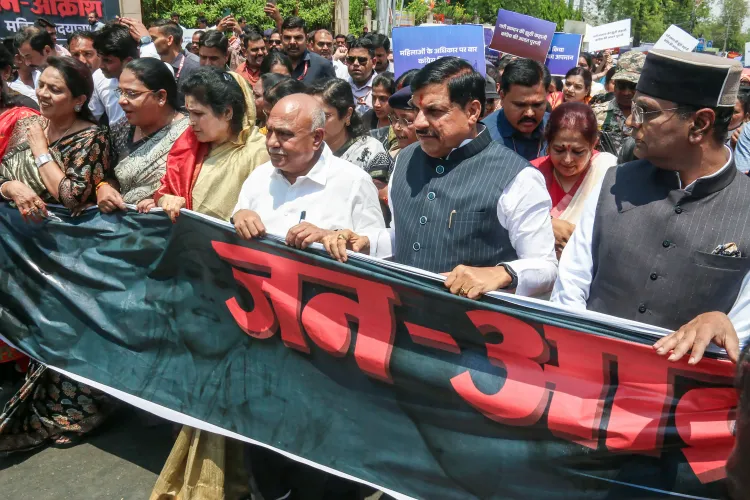
While addressing a gathering before taking part in the Bharatiya Janata Party's "Jan-Aakrosh Mahila Padyatra" (women's protest march) in Bhopal, Yadav emphasized that the nation would not tolerate injustices against women's rights and encouraged women to confidently voice their concerns nationwide. He pledged that India's tradition of honoring women would remain intact.
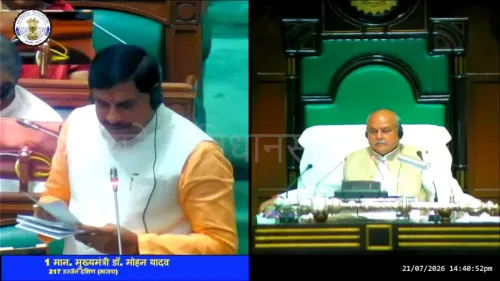
The Chief Minister criticized the Congress party for obstructing the Nari Shakti Vandan Adhiniyam in Parliament, claiming that the opposition aims to deny women their rightful representation. He declared that women would no longer stay silent and affirmed that the BJP would support them, challenging Congress from the streets to Parliament.
Yadav also made a pointed personal critique of Congress leader Priyanka Gandhi, recalling her previous slogan, "I am a girl, and I can fight," and questioning her silence while women's rights faced adversity. He accused Congress of a prolonged history of undermining women's rights, referencing their opposition to reforms from the independence era through to the Triple Talaq legislation.
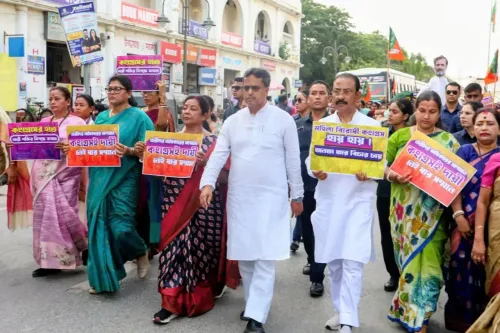
The padyatra commenced at the Motilal Vigyan Mahavidyalaya grounds and concluded at Roshanpura square, featuring substantial participation from women, with Yadav walking in solidarity alongside them.
This protest was triggered by the defeat of the Women’s Reservation Bill in the Lok Sabha, which saw 298 votes in favor and 230 against, leading to its collapse.
In response, Madhya Pradesh Congress leader Shobha Oza accused the opposition of thwarting a conspiracy by the Modi-led government, alleging that women's reservation was being misused as a facade for delimitation aimed at consolidating power.
She characterized the opposition unity as a triumph for democracy and the Constitution, reiterating Congress's ongoing support for women's reservation. Oza highlighted the party's track record, from Rajiv Gandhi's proposal for 33 percent reservation in Panchayats in 1989 to the passage of the Women’s Reservation Bill in the Rajya Sabha by the UPA government in 2010.
The setback of the amendment bill has amplified the political discourse surrounding women’s reservation, with both the BJP and Congress exchanging accusations and rallying support, indicating that this issue will continue to dominate national politics.
Point of View
Indicating that the discourse surrounding women's reservation will remain a critical issue in Indian politics.
NationPress
29 Sept 2026
Frequently Asked Questions
What is the Women's Reservation Bill?
The Women's Reservation Bill aims to reserve a certain percentage of seats for women in legislative bodies to ensure their representation in governance.
Why was the Women's Reservation Bill defeated?
The bill was defeated in the Lok Sabha due to a majority vote against it, despite significant support.
What is the significance of the Jan-Aakrosh Mahila Padyatra?
This protest march aims to raise awareness and demand accountability for women's rights, rallying public support for the Women's Reservation Bill.
What role does Congress play in the women's rights debate?
Congress has been accused of obstructing women's rights legislation, while also claiming to support women's reservation historically.