Maharashtra's 'Water 7/12' system: India's first water record initiative
Synopsis
Maharashtra is about to do for water what Saatbara did for land — document it. Revenue Minister Chandrashekhar Bawankule's 'Water 7/12' initiative, built on IIT Bombay expertise, introduces formal water audits, balance sheets, and an Aqua Credits reward system. If the pilot holds, it could become the national blueprint for water accountability.
Key Takeaways
Maharashtra is set to become India's first state to launch a dedicated 'Water 7/12' water records system, modelled on the Saatbara land documentation framework.
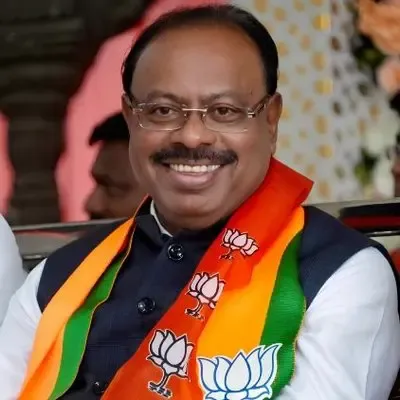
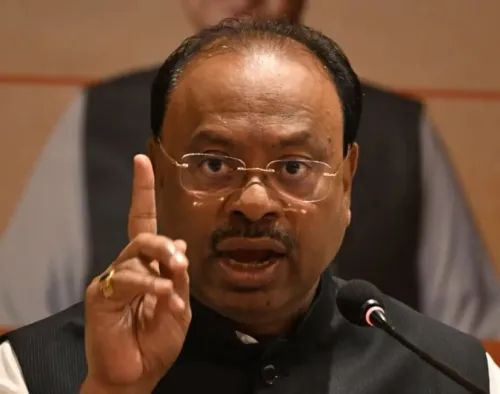
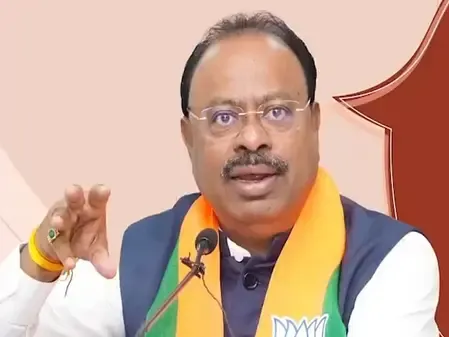
Revenue Minister Chandrashekhar Bawankule announced the initiative on 25 May after chairing a high-level inter-departmental meeting.
The system will conduct water audits in three stages with annual classification at the Gram Panchayat and watershed levels.
The framework was developed by Dr Subramanya Kansur with IIT Bombay water expert Dr Avinash Kadam and economist Uday Nair . 'Aqua Credits' will reward individuals and communities for active water conservation, targeting rural areas first.
The system will initially be deployed on a pilot basis across selected areas before a statewide rollout.
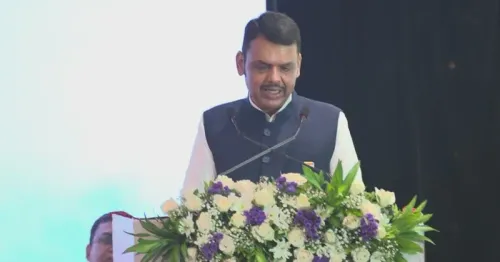
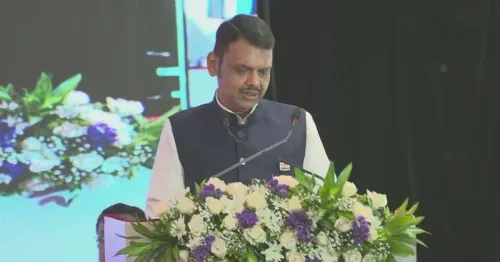
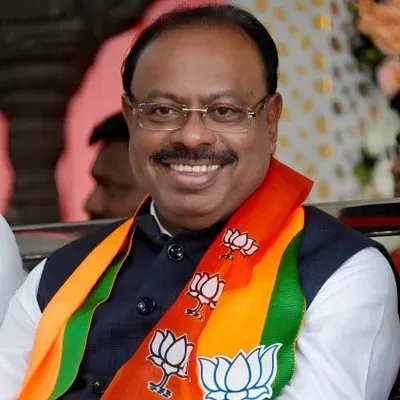
Maharashtra is set to become the first state in India to launch a dedicated water records system, modelled on the state's landmark land documentation framework. Revenue Minister Chandrashekhar Bawankule on Monday, 25 May announced the 'Water 7/12' initiative, describing it as a transformative step toward accountable and data-driven water governance across the state.
What the Water 7/12 System Entails
The initiative draws directly from Maharashtra's well-established Saatbara (7/12) land records system, extending its principles of structured documentation to water resources. The framework introduces a formal 'Water Audit' and 'Water Balance Sheet' — tools designed to track water stocks, inflows, outflows, and remaining balances at the Gram Panchayat and watershed levels. Audits will be conducted in three distinct stages, with annual classification to enable transparent, real-time accountability.
The conceptual framework has been developed by Dr Subramanya Kansur, in collaboration with IIT Bombay water expert Dr Avinash Kadam and economist Uday Nair. Their 'Water Accounting Framework' forms the technical backbone of the system.
Key Developments from the High-Level Meeting
Minister Bawankule chaired a high-level meeting attended by senior officials from the Revenue, Water Supply and Sanitation, and Rural Development departments. The meeting was convened to advance the project toward a formal pilot launch. The system will initially be rolled out on a pilot basis across selected areas of Maharashtra before a statewide expansion.
'Until consumption is accurately recorded, effective regulation remains elusive and public accountability cannot be fully enforced,' Bawankule stated at the meeting.
Aqua Credits and the Water Economy Vision
A notable feature of the scheme is the introduction of 'Aqua Credits' — a reward mechanism for individuals and communities actively engaged in water conservation. The minister described this as a means to foster responsible usage, particularly in rural Maharashtra, while laying the groundwork for a broader 'Water Economy'. The initiative is also aligned with the principles of 'Blue Green Urban Development', according to Bawankule.
Why This Matters
Maharashtra has long had a robust land records infrastructure, but no equivalent mechanism has existed for water resources — a gap that critics and water governance experts have flagged for years. This is the first structured attempt by any Indian state to bring the same level of documentation rigour to water that land records bring to property. Notably, the move comes as several Indian states grapple with worsening water stress, erratic monsoons, and groundwater depletion.
If the pilot succeeds, Maharashtra's model could serve as a national template for water governance reform, with the Aqua Credits mechanism potentially incentivising conservation at the community level in ways that regulatory mandates alone have not achieved.
Point of View
But the harder challenge is enforcement: land records work because they are tied to legal ownership and courts. Water rights in India remain ambiguous, and without a parallel legal framework, a balance sheet risks being a documentation exercise rather than a governance tool. The Aqua Credits mechanism is the most interesting element — behavioural incentives have outperformed mandates in conservation globally — but its design and funding source remain unspecified. The pilot's credibility will depend entirely on whether the three-stage audit is independently verified or self-reported by the same administrative machinery it is meant to hold accountable.
NationPress
10 Oct 2026
Frequently Asked Questions
What is Maharashtra's 'Water 7/12' system?
It is India's first dedicated water records system, modelled on Maharashtra's Saatbara land documentation framework. It will track water stocks, inflows, outflows, and balances at the Gram Panchayat and watershed levels through formal water audits and a Water Balance Sheet.
Who developed the Water 7/12 framework?
The Water Accounting Framework and Water Balance Sheet were developed by Dr Subramanya Kansur in collaboration with IIT Bombay water expert Dr Avinash Kadam and economist Uday Nair.
What are 'Aqua Credits' under this scheme?
Aqua Credits are a reward mechanism introduced under the Water 7/12 initiative to incentivise individuals and communities that actively engage in water conservation. The system is intended to promote responsible water usage, particularly in rural areas of Maharashtra.
When will the Water 7/12 system be launched?
The system will first be implemented on a pilot basis across selected areas of Maharashtra. A full statewide rollout timeline has not yet been announced by the government.
Why is this initiative significant for India?
No Indian state has so far created a structured, Saatbara-equivalent documentation system for water resources. If Maharashtra's pilot succeeds, it could serve as a national model for water governance at a time when several states face acute water stress and groundwater depletion.