Did Mamata Banerjee Craft a Compelling Narrative During Her Delhi Visit While BJP Calls It 'Drama'?
Synopsis
Mamata Banerjee's recent Delhi trip has ignited significant debate, as the Trinamool Congress leader took bold steps against the Election Commission's SIR. While the BJP dismissed her efforts as mere theatrics, Mamata's historical advocacy and determination underscore her belief in the cause. Will this narrative reshape the political landscape?
Key Takeaways
Mamata Banerjee's Delhi visit was strategically significant.
She aimed to challenge the Election Commission's electoral review.
BJP labeled her actions as mere drama.
Historical advocacy showcases her commitment to social issues.
This narrative battle could impact future elections.
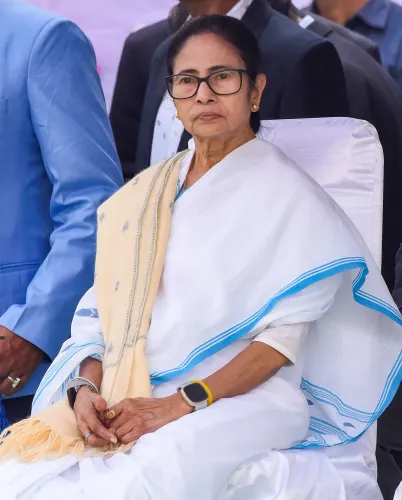
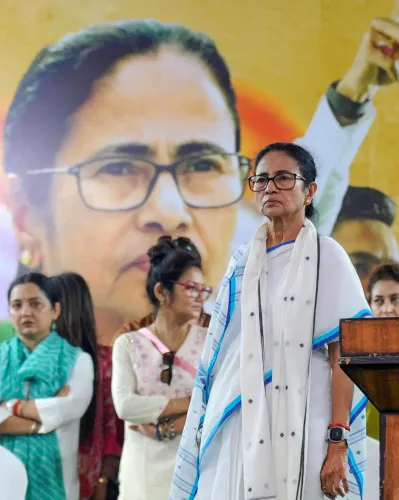
New Delhi, Feb 4 (NationPress) As members and supporters of West Bengal's ruling Trinamool Congress reflect on their leader Mamata Banerjee's recent journey to New Delhi, they might take solace in the fact that, if not the entire war, "didi" (a term of endearment for Mamata Banerjee) has secured a victory in the battle of narratives.
Despite being the third largest opposition bloc in the Lok Sabha, the Trinamool Congress has overtaken the Congress in its fierce criticism of the Election Commission's ongoing Special Intensive Review (SIR) of electoral rolls.
With 28 MPs, accounting for 5.17% of the total strength of the 18th Lok Sabha, established after the 2024 general elections, the Congress follows with 99 MPs (18.27%), and the Samajwadi Party (SP) holds 37 MPs (6.83%).
While Leader of Opposition Rahul Gandhi initially raised concerns regarding the SIR before the Bihar Assembly election last year, his approach was more about informing than reforming the alleged discrepancies in the process.
Many within the opposition INDIA bloc were either skeptical or hesitant to join the chorus, although SP Chief Akhilesh Yadav and Aam Aadmi Party's Rajya Sabha MP Sanjay Singh praised Mamata Banerjee's endeavors.
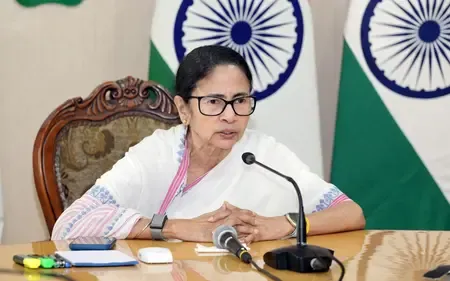
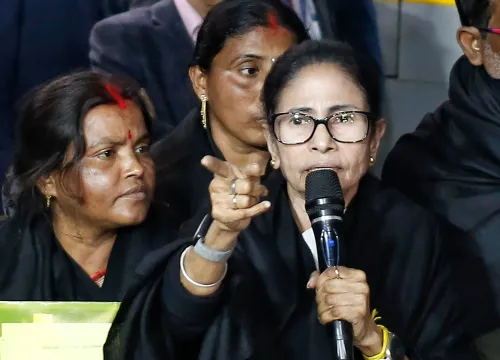
Upon arriving in Delhi on February 1, the West Bengal Chief Minister took charge of the narrative on February 2, making her way to two state guest houses in the capital in what she called her "home-wear".
The primary goal was to reprimand the Delhi Police for their presence and the erection of barricades at the two Banga Bhawans—one on Hailey Road and a newly established one in Chanakyapuri.
Mamata Banerjee was closely followed by cameras throughout the day, eventually heading to the Election Commission's headquarters at Nirvachan Sadan.
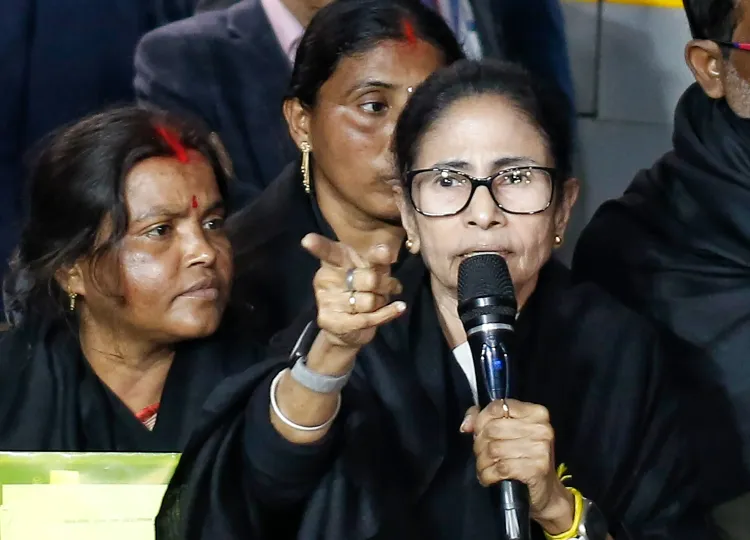
During an incomplete meeting—known for its unpredictable and disruptive nature—Mamata Banerjee addressed the media with a forceful statement.
On Tuesday, she showcased family members reportedly affected by the SIR's demands.
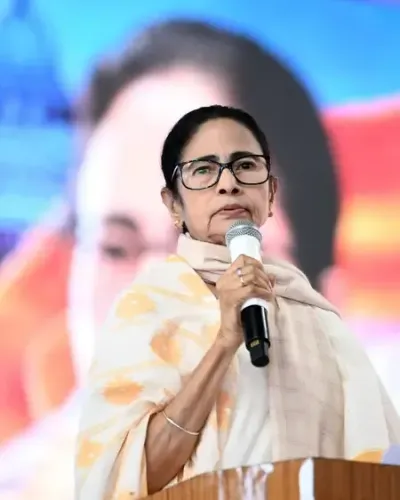
Then on Wednesday, Mamata Banerjee took the opportunity to present her case against the Election Commission's SIR initiative, flanked by a team of lawyers.
This action was celebrated by her party, stating, "This move makes her the first sitting Chief Minister in India to appear as a 'party in person' to argue a case in the apex court".
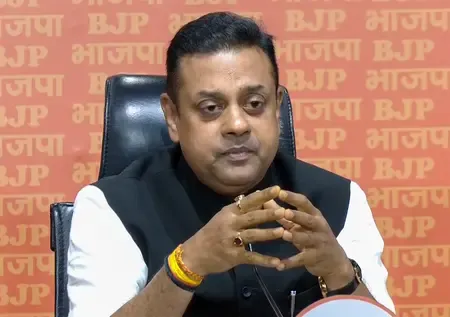
In response to the visit, Bharatiya Janata Party MP from West Bengal's Balurghat and Union Minister of State, Sukanta Majumdar, labeled it a "dramabaazi", first in front of Banga Bhavan, then before the Election Commission headquarters, and the following day at the Supreme Court.
For Mamata Banerjee, arguing was not a novel occurrence; she has previously advocated for her party members—not as a petitioner but donning the garb of a lawyer—according to regional media reports from West Bengal.
Trinamool members noted that Mamata Banerjee holds a law degree from Kolkata's Jogesh Chandra Choudhury College of Law and had apparently obtained security clearance and a gate pass to represent herself at the apex court.
In 1993, she reportedly represented the Youth Congress in a district court following a march to the State Secretariat that concluded in a confrontation with police, leading to the tragic shooting of 13 protesters.
This incident is annually commemorated as Martyr's Day, even after Mamata Banerjee founded the Trinamool Congress.
That same year, she was also reported to have acted as a lawyer in the Bhikari Paswan disappearance case.
The issue in 1993 was addressed by human rights groups, who claimed it was reported after police allegedly detained and tortured him.
In 1996, "didi" donned a black coat to represent Trinamool Congress MLA Pankaj Banerjee at the Alipore Sub-Divisional Judicial Magistrate court concerning a reported attack on the Regent Park police station in Kolkata.
She also represented clients at Balurghat court in another police shooting case that resulted in a student's death, according to local reports.
Mamata Banerjee petitioned the apex court, alleging "mass disenfranchisement, arbitrary and flawed exercise", citing procedural errors.
The case was examined by a three-judge bench led by Chief Justice of India Surya Kant, along with Justices Joymalya Bagchi and Vipul M. Pancholi.
Point of View
Mamata Banerjee's visit to Delhi highlights the ongoing tensions within Indian politics, particularly surrounding the electoral processes. While the Trinamool Congress aims to assert its influence, the BJP's dismissive remarks reflect a deep-seated rivalry. This narrative battle could have significant implications for upcoming elections and the broader political landscape.
NationPress
7 Oct 2026
Frequently Asked Questions
What was the purpose of Mamata Banerjee's visit to Delhi?
Mamata Banerjee's visit aimed to challenge the Election Commission's Special Intensive Review of electoral rolls and to raise awareness about its implications for voters.
How did the BJP react to Mamata Banerjee's actions?
The BJP criticized her visit as 'dramabaazi,' suggesting that her actions were more about theatrics than substantive political engagement.
What historical context surrounds Mamata Banerjee's legal advocacy?
Mamata Banerjee has a history of legal advocacy, having represented various causes in court, showcasing her longstanding commitment to social justice.
What impact could this visit have on the upcoming elections?
The visit may influence public perception of the Trinamool Congress and its leadership, potentially swaying voter sentiment in the upcoming elections.
Why is Mamata Banerjee's representation in court significant?
Her appearance as a 'party in person' is unprecedented for a sitting Chief Minister in India, emphasizing her proactive stance in addressing electoral issues.