Is Mamata Banerjee's Cautious Approach the Right Strategy After the Disrupted Election Commission Meeting?

Synopsis
Mamata Banerjee's recent visit to New Delhi to confront the Election Commission has left many questions unanswered. Following a disrupted meeting, she contemplates her next move with party colleagues, signaling a strategic shift in her approach. How will this impact her party's stance moving forward?
Key Takeaways
Mamata Banerjee's cautious approach indicates strategic planning.
Election Commission's stance reflects the tension in political dynamics.
Trinamool Congress faces internal discussions on future actions.
The ongoing conflict underscores the complexities of electoral processes.
Media scrutiny plays a crucial role in shaping public perception.
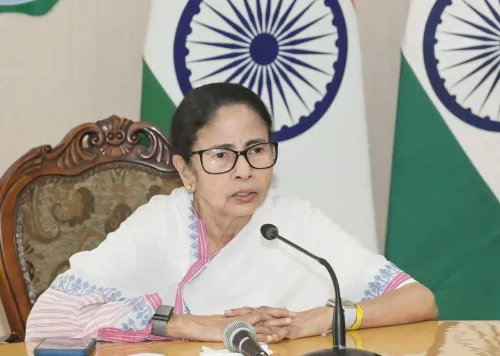
New Delhi, February 2 (NationPress) West Bengal Chief Minister Mamata Banerjee has taken her fight against the Election Commission's Special Intensive Revision (SIR) directly to the commission's headquarters in New Delhi, though her initial objectives may not have been accomplished on the first day of this visit.
Monday unfolded with significant events as Banerjee made her way to two state guest houses in the capital, amid reports of Delhi Police presence and the establishment of barricades at the two Banga Bhawans—one located at Hailey Road, and a newer one at Chanakyapuri.
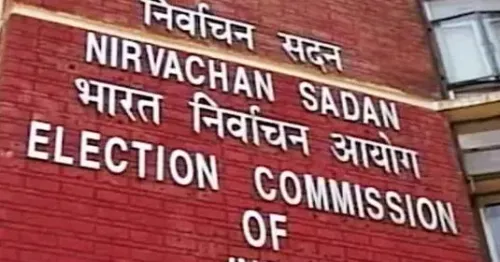
Throughout the day, cameras followed her, ultimately leading her to the Election Commission (EC) headquarters at Nirvachan Sadan.
Following an incomplete meeting, notorious for its unpredictable and disruptive nature, Chief Minister Banerjee seemed uncertain about her next steps.
When questioned regarding the Trinamool Congress' future plans, the party leader indicated she would reconvene after discussions with her party colleagues.
Despite the Trinamool Congress delegation's decision to boycott the proceedings, citing feelings of being insulted and humiliated, they are not withdrawing from the electoral landscape.
Media representatives reminded her that in Bihar, the opposition Mahagathbandhan alliance led by Rashtriya Janata Dal (RJD) had considered boycotting the Assembly elections due to alleged SIR irregularities but later reconciled.
She pointed out that opposition parties had failed to pinpoint how the SIR exercise might have been manipulated to favor the Bharatiya Janata Party (BJP).
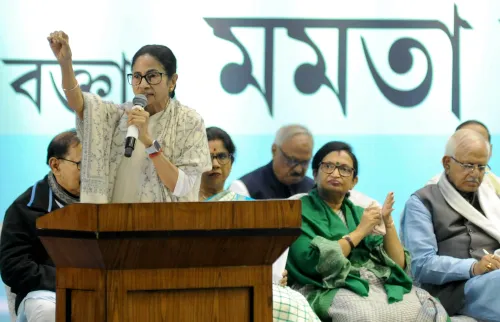
"No one identified the issues in Bihar, hence the ruling bloc's victory, nor in Haryana, where the BJP again triumphed. It was all manipulation. However, we possess an organization, allowing me to challenge them in Delhi," Mamata Banerjee stated.
The implication was evident: while opposition entities like the Congress, RJD, and Dravida Munnetra Kazhagam (DMK) were vocal about the SIR process, they lacked the capability to clearly articulate the modus operandi behind the alleged manipulation.
A similar sentiment was echoed by Trinamool General Secretary and Lok Sabha MP Abhishek Banerjee after his meeting with the poll panel on December 31, where he alluded to the BJP's "unusually high strike rate" in state elections.
He asserted that opposition parties, including the Congress, fell short in identifying the alleged discrepancies that his party had recognized.
He highlighted that the Trinamool Congress was the only party that had raised significant concerns regarding potential "vote theft" favoring the BJP, which other opposition parties overlooked.
Meanwhile, Mamata Banerjee had primarily confined her protests to West Bengal, although she had previously warned that she might escalate her actions to New Delhi.
The December meeting, according to the Trinamool heir apparent, was fraught with tension and did not adequately address the delegation's grievances, "except for two or three points."
On Monday evening, many gathered in front of Delhi's Nirvachan Sadan considered an "instant, aggressive, and unexpected" response after the meeting ended in a deadlock.
However, the dynamic leader opted for contemplation instead of an impulsive reaction—a departure from her previous behavior.
The Election Commission, on its part, adopted a firm stance, accusing Trinamool MLAs in West Bengal of "openly using abusive and threatening language" against the Commission, particularly targeting Chief Election Commissioner (CEC) Gyanesh Kumar.
The CEC reportedly responded to Mamata Banerjee's questions by asserting that "Rule of Law shall prevail" and that those taking the law into their own hands would face strict consequences as per the legal provisions available to the Commission.
This approach marked a shift from December, when Election Commission sources opted for clarifications rather than addressing the internal dynamics of the meeting.
Point of View
It is essential to recognize the evolving dynamics in Indian politics, particularly with influential leaders like Mamata Banerjee at the forefront. Her cautious approach could redefine the opposition's strategies and influence upcoming elections. The unfolding scenario warrants close scrutiny as it reveals the complexities of political maneuvering in the face of challenging electoral processes.
NationPress
7 Oct 2026
Frequently Asked Questions
What is the Special Intensive Revision (SIR)?
The Special Intensive Revision (SIR) is a process conducted by the Election Commission to update electoral rolls and ensure their accuracy.
Why did Mamata Banerjee visit New Delhi?
Mamata Banerjee visited New Delhi to confront the Election Commission regarding concerns related to the SIR and its implications for upcoming elections.
What was the outcome of the meeting with the Election Commission?
The meeting ended in a stalemate, leading to the Trinamool Congress delegation deciding to boycott the proceedings, citing feelings of insult and humiliation.
What implications does this have for the Trinamool Congress?
The situation may impact the Trinamool Congress's strategic planning and electoral strategies as they prepare for future challenges.
How has Mamata Banerjee's approach changed?
Mamata Banerjee's current cautious approach marks a shift from her previously more impulsive reactions, indicating a need for strategic contemplation.