Escalating Maritime Security Threats in the Gulf Region
Synopsis
The maritime security crisis in the Gulf of Oman, Persian Gulf, and Strait of Hormuz intensifies as military tensions escalate. With significant attacks on commercial shipping, the threat level has been elevated to 'CRITICAL', prompting major shipping companies to suspend operations.
Key Takeaways
Increased military tensions in the Gulf region have led to a significant maritime security crisis.
Commercial shipping has been severely impacted, with many vessels suspended or rerouted.
The threat level has been raised to 'CRITICAL' , indicating a high likelihood of further attacks.
Navigation safety is compromised due to widespread GPS and AIS jamming.
Authorities are closely monitoring the situation as it poses risks to global energy supply chains.
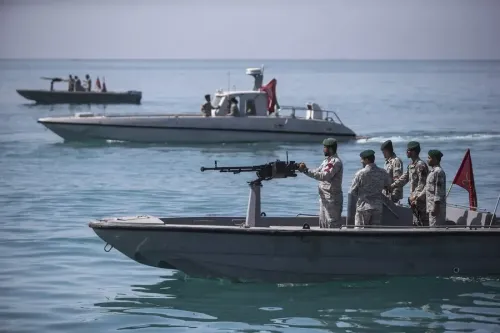
New Delhi/London, March 5 (NationPress) The maritime security situation in the Gulf of Oman, Persian Gulf, and Strait of Hormuz has become increasingly unstable in the last 24 to 48 hours, primarily due to rising military tensions involving Iran, the United States, and Israel.
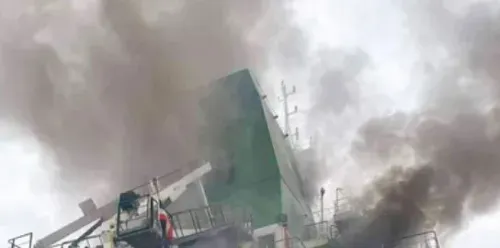
Numerous incidents involving projectiles, missiles, and explosives have targeted commercial vessels, leading to a near-complete cessation of transits through this vital chokepoint.
Since the end of February, following US and Israeli strikes on Iranian positions, the region has experienced confirmed attacks on several merchant ships.
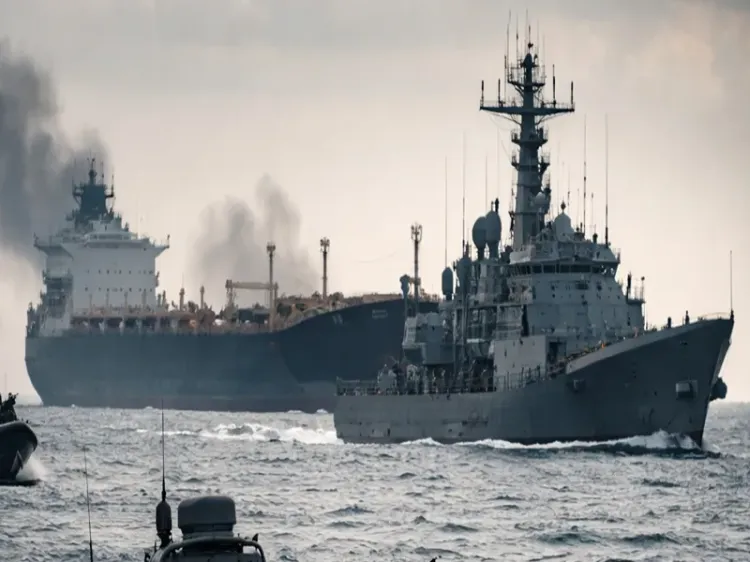
Reports indicate that between three and eight commercial vessels have been damaged or hit, including tankers and a container ship struck by projectiles near the Strait of Hormuz and the approaches to the Gulf of Oman.
There have been casualties, including at least one seafarer killed and others injured in incidents involving drone boats, missiles, and close calls. The volume of shipping traffic has dramatically decreased.
The Strait of Hormuz, through which approximately 20% of the world's seaborne oil and liquefied natural gas typically passes, has seen only a limited number of crossings recently—well below normal levels—with some tracking services reporting almost no active transits in key lanes.
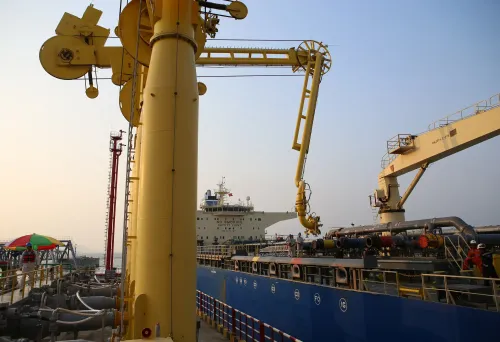
Hundreds of vessels, including oil tankers and LNG carriers, remain either anchored in regional waters or gathered in safer locations. Major shipping companies like Maersk and Hapag-Lloyd have completely halted their operations through Hormuz. Some shipping routes are being redirected around the Cape of Good Hope, significantly prolonging travel times and increasing costs.
In addition to the physical threats, persistent GPS and AIS jamming is severely undermining navigation safety.
Maritime intelligence companies such as Windward have reported extensive electronic disruptions, with over 1,100 vessels affected recently, resulting in false positioning that shows ships on land, at airports, or near nuclear facilities.
This situation has created denial zones and introduced misleading signals throughout the Gulf, raising the risk of collisions and complicating situational awareness. In reaction, war-risk insurance providers—including Gard, Skuld, NorthStandard, London P&I Club, and the American Club—have issued cancellation notices for coverage in Iranian waters, the Persian Gulf, and surrounding areas, effective from March 5 onward.
This has compelled ship owners to explore prohibitively expensive alternatives or to avoid the region altogether, effectively stalling commercial activities. The Joint Maritime Information Center (JMIC) has raised the regional threat level to “CRITICAL,” indicating that attacks are almost inevitable.
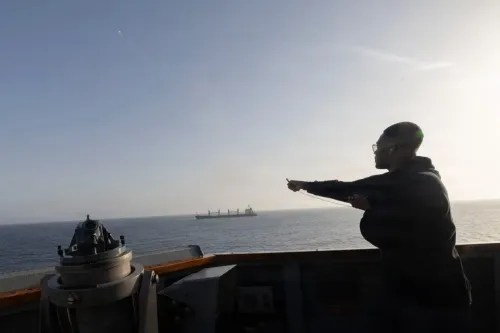
The US MARAD advisories recommend that vessels steer clear of the area if possible, maintain a 30-nautical-mile distance from naval assets, and implement additional safety measures. Merchant vessels are strongly urged to practice “heightened vigilance,” enforce improved watchkeeping, cross-verify all navigation data (including radar and visual bearings), and strictly follow “Best Management Practices (BMP5 or MS)” security protocols when transiting or operating in the region.
Monitoring advisories from UKMTO, JMIC, and NAVCENT is crucial. The ongoing situation highlights the vulnerability of global energy supply chains, with the potential for further escalation amid persistent hostilities.
Authorities continue to monitor the situation closely as the crisis threatens broader economic impacts.
Point of View
It is evident that the maritime security landscape is precarious. The escalating confrontations between military powers not only threaten commercial shipping but also pose significant risks to global energy supply. Vigilance and strategic planning are essential as authorities monitor these developments closely.
NationPress
29 Sept 2026
Frequently Asked Questions
What caused the recent maritime security crisis in the Gulf?
The crisis has been triggered primarily by increasing military confrontations involving Iran, the US, and Israel, leading to targeted attacks on commercial shipping.
How many vessels have been affected by the situation?
Reports indicate that between three and eight commercial vessels have been damaged or struck in recent incidents.
What is the current threat level in the region?
The Joint Maritime Information Center has raised the regional threat level to 'CRITICAL', indicating that further attacks are highly likely.
How are shipping companies responding to the crisis?
Major shipping companies like Maersk and Hapag-Lloyd have suspended their operations through the Strait of Hormuz, with some vessels rerouting around the Cape of Good Hope.
What navigation challenges are present in the Gulf region?
Persistent GPS and AIS jamming has severely impaired navigation safety, complicating situational awareness and increasing collision risks.