MEA: India Actively Engaged with Nepal Over NPR 100 Customs Duty Rule
Synopsis
India's MEA confirmed active diplomatic engagement with Nepal over the enforcement of a customs duty rule on goods worth over NPR 100 purchased in India. The long-dormant provision, now strictly enforced by Nepal's new government, has sparked backlash from border communities and civil society groups who call it impractical and burdensome.
Key Takeaways
India's MEA confirmed on April 23 that New Delhi is actively engaged with Nepal over the enforcement of customs duty on goods worth over NPR 100 purchased in India.
MEA Spokesperson Randhir Jaiswal stated India understands Nepal's intent to curb informal trade and smuggling along the open border.
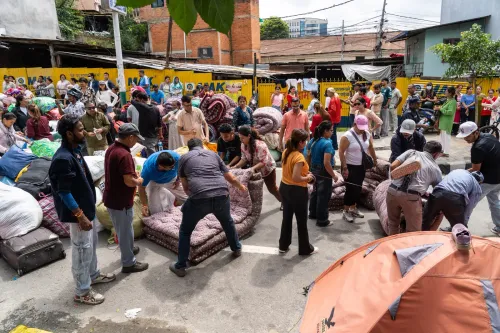
Nepal's newly-elected government began strictly enforcing the long-dormant NPR 100 customs duty rule in recent days, sparking backlash from border communities.
Nepal's Customs Director Kishor Bartaula said the enforcement targets organised smuggling networks that use ordinary people as carriers to avoid duty payments.
The Nepal-India Open Border Interaction Group has demanded the immediate repeal of the NPR 100 threshold and called for zero duty on household goods.
The group also proposed 48-hour duty-free allowances for devotees visiting religious sites in border towns to promote people-to-people ties and religious tourism.
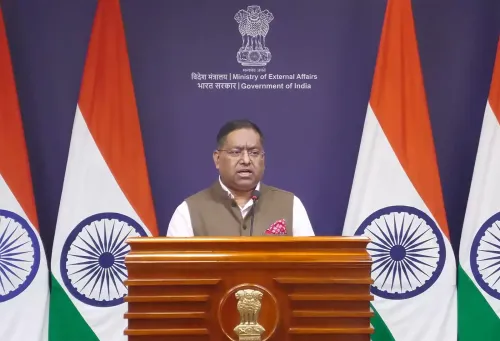
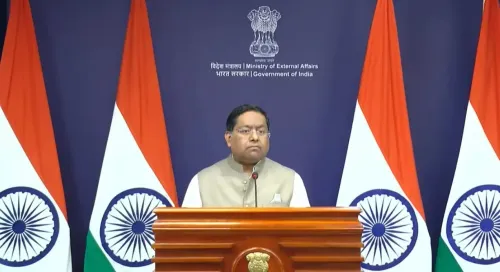
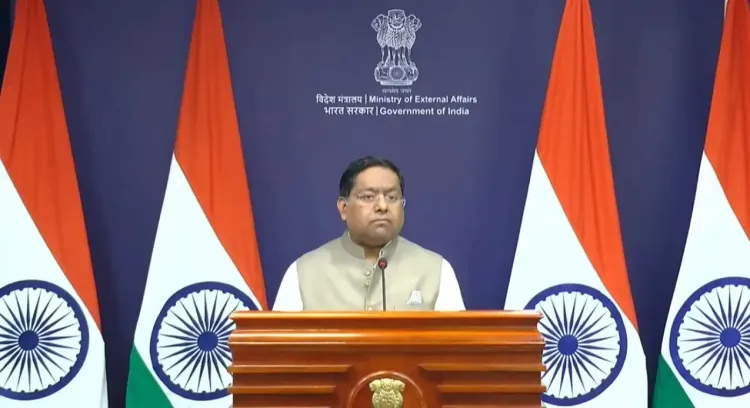
New Delhi, April 23: The Ministry of External Affairs (MEA) confirmed on Thursday, April 23, that India is actively engaged with Nepal over the enforcement of a customs duty provision requiring cross-border travellers to pay duty on goods purchased in India valued above Nepali Rupees (NPR) 100. The development has triggered significant backlash in Nepal's border communities, where Indian markets have historically been the primary source of affordable daily essentials. MEA Spokesperson Randhir Jaiswal addressed the matter at a weekly press briefing in New Delhi.
What India's MEA Said
MEA Spokesperson Randhir Jaiswal confirmed that Indian authorities have taken note of videos and reports circulating on social media showing Nepali customs officials enforcing the duty rule at border points. He stated, "We've also seen some reports about enforcement by Nepali authorities of pre-existing provision that outlines collection of customs duty from cross-border travellers in case they carry items which are purchased in India and which have a value of over 100 Nepali rupees."
Jaiswal noted that New Delhi understands Kathmandu's primary intent behind the enforcement — to curb informal trade and smuggling along the porous open border. He also referenced a statement by a senior Nepali official clarifying that civilians carrying personal or household goods would not be obstructed. "We remain engaged on these developments," Jaiswal added.
Background: A Long-Dormant Rule Now Strictly Enforced
The customs provision mandating duty on goods worth more than NPR 100 brought from bordering Indian towns is not new — it was introduced several years ago but remained largely unenforced due to the practical difficulties faced by residents of border regions. The newly-elected Nepali government has now chosen to strictly implement the rule over the past several days, triggering immediate criticism from local stakeholders.
Nepal's Department of Customs Director Kishor Bartaula explained the rationale to IANS, saying, "Smugglers use ordinary people to bring goods from Indian markets in small quantities multiple times a day without paying duty, and then collect them in large volumes for sale. Otherwise, charging duty on goods priced over NPR 100 does not contribute significantly to government revenue." He added that stricter enforcement is also expected to benefit traders operating in Nepal's border towns.
Impact on Border Communities and Civil Society Pushback
The enforcement has drawn sharp criticism from residents and civil society groups in Nepal's border districts, where proximity to Indian markets has long provided access to affordable food, medicine, and household goods. The Nepal-India Open Border Interaction Group, a prominent civil society organisation, on Saturday urged the Nepali government to immediately revise its customs policy, warning that the current provisions place undue hardship on low-income households.
In its statement, the group highlighted the centuries-old social, cultural, and economic ties between Nepal and India, urging authorities to adopt practical, people-friendly measures that ease cross-border movement and strengthen grassroots relations. A central demand is the immediate repeal of the NPR 100 customs duty threshold, calling it disproportionately burdensome and impractical to enforce on ordinary citizens.
The group also called for the establishment of well-managed, affordable markets in border areas and proposed introducing special customs-free facilities for religious and cultural visits — allowing devotees travelling to border towns and major religious sites in both countries to carry goods duty-free for up to 48 hours. This, they argued, would promote religious tourism and deepen people-to-people ties between the two nations.
Deeper Context: India-Nepal Trade Dynamics and the Smuggling Problem
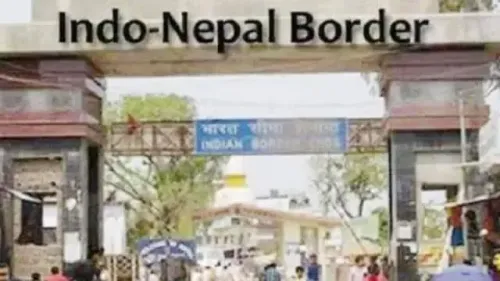
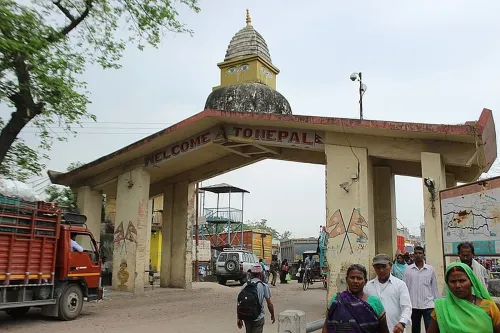
The India-Nepal open border — one of the most unique bilateral arrangements in South Asia — allows citizens of both countries to move freely without visas or passports. While this has historically fostered deep cultural and economic integration, it has also created persistent challenges around informal trade, smuggling, and revenue leakage for Nepal's customs authorities.
Nepal has long grappled with a significant trade deficit with India, with Indian goods dominating consumer markets across the country. The enforcement of the NPR 100 duty rule reflects a broader policy tension in Kathmandu — balancing the need to protect domestic traders and government revenue against the lived realities of border communities who depend on Indian markets for basic necessities. Critics argue the threshold of NPR 100 — equivalent to less than ₹65 — is unrealistically low and was never designed to target genuine household purchases.
Notably, this development comes at a time when India-Nepal bilateral relations are navigating multiple sensitive issues, including border demarcation disputes and infrastructure connectivity projects. The customs row, while seemingly administrative, carries diplomatic undertones that both governments appear keen to manage carefully.
What Happens Next
With India's MEA confirming active diplomatic engagement, both governments are expected to work toward a practical resolution that addresses Nepal's anti-smuggling objectives without penalising ordinary border residents. The Nepal-India Open Border Interaction Group's proposals — including zero duty on household goods and special provisions for religious travel — may form the basis of future policy discussions.
Stakeholders and border residents in both countries will be closely watching for any formal policy revision from Kathmandu in the coming days. The outcome could set an important precedent for how the two nations manage the complex interplay of open-border freedoms, trade regulation, and people-to-people connectivity going forward.
Point of View
Worth less than ₹65, was never a realistic deterrent for smugglers; it is, however, a daily hardship for the low-income families it was never meant to target. India's measured diplomatic response — engaging quietly rather than escalating — reflects New Delhi's awareness that this is as much a domestic political issue for Kathmandu as it is a bilateral one. The real question is whether Nepal's new government has the political will to revise a policy that is alienating its own border citizens while doing little to meaningfully curb organised smuggling.
NationPress
7 Oct 2026
Frequently Asked Questions
What is the NPR 100 customs duty rule in Nepal?
Nepal has a provision requiring customs duty to be paid on goods purchased in India and brought across the border if their value exceeds NPR 100 (approximately ₹65). Though the rule existed for several years, Nepal's newly-elected government began strictly enforcing it recently, drawing widespread criticism from border communities.
What did India's MEA say about Nepal's customs duty enforcement?
MEA Spokesperson Randhir Jaiswal stated on April 23 that India is aware of the enforcement and remains actively engaged with Nepal on the issue. He noted that India understands Nepal's intent to curb informal trade and smuggling, and referenced a senior Nepali official's assurance that civilians with personal goods would not be obstructed.
Why is Nepal enforcing the NPR 100 customs duty rule now?
Nepal's Department of Customs Director Kishor Bartaula said the rule is being enforced to control smuggling, where organised networks use ordinary people to carry small quantities of Indian goods multiple times daily to avoid duty. The newly-elected Nepali government decided to strictly implement the long-dormant provision as part of this anti-smuggling drive.
How does the NPR 100 customs duty affect border residents?
The rule disproportionately impacts low-income households in Nepal's border areas, who rely on nearby Indian markets for affordable food, medicine, and daily essentials. Civil society groups argue the NPR 100 threshold is impractically low and places undue financial and logistical burdens on ordinary citizens rather than actual smugglers.
What are civil society groups demanding over Nepal's customs duty rule?
The Nepal-India Open Border Interaction Group has demanded the immediate repeal of the NPR 100 customs duty provision and called for zero duty on household goods. They also proposed special customs-free facilities for religious and cultural visits, allowing devotees to carry goods duty-free for up to 48 hours.