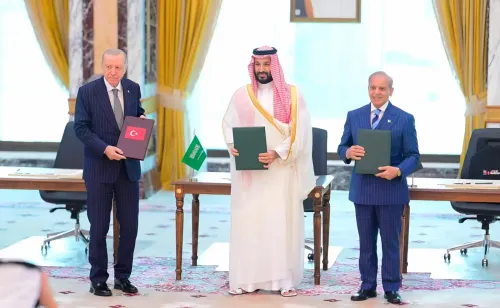
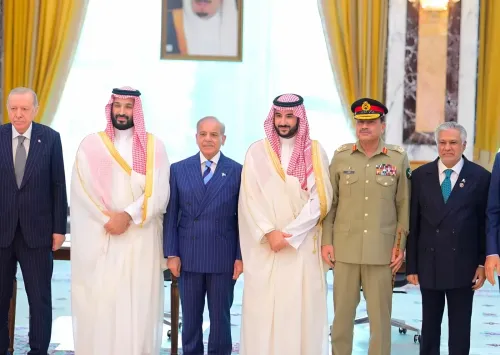
Mecca Defence Pact 2026: Why Turkey and Pakistan shield Saudi Arabia but won't fight for it
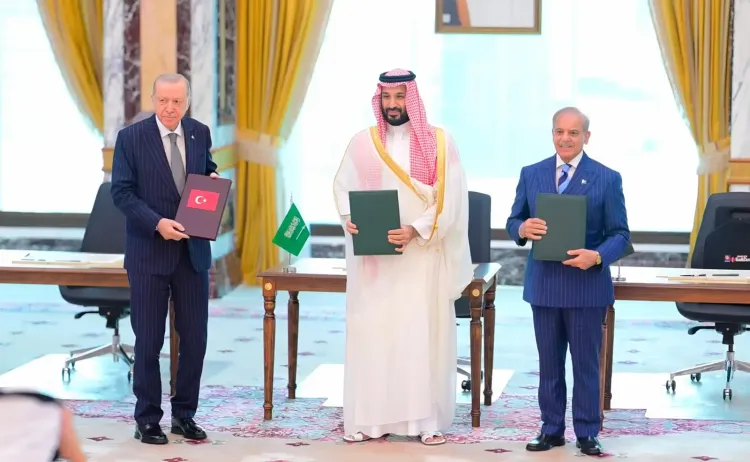
Synopsis
Saudi Arabia assembled what it called a NATO-style Muslim alliance in August 2026 — and both Turkey and Pakistan have already told it, explicitly, they will not fight. With Ankara dependent on Iranian gas and Islamabad watching a $9.78 billion remittance pipeline, the Mecca Joint Defence Agreement is a shield held firmly in place by economic self-interest, not a sword Riyadh can swing.
Key Takeaways
The Mecca Joint Defence Agreement , signed in August 2026 , was marketed as a collective security pact but both Turkey and Pakistan have explicitly ruled out offensive operations.
Turkish Foreign Minister Hakan Fidan described the pact as 'defensive, not offensive'; Defence Minister Yasar Guler said Turkey 'absolutely' does not foresee conflict with the Houthis.
Pakistan has deployed roughly 8,000 troops to Saudi Arabia in an advisory and training role; it rejected joining the Saudi Yemen war in 2015 and has done so again.
Iran supplies roughly 13 per cent of Turkey's natural gas and provides critical coordination on Kurdish militant containment — attacking Tehran's proxy is not an option for Ankara.
Pakistani workers remitted a record $41.6 billion in 2026 ; $9.78 billion came from Saudi Arabia, underscoring why Islamabad cannot afford either a rupture with Riyadh or a war that inflames Iran.
Saudi Arabia itself ran a deficit of approximately SAR 244 billion in the first nine months of 2026 , making costly offensive campaigns financially untenable.
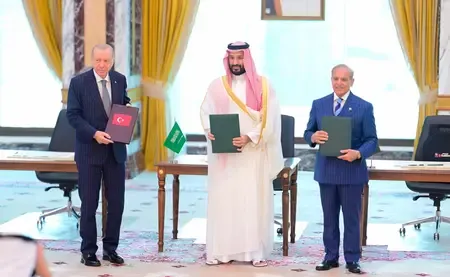
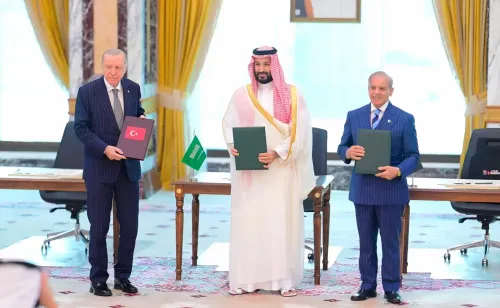
When Saudi Arabia unveiled the Mecca Joint Defence Agreement in August 2026, it was billed as a transformative collective security architecture — a Sunni-world NATO binding Riyadh, Ankara, and Islamabad in mutual defence. The reality, as the pact faces its first genuine test, is considerably more limited: neither Turkey nor Pakistan has any intention of conducting offensive military operations on Saudi Arabia's behalf.
The Defensive Line Both Allies Have Drawn
Turkish Foreign Minister Hakan Fidan was unambiguous in remarks to the media in Ankara on 8 October: the Mecca agreement is 'defensive, not offensive,' and Turkey 'will not send forces to the territory of another state to launch an attack from there.' Defence Minister Yasar Guler was blunter still, telling Turkey's Star TV shortly after: 'We absolutely do not foresee entering into any conflict with the Houthis.'
Ankara's contribution is calibrated accordingly — military technology, air-defence systems, drone operators, and intelligence-sharing, not combat brigades. The pact reinforces a pre-existing commercial logic: in 2023, Turkey signed its largest-ever defence export contract with Saudi Arabia, anchored by Akinci combat drones. The Mecca agreement deepens that industrial partnership without extending it into offensive combat.
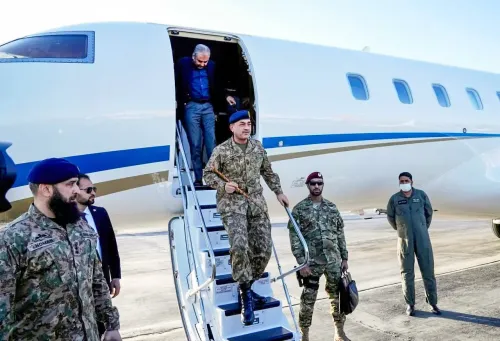
Pakistan, for its part, has deployed roughly 8,000 troops to the Kingdom, alongside a squadron of JF-17 fighter jets and a Chinese HQ-9 air-defence system. These forces are officially framed as advisory and training in nature. Islamabad declined to join the Saudi-led Yemen war in 2015 — a decision the Pakistani parliament made unanimously — and it has once again ruled out sending troops for offensive operations against the Houthis.
Why Pakistan Will Not Go on the Offensive
Geography is the first constraint. Pakistan shares a 900-kilometre border with Iran — a frontier whose fragility was demonstrated by cross-border missile strikes between the two nations in early 2024. If Islamabad launches offensive operations against Tehran's most active regional proxy, Iran need not engage Pakistan in the Arabian Sea; it can instead destabilise Balochistan.
Domestic stability is the second. Pakistan has the world's second-largest Shia population, estimated at roughly 10 to 15 per cent of the country. Entering a Middle Eastern sectarian conflict on behalf of Riyadh risks triggering violent internal strife. Pakistan's military doctrine is oriented toward deterrence on its eastern border with India, not expeditionary warfare in the Arabian Peninsula.
Economics seals the calculation. Saudi Arabia holds roughly $8 billion in deposits at the State Bank of Pakistan, and in 2026 extended its $5 billion facility on a three-year horizon running to December 2028. Pakistani workers remitted a record $41.6 billion in the 2026 fiscal year; Saudi Arabia was the single largest source at $9.78 billion — close to a quarter of the total. Three Pakistani seafarers lost their lives in a Red Sea attack in August. Carrying the war into Yemen would widen the zone of danger for both Saudi infrastructure and the Pakistani diaspora living beside it.
Why Turkey's Pragmatism Rules Out Combat
Turkey's restraint is rooted in energy dependence and regional diplomacy. According to reports, Iran supplied roughly 13 per cent of Turkey's natural gas imports in 2025 — approximately 7.7 billion cubic metres. Attacking Tehran's key proxy in Yemen would jeopardise that supply. Beyond energy, Turkey requires tactical coordination with Iran in northern Iraq and Syria to contain Kurdish militant groups; torching that relationship over Yemen would dismantle Ankara's primary national security priority on its own southern flank.
There is an ideological dimension as well. Turkish leadership has built its regional soft power on championing the Palestinian cause. The Houthis have consistently framed their missile campaign as resistance against Western and Israeli commercial traffic. Turkish offensive strikes against them would demolish Ankara's standing with the wider Muslim public — an asset far too valuable to trade for Saudi shipping lanes.
Economically, the costs of escalation are steep. Inflation in Turkey reportedly stood at 29.7 per cent in October 2026, with the policy rate at 36 per cent. The energy think tank Ember estimates a Brent crude shock could add $14 billion to Turkey's import bill. Turkish exports to the Gulf reportedly fell 21 per cent in the first seven months of 2026. Tourism, worth a record $65 billion in 2025, depends on regional calm. For Ankara, de-escalation is economic policy, not timidity.
Saudi Arabia's Own Finances Favour the Shield
Saudi Arabia itself recorded a deficit of approximately SAR 244 billion in the first nine months of 2026, with public debt rising roughly 17 per cent to around $473 billion. Under these conditions, deterrence and infrastructure protection offer a more cost-effective strategy than a prolonged offensive campaign. Long-term Saudi investment projects in Pakistan — including a proposed $10 billion refinery at Gwadar and interest in Reko Diq — also depend on a stable regional environment to advance from planning to construction.
A Shield by Design, Not Default
What looks like restraint is, on closer examination, rational architecture. Pakistan and Turkey are protecting the economic foundations of their Saudi partnerships — labour remittances, defence exports, gas pipelines, investment flows, and industrial co-production agreements. After the Strait of Hormuz effectively closed in early 2026, Pakistani Prime Minister Shehbaz Sharif acknowledged that the country's weekly oil import bill had risen from $300 million to $800 million. Most Saudi crude now transits the Red Sea; defending that route serves Islamabad's direct interest, while escalating against the Houthis would expose it to further retaliation and higher prices.
Turkey's defence export trajectory reinforces the same logic. Reports indicate Turkish defence exports rose from $7.15 billion in 2024 to around $10 billion in 2025, reaching $11.2 billion over the twelve months to mid-2026. Advanced talks on the KAAN fighter programme and a memorandum on assembling Gokbey helicopters inside the Kingdom position Turkey as a technology partner, not a frontline combatant. That is exactly the role a defensive pact rewards.
The Mecca Joint Defence Agreement will likely endure — not despite its limits, but because of them. Both Ankara and Islamabad have determined that guarding Saudi Arabia's skies is the optimal way to secure their own national interests, and both have made clear that is precisely the limit of what they will do.
(This article is based on an analysis by Mahmud Bin Morshad, Programme Officer, Department of Political Science and Sociology, North South University, Bangladesh, and Muhammad Atta Annus, researcher and economics student at the National University of Sciences and Technology, Pakistan. Views expressed are personal.)
Point of View
And both Ankara and Islamabad knew it when they signed. The more revealing question is why Saudi Arabia accepted these terms. The answer is that Riyadh needed the optics of a multilateral shield — something it could display to Tehran — more than it needed boots on Yemeni soil. What it has ended up with is a pact whose defensive limits are built in by design: Turkey's energy dependency on Iran, Pakistan's Shia demography, and both nations' fiscal fragility make offensive commitment structurally impossible. The harder accountability question is whether Saudi Arabia's Vision 2030 bet on regional stability can survive a Houthi threat that this pact explicitly declines to neutralise.
NationPress
10 Nov 2026
Frequently Asked Questions
What is the Mecca Joint Defence Agreement?
The Mecca Joint Defence Agreement is a collective security pact assembled by Saudi Arabia in August 2026, bringing together Turkey and Pakistan in a framework modelled on mutual-defence principles. It was marketed as a NATO-style arrangement where an attack on one member would be treated as an attack on all, though both Turkey and Pakistan have since clarified its scope is strictly defensive.
Why won't Turkey fight the Houthis despite the pact?
Turkey has explicitly ruled out offensive action because Iran supplies roughly 13 per cent of its natural gas and provides essential cooperation on Kurdish militant containment in northern Iraq and Syria. Turkish Foreign Minister Hakan Fidan stated the agreement is 'defensive, not offensive,' and Defence Minister Yasar Guler confirmed Turkey does not foresee any conflict with the Houthis.
Why has Pakistan refused to conduct offensive operations in Yemen?
Pakistan faces a convergence of geographic, demographic, and economic constraints. It shares a 900-kilometre border with Iran, has the world's second-largest Shia population, and depends on Saudi Arabia for $9.78 billion in annual worker remittances. Its parliament unanimously rejected joining the Saudi Yemen war in 2015, and it has taken the same position in 2026, limiting its role to advisory, training, and air-defence functions.
What are Turkey and Pakistan actually contributing under the Mecca pact?
Turkey is providing military technology, air-defence systems, drone operators, and intelligence-sharing, deepening a defence-industrial relationship that includes Akinci combat drones and advanced talks on the KAAN fighter programme. Pakistan has deployed roughly 8,000 troops, a JF-17 fighter squadron, and a Chinese HQ-9 air-defence battery, all in an officially advisory and training capacity.
What does Saudi Arabia's own fiscal position mean for the alliance?
Saudi Arabia recorded a deficit of approximately SAR 244 billion in the first nine months of 2026, with public debt rising about 17 per cent to around $473 billion. These conditions make a sustained offensive campaign financially costly, reinforcing the economic logic of a deterrence-focused, defensive framework rather than prolonged military action.