PM Modi: Political decisions must serve present and future, not just headlines
Synopsis
Modi used the ET World Leaders Forum to draw a sharp contrast between electoral populism and durable governance — citing PM Surya Ghar's reach of 50 lakh families and ₹22,000 crore in disbursements as proof that rooftop solar is now an income source, not just a welfare scheme. The subtext: a pointed critique of opposition-era policymaking, delivered on a global stage.
Key Takeaways
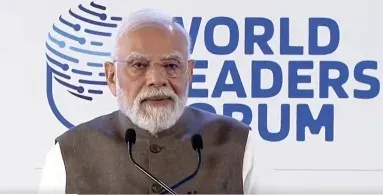
PM Modi addressed the ET World Leaders Forum in New Delhi on 21 August , arguing that lasting progress requires decisions that serve both present and future needs.
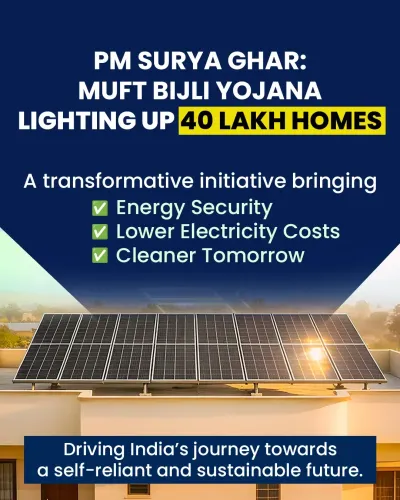
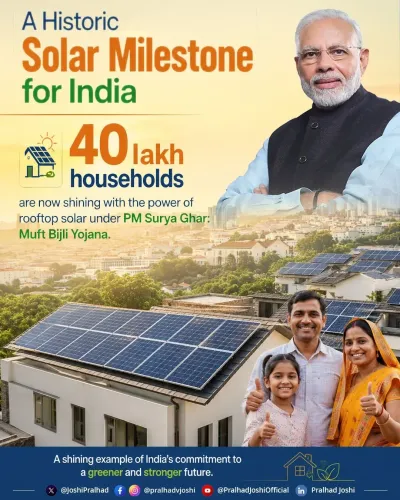
The PM Surya Ghar Muft Bijli Yojana has enrolled more than 50 lakh families , with the government disbursing over ₹22,000 crore for solar installations.
Beneficiaries are reporting zero electricity bills and additional income from selling surplus power to the grid.
The PM-KUSUM Yojana has relieved farmers of electricity anxiety for irrigation, Modi said.
Modi affirmed that scheme benefits would continue expanding irrespective of electoral cycles .
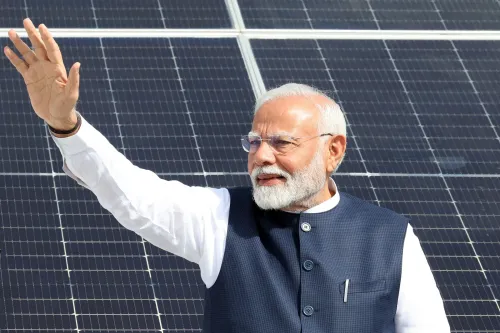
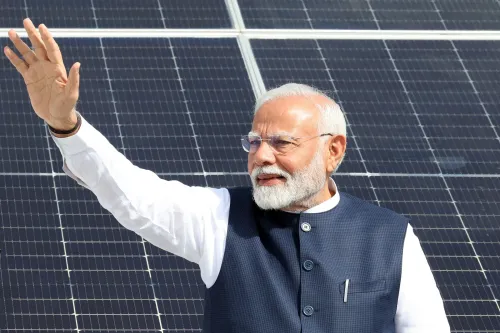
Prime Minister Narendra Modi on Friday, 21 August said that genuine national progress stems from policy decisions whose impact is felt on the ground and which balance the needs of both present and future generations — not short-term announcements engineered for electoral dividends. He made these remarks at the World Leaders Forum organised by The Economic Times in New Delhi.
Long-Term Vision Over Electoral Cycles
Modi argued that in politics, the daily news cycle is often captured by decisions whose effects last no more than a day. Earlier governments, he said, routinely made pre-election announcements that risked fragmenting the national fabric. Lasting transformation, he maintained, comes only from policies that deliver visible results while simultaneously securing the country's long-term interests.
PM-KUSUM and PM Surya Ghar: Flagship Examples
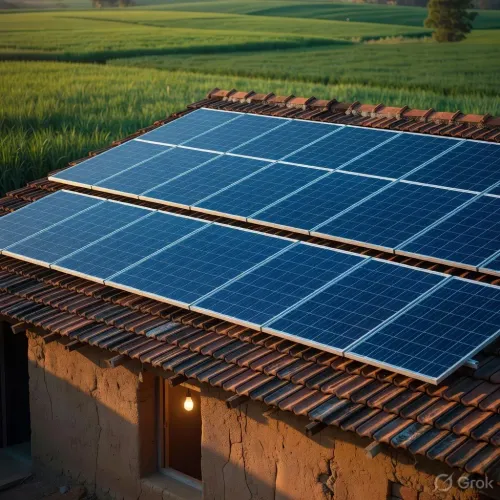
The Prime Minister cited two schemes as illustrations of this governance philosophy. Under the PM-KUSUM Yojana, farmers have been freed from the persistent anxiety of unreliable electricity for irrigation. The PM Surya Ghar Muft Bijli Yojana has, he said, converted household rooftops into sources of free power, delivering tangible relief to the middle class.
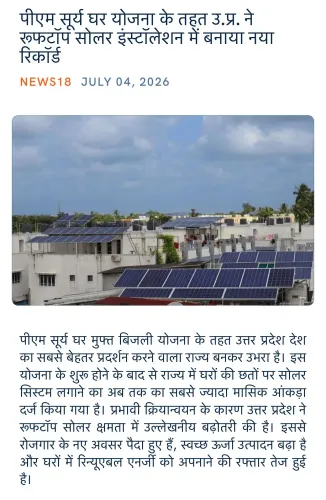
'We had planned to place a sun on the roof of every house,' Modi said, noting that more than 50 lakh families are now enrolled in the scheme. The government has disbursed over ₹22,000 crore to these households for solar system installation.
Zero Bills, Surplus Income for Beneficiaries
Beneficiaries are generating electricity for daily household needs — running washing machines, televisions, and other appliances — while also selling surplus power back to the grid. As a result, electricity bills for participating families have reportedly fallen to zero, with additional income beginning to flow in.
Modi observed that the scheme has addressed everyday hardships that once went unnoticed in policy circles: power cuts that spoiled milk and disrupted the studies of school-going children. Free or subsidised appliances have, he said, become a reality for many of these families.
India's Role in Shaping the Global Future
Reaffirming his government's commitment to sustained effort, Modi said work would continue with full dedication to accelerate the country's progress. He expressed confidence that India would play a significant role in shaping the world's future, projecting the emergence of a stronger, safer, and more capable India contributing meaningfully on the global stage.
The address closed with a call for governance rooted in long-term vision, with Modi underscoring that the benefits of rooftop solar — and by extension, transformative policy — would continue expanding irrespective of electoral cycles.
Point of View
But the deeper question is whether zero electricity bills and surplus income are being independently verified at the household level or are government self-reported metrics. Rooftop solar is a genuine structural intervention, yet the scheme's long-term success hinges on grid infrastructure and net-metering policy that varies sharply across states. The global stage amplifies the message; the ground reality will determine whether it holds.
NationPress
6 Oct 2026
Frequently Asked Questions
What did PM Modi say at the ET World Leaders Forum?
PM Modi said that true national progress comes from policy decisions whose impact is felt on the ground and that balance present and future needs, rather than short-term announcements made for electoral gains. He cited PM-KUSUM and PM Surya Ghar as examples of this governance approach.
How many families have joined the PM Surya Ghar Muft Bijli Yojana?
More than 50 lakh families are currently enrolled in the PM Surya Ghar Muft Bijli Yojana, according to PM Modi's remarks. The government has provided over ₹22,000 crore to these households for installing rooftop solar systems.
What benefits does the PM Surya Ghar scheme offer?
The scheme enables households to generate their own electricity for daily needs and sell surplus power back to the grid, reportedly bringing electricity bills to zero while generating additional income. Modi also said it has ended power cuts that once disrupted studies and spoiled food.
What is the PM-KUSUM Yojana?
The PM-KUSUM Yojana is a government scheme aimed at providing reliable solar-powered electricity to farmers for irrigation, relieving them of dependence on erratic grid supply. Modi cited it as an example of a policy delivering visible, ground-level impact.
Why did PM Modi criticise earlier governments' approach to policymaking?
Modi argued that earlier governments frequently made pre-election announcements that risked dividing the nation and delivered only short-lived impact. He contrasted this with what he described as his government's focus on policies that secure long-term national interests alongside immediate benefits.