Mumbai housing redevelopment sales outpace new launches for first time
Synopsis
For the first time, Mumbai's housing redevelopment sales are consistently outpacing new project launches — a structural turning point, not a blip. With 2,156 acres in the slum pipeline (four times the past 30 years of activity) and 13,500 cessed buildings awaiting replacement, the city is no longer choosing redevelopment; it has no alternative.
Key Takeaways
Mumbai housing redevelopment sales have exceeded new project launches for the first time , per a JLL–NAREDCO report released 3 September .
Over 1,000 redevelopment projects have been launched since 2020 , comprising 13% of Mumbai's total residential supply.
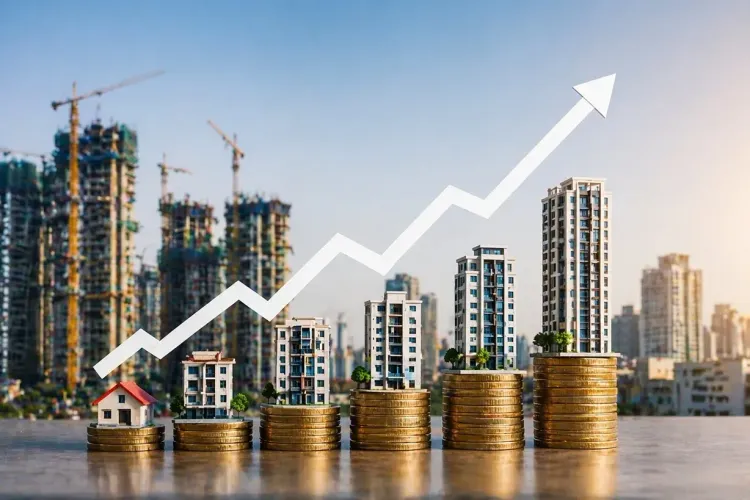
Redevelopment's share of housing sales rose to 15% in 2025–H1 2026, up from 6% between 2016 and 2021.
Nearly 2,156 acres are in the slum redevelopment pipeline — roughly four times all such activity over the previous 30 years .
An estimated 13,500 cessed buildings across Mumbai require urgent replacement.
Policy reforms including DCPR 2034 and reduced consent thresholds are credited with accelerating project execution.
Mumbai's housing redevelopment market has crossed a pivotal threshold, with sales consistently exceeding new project launches for the first time, according to a joint report by JLL and NAREDCO released on Thursday, 3 September. The milestone signals a structural shift in how India's financial capital is meeting its housing demand — not through greenfield expansion, but through rebuilding from within.
Scale of the Redevelopment Wave
More than 1,000 redevelopment projects have been launched since 2020, accounting for 13% of Mumbai's overall residential supply. Redevelopment's share of total housing sales has surged to 15% in the period spanning 2025 to the first half of 2026, a sharp rise from just 6% recorded between 2016 and 2021. Notably, 850 projects have been launched since 2020 alone, marking a shift from fragmented, single-plot reconstructions to a city-wide systemic transformation.
The slum redevelopment pipeline is particularly striking: nearly 2,156 acres are currently in various stages of processing — representing approximately four times all slum redevelopment activity recorded over the previous 30 years.
Why Land Scarcity Is Driving the Shift
Karan Singh Sodi, Senior Managing Director — Mumbai MMR & Gujarat and Alternatives, India, JLL, framed the shift in stark terms. 'Mumbai faces a fundamental constraint that no regulatory framework can resolve: an absolute scarcity of developable land. Redevelopment has transitioned from a commercial opportunity into an urban survival imperative,' he said.
Sodi added: 'With virtually no vacant land left and 13,500 cessed buildings requiring urgent replacement, the question is not whether redevelopment will dominate Mumbai's supply, but how quickly we can safely execute this essential transformation.'
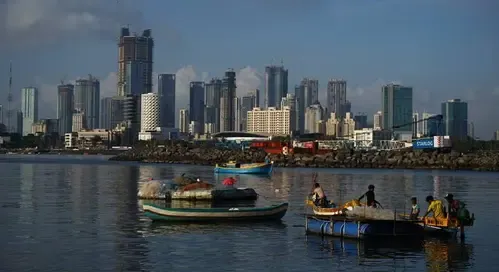
The city's geography — hemmed by the Arabian Sea, Thane Creek, and Sanjay Gandhi National Park — has long constrained horizontal expansion. Peripheral developments in areas like Navi Mumbai and Thane have historically carried a 5–7 year infrastructure lag, making redevelopment in established neighbourhoods increasingly attractive to buyers.
Policy Reforms Accelerating Execution
Kamlesh Thakur, President, NAREDCO Maharashtra, attributed the momentum to progressive policy interventions. He said the structural shift demonstrates how reforms such as DCPR 2034, reduced consent thresholds, and cluster-focused redevelopment policies are streamlining execution and restoring market confidence.
These regulatory changes have lowered the procedural barriers that historically stalled redevelopment projects — particularly in older, densely occupied neighbourhoods where securing resident consent was a persistent bottleneck.
What This Means for Buyers and Developers
The report characterises the transition from a launch surge to sustained absorption as confirmation that redevelopment is a durable supply mechanism rather than a policy-driven bubble. For developers, the trend provides confidence for long-term capital deployment. For buyers, it offers access to new construction in well-connected, established locations — without the extended wait associated with peripheral projects.
With 13,500 cessed buildings still awaiting replacement and the slum pipeline at a historic high, Mumbai's redevelopment cycle appears to have moved well past its inflection point. How swiftly and safely the city can execute at this scale will define its housing trajectory for the decade ahead.
Point of View
Which is a demand signal, not just a supply story. Yet the same report flags 13,500 cessed buildings still awaiting action — a backlog so large that execution risk, not policy intent, is now the central variable. DCPR 2034 and consent-threshold reforms have cleared procedural hurdles, but Mumbai's redevelopment pipeline has historically been littered with projects stalled mid-demolition. The real test is whether institutional capital follows this absorption data or waits for a longer track record of safe, on-time delivery at scale.
NationPress
18 Oct 2026
Frequently Asked Questions
What does it mean that Mumbai redevelopment sales are outpacing new launches?
It means homebuyers in Mumbai are purchasing units in redevelopment projects faster than developers are launching new ones — a first for the city. According to the JLL–NAREDCO report, this confirms redevelopment as a sustainable supply mechanism rather than a short-term policy-driven surge.
How many redevelopment projects have been launched in Mumbai since 2020?
More than 1,000 redevelopment projects have been launched since 2020, comprising 13% of Mumbai's overall residential supply. Of these, 850 projects were formally tracked in the report's analysis period.
What are cessed buildings and why do they matter?
Cessed buildings are older structures in Mumbai that pay a cess (levy) to the Maharashtra Housing and Area Development Authority (MHADA) and are typically in a state of disrepair requiring urgent replacement. The report estimates 13,500 such buildings currently need redevelopment across the city.
How have government policies contributed to Mumbai's redevelopment boom?
Reforms such as DCPR 2034, reduced resident consent thresholds, and cluster-focused redevelopment policies have streamlined approvals and lowered procedural barriers. NAREDCO Maharashtra President Kamlesh Thakur credited these interventions with restoring market momentum and enabling faster execution.
Why are buyers choosing redevelopment projects over new peripheral developments?
Redevelopment projects are located in established, well-connected neighbourhoods, whereas peripheral developments in areas like Navi Mumbai and Thane typically carry a 5–7 year infrastructure lag. With virtually no vacant land left within Mumbai's core, redevelopment offers buyers new construction without the wait.