Mysuru Dasara minister row: Caste angle is 'low-level thinking', says Karnataka Dy CM Parameshwara
Synopsis
Three Karnataka ministers were barred by police from entering Mysuru Palace for the Nandi Dhwaja puja during Dasara, forcing CM Shivakumar to personally escort them in. Dy CM Parameshwara has now pushed back on the caste framing — but with an inquiry ordered and Dalit organisations already vocal, the political fallout is far from over.
Key Takeaways
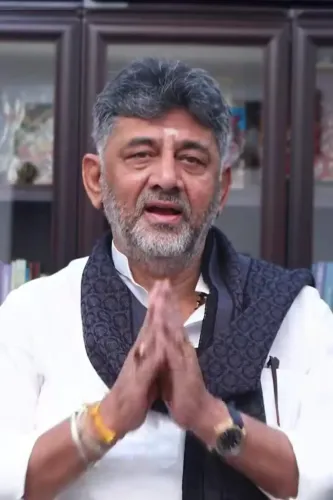
Parameshwara on 22 October called giving a caste angle to the Mysuru Dasara minister-entry incident 'low-level thinking.' Police allegedly stopped Ministers Shivaraj Tangadgi , P.M.
Narendra Swamy , and K.S.
Basavanthappa from entering Mysuru Palace for the Nandi Dhwaja puja on 21 October .
Shivakumar intervened in person, turned back, and escorted the ministers inside; he later described the police conduct as 'arrogant.' Shivakumar has directed Chief Secretary Shalini Rajneesh to examine video footage and submit an enquiry report.
Parameshwara objected to labelling the ministers as 'Dalit ministers', arguing they should simply be called ministers.
Dalit organisations and progressive groups have criticised the treatment of the three ministers, keeping political pressure on the ruling side.
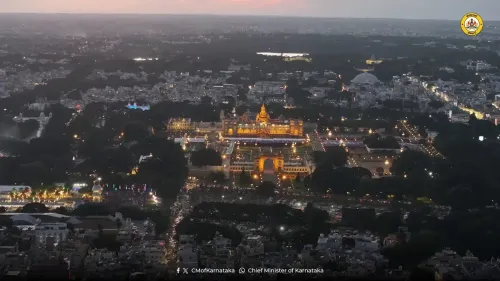
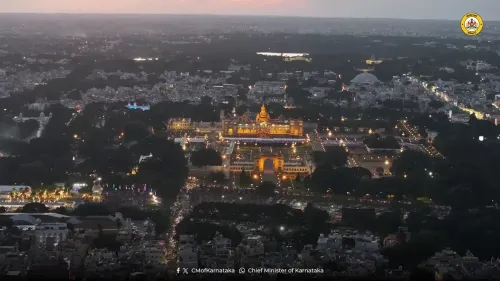
Karnataka Deputy Chief Minister G. Parameshwara on Thursday, 22 October dismissed attempts to attach a caste dimension to the incident in which three Cabinet ministers were stopped from entering the Mysuru Palace premises during the Nandi Dhwaja puja on Jamboo Savari day of the Mysuru Dasara festival, calling such framing 'low-level thinking.' Parameshwara asserted that police personnel operate on instructions from senior officers and urged all sides to refrain from exploiting the episode for political gain.
What Parameshwara Said
Addressing reporters in Bengaluru, the Deputy Chief Minister said he had watched the video footage of the incident and that the police officer involved had stopped the ministers without manhandling them. He maintained that the officer was likely acting on a protocol instruction permitting only the Chief Minister inside the venue at that point.
'If the officer has instructions not to allow anyone other than the Chief Minister, he will not let others in. That is protocol. What is wrong with the police following instructions from their senior officers?' Parameshwara said.
He also objected to the repeated use of the phrase 'Dalit ministers' in public discourse around the episode. 'Isn't it enough to call them ministers? Why use the term Dalit ministers? Would you refer to other ministers by their communities? It is wrong,' he said. Parameshwara acknowledged that Indian society has distinct social layers but cautioned that such categorisations should not be 'weaponised' to manufacture controversy.
The Incident at Mysuru Palace
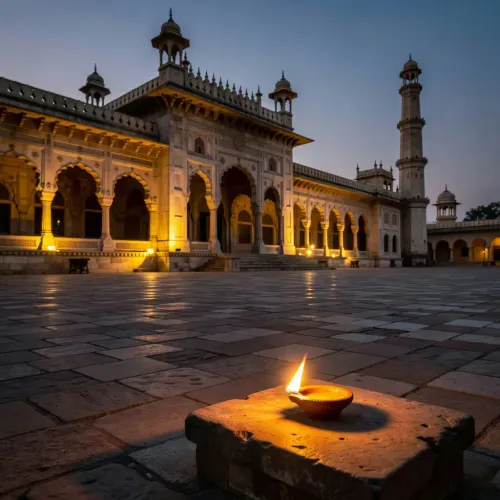
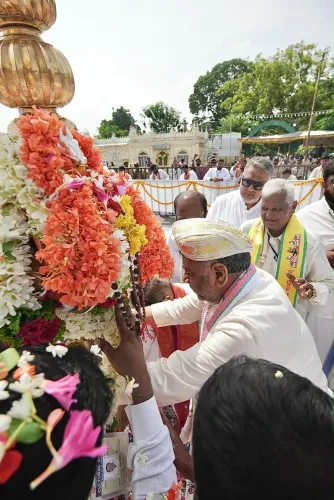
The controversy erupted on Wednesday, 21 October, when police personnel at the Mysuru Palace premises allegedly prevented Ministers Shivaraj Tangadgi, P.M. Narendra Swamy, and K.S. Basavanthappa from entering the venue for the traditional Nandi Dhwaja puja during the Jamboo Savari procession. Chief Minister D.K. Shivakumar subsequently intervened, turned back, and personally escorted the ministers into the venue.
The episode triggered a political debate over who had authorised the police to restrict entry, with Dalit organisations and progressive groups criticising the treatment of the three ministers, all of whom belong to marginalised communities. This comes amid a broader political climate in Karnataka where caste identity has repeatedly intersected with questions of protocol and institutional access.
Chief Minister Shivakumar Orders Enquiry
Chief Minister Shivakumar on Thursday directed Chief Secretary Shalini Rajneesh to examine the video footage and conduct a formal enquiry into the incident. In a press statement, Shivakumar said the police officers had 'behaved arrogantly' by preventing the ministers from entering the venue.
'Everything cannot be done through Mysuru District In-Charge Minister Yathindra Siddaramaiah alone. Against this backdrop, I had assigned responsibilities to all the ministers. They are all our leaders, and I ensured that they were allowed inside. I had to go back and bring them in. What else can I do?' the Chief Minister said.
Shivakumar also noted that the Mysuru Dasara celebrations had otherwise been conducted successfully and that responsibilities had been distributed among all ministers given the scale of the event.
Political Fallout and What Comes Next
The incident has widened the political fault lines within the Karnataka government's management of state ceremonial events, raising questions about the chain of command at high-profile public functions. Notably, the three ministers at the centre of the episode are from Scheduled Caste and Other Backward Class communities, lending the controversy a social-justice dimension that opposition parties and civil society groups are unlikely to let rest quietly.
Chief Secretary Shalini Rajneesh is expected to submit her enquiry report after reviewing the available footage. The findings could determine whether the restriction was a failure of coordination, a protocol misapplication, or something more deliberate — a question that both the ruling side and its critics are watching closely.
Point of View
And why were sitting ministers not on any permitted list? The Chief Secretary inquiry will matter only if it traces the instruction chain rather than stopping at 'protocol.' Karnataka's Congress government, already navigating a crowded coalition of caste interests, can ill afford a perception that ceremonial spaces remain informally gatekept along community lines — regardless of whether Wednesday's episode was deliberate or a coordination failure.
NationPress
22 Oct 2026
Frequently Asked Questions
What happened at Mysuru Palace during Dasara that triggered the controversy?
Police personnel at the Mysuru Palace premises allegedly prevented three Karnataka ministers — Shivaraj Tangadgi, P.M. Narendra Swamy, and K.S. Basavanthappa — from entering the venue for the traditional Nandi Dhwaja puja during the Jamboo Savari procession on 21 October. Chief Minister D.K. Shivakumar intervened and personally escorted the ministers inside.
Why did Dy CM Parameshwara call the caste angle 'low-level thinking'?
Parameshwara argued that the police officer was acting on protocol instructions to permit only the Chief Minister, and that framing the episode as caste discrimination was inappropriate. He also objected to repeatedly calling the three ministers 'Dalit ministers', saying they should simply be referred to as ministers.
What action has the Karnataka government taken after the incident?
Chief Minister D.K. Shivakumar has directed Chief Secretary Shalini Rajneesh to examine video footage of the incident and submit an enquiry report. Shivakumar also stated that the police officers had 'behaved arrogantly' by preventing the ministers from entering.
Who are the ministers at the centre of the Mysuru Dasara incident?
The three ministers are Shivaraj Tangadgi, P.M. Narendra Swamy, and K.S. Basavanthappa — all members of the Karnataka Cabinet from Scheduled Caste and Other Backward Class communities, whose treatment drew criticism from Dalit organisations and progressive groups.
What is the Nandi Dhwaja puja at Mysuru Dasara?
The Nandi Dhwaja puja is a traditional religious ritual held at the Mysuru Palace as part of the annual Mysuru Dasara festival, which culminates in the Jamboo Savari procession. It is a ceremonially significant event that senior government officials and ministers customarily attend.