NCB busts mephedrone lab in Ahmedabad, cafe owner arrested with 130 kg chemicals
Synopsis
A cafe owner was hiding a mephedrone lab behind a fake almirah and tiled floor in a residential basement in Ahmedabad's Sarkhej — sourcing chemicals via Indiamart.com. The NCB's bust exposes how synthetic drug networks are exploiting e-commerce supply chains and urban housing to evade detection across Gujarat, Maharashtra, MP, and Rajasthan.
Key Takeaways
The NCB Ahmedabad Zonal Unit busted a clandestine mephedrone lab in Sarkhej, Ahmedabad on Sunday, 15 November 2026 .
Cafe owner Mudasar Ahmed Khan was arrested; the lab was hidden in a basement behind a concealed almirah and removable tiled flooring.
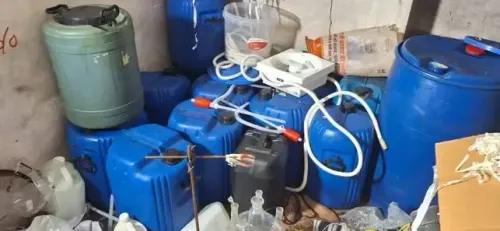
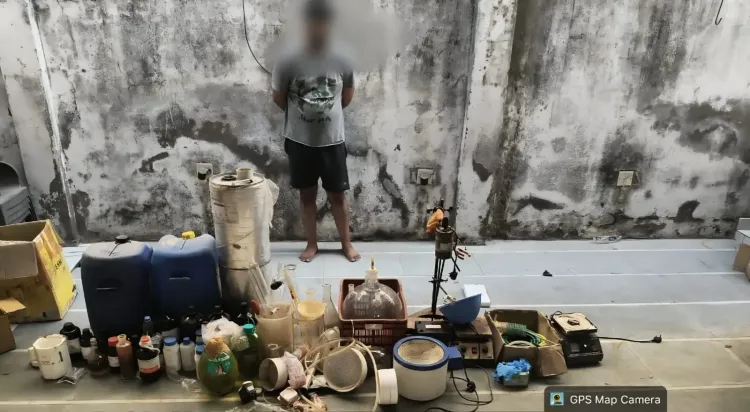
25 chemicals weighing 130.613 kg , including methylamine, bromine, and hydrobromic acid, were seized along with laboratory equipment and suspected mephedrone in powder and liquid form.
Khan admitted to learning the manufacturing process from the internet and procuring chemicals from Mandsaur , Ahmedabad , and Indiamart.com .
Khan had four prior criminal cases against him, including attempted murder and criminal intimidation.
The NCB flagged rising mephedrone use across Gujarat, Madhya Pradesh, Maharashtra, and Rajasthan .
The Narcotics Control Bureau (NCB) busted a clandestine mephedrone (MD) manufacturing laboratory in the Sarkhej area of Ahmedabad, Gujarat, arresting a cafe owner and seizing 25 chemicals weighing 130.613 kg, officials confirmed on Monday, 16 November 2026. The operation, carried out the previous day, marks a significant strike against the growing synthetic drug manufacturing network in western India.
How the Operation Unfolded
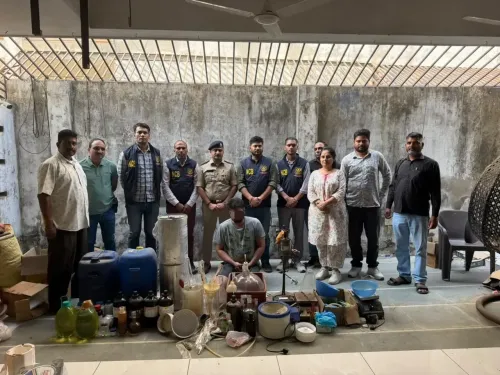
The NCB Ahmedabad Zonal Unit, operating in collaboration with the Gujarat Police, conducted a house search at a residential building in Sarkhej on Sunday. The laboratory was hidden in a basement room, with its entrance concealed inside the house — behind what appeared to be an almirah and a removable section of tiled flooring, according to the NCB.
A forensic team from the National Forensic Sciences University (NFSU) also visited the site. The elaborate concealment suggests a deliberate effort to avoid detection over an extended period.
Who Was Arrested and What He Said
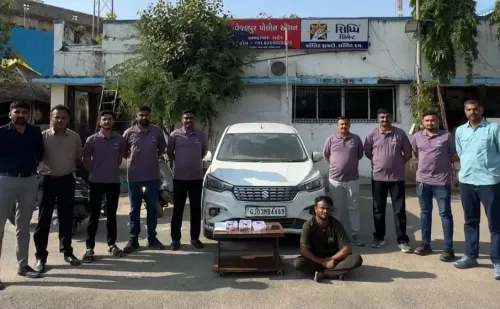
Mudasar Ahmed Khan, who was residing at the premises with his family, was arrested during the raid. According to the NCB, Khan admitted to learning the mephedrone manufacturing process from the internet and to sourcing the required chemicals and laboratory equipment from multiple suppliers in Mandsaur and Ahmedabad, as well as through the online platform Indiamart.com.
A background check revealed that four prior criminal cases had been registered against Khan, covering charges of rioting, criminal intimidation, mischief by fire, and attempted murder, according to the agency. Khan's cafe, the NCB said, is suspected to have served as a delivery point for mephedrone.
What Was Seized
Among the 25 chemicals recovered were methylamine, bromine, and hydrobromic acid, together weighing 130.613 kg. Investigators also seized laboratory equipment used in the synthesis process, including heating mantles, digital magnetic stirrers, temperature-measuring instruments, pipettes, round-bottom flasks, dropping funnels, separating funnels, and beakers. Suspected mephedrone in both powder and liquid form was also recovered.
The Broader Synthetic Drug Threat
The NCB said the Ahmedabad bust highlights a worsening trend of clandestine laboratories being embedded within residential buildings, industrial premises, farms, and remote locations. Mephedrone use as a psychotropic substance has been rising across Madhya Pradesh, Maharashtra, Gujarat, and Rajasthan, the agency noted. The use of open e-commerce platforms to procure precursor chemicals adds a layer of complexity to enforcement efforts that investigators are increasingly flagging.
The NCB is expected to pursue further leads from Khan's disclosed supply chain to identify other nodes in the network.
Point of View
Precursor chemicals on Indiamart, and a residential basement as the factory floor. The fact that Khan sourced inputs through a mainstream B2B platform points to a regulatory gap that law enforcement has yet to close: e-commerce platforms carrying dual-use chemicals have few obligations to flag bulk buyers. With mephedrone now entrenched across four states, the NCB's operational capacity is being stress-tested; arresting individual operators matters less than dismantling the supply chain they tap into.
NationPress
16 Nov 2026
Frequently Asked Questions
What was found in the NCB raid in Ahmedabad's Sarkhej area?
The NCB recovered 25 chemicals weighing 130.613 kg, including methylamine, bromine, and hydrobromic acid, along with laboratory equipment such as heating mantles, flasks, and stirrers. Suspected mephedrone in both powder and liquid form was also seized from the hidden basement lab.
Who was arrested in the Ahmedabad mephedrone lab case?
Mudasar Ahmed Khan, a cafe owner residing at the raided premises in Sarkhej, Ahmedabad, was arrested. He had four prior criminal cases registered against him, including charges of attempted murder and criminal intimidation.
How did the accused learn to manufacture mephedrone?
According to the NCB, Khan admitted to learning the manufacturing process from the internet. He sourced the required chemicals and equipment from suppliers in Mandsaur and Ahmedabad, as well as through the online platform Indiamart.com.
How was the clandestine drug lab concealed?
The laboratory was hidden in a basement room of a residential building in Sarkhej. Its entrance was disguised inside the house using what appeared to be an almirah and a removable section of tiled flooring, making it difficult to detect during routine inspections.
Why is mephedrone a growing concern in Gujarat and surrounding states?
The NCB has flagged increasing use of mephedrone as a psychotropic substance across Gujarat, Madhya Pradesh, Maharashtra, and Rajasthan. Clandestine labs are increasingly being set up in residential buildings, farms, and remote locations, complicating enforcement efforts.