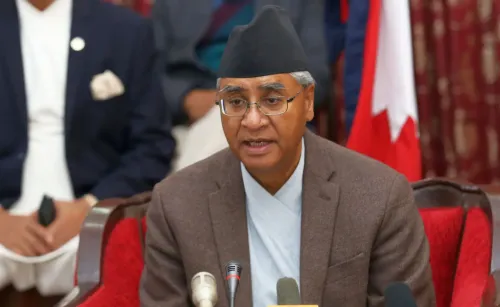
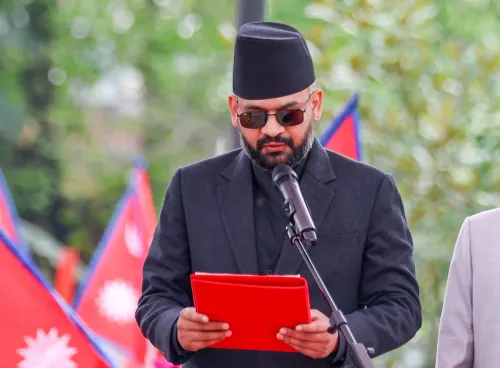
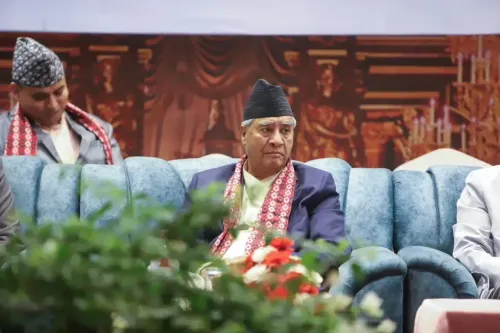
Nepal ex-Deputy PM Rayamajhi, ex-Home Minister Khand convicted in fake Bhutanese refugee scam

Synopsis
A Kathmandu court has done what Nepal's political system rarely manages — convicted a former Deputy PM and former Home Minister in a scam that used fake Bhutanese refugee identities to illegally funnel Nepali citizens to the US. The court's explicit finding of 'organised crime' involving politicians, bureaucrats, and middlemen makes this verdict a landmark moment for accountability in Nepal.
Key Takeaways
Kathmandu District Court convicted former Deputy PM Top Bahadur Rayamajhi and former Home Minister Bal Krishna Khand on 8 July in the fake Bhutanese refugee scam.
A total of 16 individuals were convicted; 7 of 30 originally charged were acquitted.
Charges include forgery, fraud, organised crime, and offences against the state.
The court found that counterfeit Bhutanese refugee identity cards were issued and official documents were falsified.
Sentencing hearing is scheduled for 13 July ; penalties are yet to be determined.
Around 113,000 genuine Bhutanese refugees were resettled between 2007 and 2016 ; the scam exploited the concluded programme to defraud Nepali citizens.
A Kathmandu District Court has convicted former Deputy Prime Minister Top Bahadur Rayamajhi, former Home Minister Bal Krishna Khand, and 14 others in the fake Bhutanese refugee scam — a case that shook Nepal's political establishment and exposed a coordinated conspiracy to fraudulently send Nepali citizens to the United States under the guise of refugee resettlement.
The verdict, delivered on 8 July, marks a rare instance of senior political figures in Nepal being held judicially accountable for a state-level fraud that the court itself described as an offence against the nation.
What the Court Found
Presiding Judge Tej Bahadur Khadka found the defendants guilty on charges including forgery, fraud, organised crime, and offences against the state — with specific charges varying based on each individual's role in the scheme. The court held that the accused had deceived Nepali citizens by falsely promising to send them to the US, exploiting the pretext of additional Bhutanese refugee resettlement quotas — even though the third-country resettlement programme had formally concluded in 2016.
Counterfeit identity cards identifying individuals as Bhutanese refugees were found to have been issued, and a fake report was used to alter original documents, according to the court order.
Who Was Convicted
Alongside Rayamajhi and Khand, those convicted include former Home Secretary Tek Narayan Pandey; scam network members Keshav Dulal, Sanu Bhandari, Sagar Rai, Sandesh Sharma, and Indrajit Rai — the security adviser to then Home Minister Ram Bahadur Thapa. Also convicted were Govinda Chaudhary; former Nepali Congress lawmaker Angtawa Sherpa; Shamsher Miya, then chair of the Haj Committee; Narendra KC, personal secretary to then Home Minister Khand; alleged middleman Hari Bhakta Maharjan; and Niranjan Kumar Kharel.
The court noted that while no evidence was found that Khand personally received any money, he was convicted as an accomplice in organised fraud for acting under the network's undue influence and facilitating the scheme.
Why the Court Called It Organised Crime
The court's order was unambiguous in classifying the conspiracy as organised crime, stating: 'The offence of organised crime has been established because the coordinated scheme involved political figures, administrators, government employees and middlemen, who collectively defrauded victims of large sums of money by falsely promising to send them to the United States as Bhutanese refugees. Such acts cannot be regarded as ordinary fraud committed by individuals.'
The court further observed that those responsible had directly undermined the dignity of Nepali citizens and damaged Nepal's international reputation.
Background: The Bhutanese Refugee Crisis
Over 100,000 Bhutanese refugees had been living in camps in Nepal since the late 1980s, following the alleged ethnic persecution of the Nepali-speaking minority in Bhutan. Between 2007 and 2016, approximately 113,000 of these refugees were resettled across eight countries, primarily the United States, according to the International Organisation for Migration (IOM). The scam exploited public awareness of this programme to deceive Nepali citizens into paying for fraudulent resettlement slots.
Sentences and Acquittals
Of the 30 individuals originally charged, seven were acquitted after the prosecution failed to prove charges against them. Cases against remaining absconding defendants remain in abeyance. The court is yet to determine sentences for those convicted; a hearing has been scheduled for 13 July to decide penalties.
The verdict is expected to set a significant precedent for political accountability in Nepal, where high-profile convictions of serving or former senior officials have historically been rare.
Point of View
Bureaucrats, and middlemen signals judicial resolve, but the real accountability question comes at sentencing on 13 July. Nepal has a history of high-profile cases stalling at the punishment stage, and a lenient sentence could undercut the verdict's deterrent value. The scam also exposes a structural vulnerability: when legitimate humanitarian programmes like refugee resettlement conclude, the information vacuum they leave becomes fertile ground for exploitation by well-connected networks. India's neighbourhood stability interest in a functioning Nepali rule-of-law system makes this verdict worth watching closely.
NationPress
7 Oct 2026
Frequently Asked Questions
What is the fake Bhutanese refugee scam in Nepal?
The scam involved a network of politicians, bureaucrats, and middlemen who deceived Nepali citizens into paying to be sent to the United States under the false pretence that they were eligible Bhutanese refugees. The Bhutanese refugee resettlement programme had officially concluded in 2016, but the accused allegedly fabricated quotas and issued counterfeit refugee identity cards to defraud victims.
Who has been convicted in the Nepal fake refugee scam?
Former Deputy Prime Minister Top Bahadur Rayamajhi, former Home Minister Bal Krishna Khand, former Home Secretary Tek Narayan Pandey, and 13 others were convicted by the Kathmandu District Court on 8 July. Charges vary by individual and include forgery, fraud, organised crime, and offences against the state.
What sentence do the convicted face?
The Kathmandu District Court has not yet determined the sentences. A hearing is scheduled for 13 July to decide the penalties for all 16 convicted individuals.
Why did the court classify this as organised crime?
The court found that the scheme required coordinated participation of political figures, administrators, government employees, and middlemen — going well beyond what could be classified as ordinary individual fraud. The scale of deception, use of forged documents, and involvement of senior state actors met the legal threshold for organised crime under Nepali law.
What happened to the genuine Bhutanese refugees in Nepal?
Over 100,000 Bhutanese refugees had lived in camps in Nepal since the late 1980s after fleeing alleged ethnic persecution in Bhutan. Between 2007 and 2016, approximately 113,000 were resettled across eight countries, primarily the United States, according to the International Organisation for Migration (IOM). A small number who declined resettlement remained in Nepal.