NITI Aayog pushes evaluation framework to unlock India's gold mining potential
Synopsis
India is one of the world's biggest gold consumers but mines a fraction of its demand — and NITI Aayog is now pushing a structured evaluation framework to change that. The call for internationally benchmarked criteria, better geological data, and Centre-state regulatory coordination marks a serious institutional attempt to convert untapped reserves into domestic production and reduce a costly import bill.
Key Takeaways
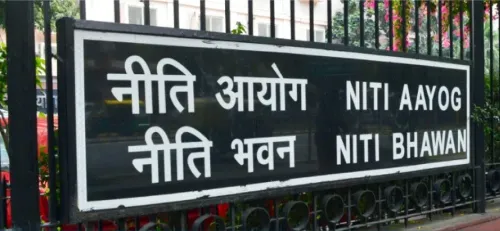
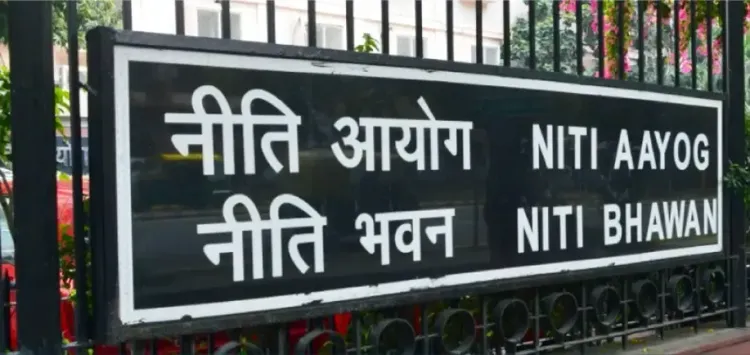
NITI Aayog CEO Anurag Jain called for a robust evaluation matrix for gold exploration and mining project awards on 11 November 2026 .
The framework aims to promote technical competence , attract investment, and support sustainable development of India's gold resources.
Key challenges identified include inadequate geological data , limited exploration, prolonged project timelines, and flawed auction design.
Stakeholders called for internationally accepted reporting standards for geological data and stronger Centre-state regulatory coordination .
The deliberations were anchored in a report by the Pahle India Foundation supported by the World Gold Council .
India's growing dependence on imported gold was flagged as a key macroeconomic concern driving the push for domestic mining reform.
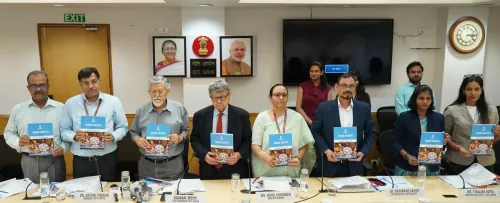
NITI Aayog CEO Anurag Jain on Wednesday, 11 November 2026, called for a robust evaluation matrix for awarding gold exploration and mining projects, arguing that a structured framework would promote technical competence, attract private investment, and support the sustainable development of India's untapped gold resources. Jain made the remarks at a high-level meeting convened to deliberate on a report titled India's Gold Mining Policy: Challenges, Learning and the Road Ahead, prepared by the Pahle India Foundation (PIF) with support from the World Gold Council (WGC).
Key Issues on the Table
Participants at the meeting spotlighted a cluster of structural bottlenecks holding back India's gold mining sector. These included inadequate geological data, limited exploration activity, prolonged project development timelines, flawed auction design, and persistent concerns over investment viability. The consensus was that each of these barriers, taken together, has suppressed what many experts consider a significantly under-exploited domestic resource base.
The deliberations also flagged the country's rising dependence on imported gold — a pressure point for both the current account deficit and foreign exchange reserves. Strengthening domestic exploration and mining capabilities, stakeholders argued, is therefore a question of economic resilience, not merely sectoral policy.
What the Evaluation Framework Would Do
According to reports, Jain emphasised drawing upon international best practices to design the evaluation matrix. The framework is intended to ensure that project awards reward genuine technical expertise rather than price bidding alone — a shift that proponents say would improve long-term project outcomes and reduce the risk of stranded assets. This approach mirrors reforms seen in jurisdictions such as Australia and Canada, where multi-criteria evaluation has historically yielded higher exploration success rates.
Data Standards and Regulatory Coordination
The meeting underscored the urgent need to improve the quality and availability of geological data through internationally accepted reporting standards. Stakeholders highlighted that unreliable or incomplete data remains a primary deterrent for both domestic and foreign investors conducting due diligence on Indian gold assets.
Equally critical, participants stressed, is streamlining regulatory approvals through stronger coordination between the Centre and state governments. A predictable, stable policy environment was identified as essential for improving project bankability — the degree to which a project can attract debt financing — and for encouraging greater private-sector participation in an industry currently dominated by limited public-sector activity.
Broader Policy Context
India is among the world's largest consumers of gold, yet domestic production remains negligible relative to demand, leaving the country heavily reliant on imports that run into tens of billions of dollars annually. This structural imbalance has long been flagged by economists as a drag on the current account. The PIF-WGC report and Wednesday's deliberations signal a renewed institutional push to address this gap through targeted policy reform. Notably, this meeting follows broader governmental momentum around critical minerals and resource self-sufficiency, areas that have received increased policy attention over the past two years.
How quickly the Centre translates these deliberations into binding policy frameworks — and whether states align — will determine whether India's gold mining sector can finally move from potential to production.
Point of View
And Wednesday's deliberations expose why: the problem is not geology but governance. Inadequate data standards, misaligned auction design, and Centre-state regulatory friction have collectively deterred the serious capital needed for deep exploration. The push for a multi-criteria evaluation matrix is conceptually sound, but India has a history of well-designed frameworks that stall in implementation. The real test will be whether the Centre can build the state-level buy-in that every previous mining reform has struggled to secure — without that, the report risks becoming another shelf document in a sector full of them.
NationPress
11 Nov 2026
Frequently Asked Questions
What did NITI Aayog say about India's gold mining sector?
NITI Aayog CEO Anurag Jain stressed the need for a robust evaluation matrix for awarding gold exploration and mining projects, drawing on international best practices to promote technical competence and attract investment. The remarks came at a meeting on 11 November 2026 to discuss a report on India's gold mining policy challenges and the road ahead.
What are the main challenges facing India's gold mining sector?
The key challenges include inadequate geological data, limited exploration activity, lengthy project development timelines, issues with auction design, and concerns over investment viability. These barriers have collectively suppressed domestic gold production despite India being one of the world's largest gold consumers.
Why is India's gold import dependence a concern?
India relies heavily on imported gold to meet domestic demand, which puts pressure on the current account deficit and foreign exchange reserves. Boosting domestic exploration and mining is seen as a way to reduce this structural imbalance and improve economic resilience.
What reforms were recommended at the NITI Aayog meeting?
Stakeholders recommended improving geological data quality through internationally accepted reporting standards, streamlining regulatory approvals via stronger Centre-state coordination, and creating a predictable policy environment to enhance project bankability and encourage private-sector participation.
Which organisations contributed to the gold mining policy report discussed at the meeting?
The report titled 'India's Gold Mining Policy: Challenges, Learning and the Road Ahead' was prepared by the Pahle India Foundation (PIF) with support from the World Gold Council (WGC). It served as the basis for the high-level deliberations hosted by NITI Aayog.