NITI Aayog Unveils Major Urban Governance Roadmap for Million-Plus Cities
Synopsis
NITI Aayog has released a sweeping urban governance reform blueprint calling for directly elected Mayors, integrated city services, and municipal bond access for India's million-plus cities — a bold attempt to finally deliver on the 74th Constitutional Amendment's three-decade-old promise of empowered urban local bodies.
Key Takeaways
NITI Aayog released the report Moving Towards Effective City Government on April 25, 2025 , targeting governance reforms in India's million-plus cities.
The report recommends a directly elected Mayor with a fixed tenure backed by an empowered Mayor-in-Council system to ensure accountability.
Key urban services including water supply, sanitation, and public transport are proposed to be brought under unified city government control.
Municipal finances are to be strengthened through own-source revenues, State Finance Commission transfers, and access to municipal bond markets .
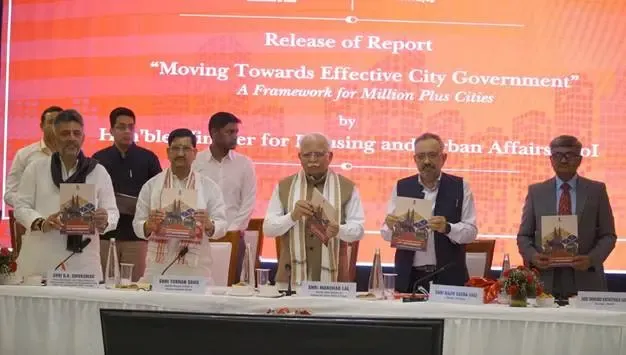
Union Minister Manohar Lal Khattar launched the report with Urban Development Ministers from 10-plus states in attendance.
States are urged to amend their Municipal Acts while MoHUA is asked to update the Model Municipal Law and provide reform incentives.
New Delhi, April 25: NITI Aayog on Saturday, April 25, released a landmark report outlining a comprehensive urban governance reform framework aimed at transforming India's million-plus cities into powerful engines of economic growth. The report, titled Moving Towards Effective City Government – A Framework for Million-Plus Cities, directly addresses long-standing structural failures in urban administration — including fragmented institutional authority, weak financial autonomy, and blurred accountability — that have historically hobbled Indian cities.
Why Urban Governance Reform Is Urgent Now
India's cities are expected to drive the country's ambition of becoming a $30 trillion economy and achieving the Viksit Bharat 2047 vision. Yet, decades of under-empowered municipal bodies, excessive state-level control, and starved urban finances have left city governments unable to deliver basic services efficiently.
This comes amid growing recognition that India's urbanisation rate is accelerating rapidly, with million-plus cities already contributing a disproportionately large share to national GDP. The report argues that without structural governance fixes, this urban potential will remain unrealised — a costly missed opportunity for the national economy.
Notably, the 74th Constitutional Amendment of 1992 had mandated devolution of powers to urban local bodies, but implementation across states has remained patchy and inconsistent for over three decades. This report is, in effect, a renewed push to make that constitutional promise a functional reality.
Key Recommendations of the NITI Aayog Report
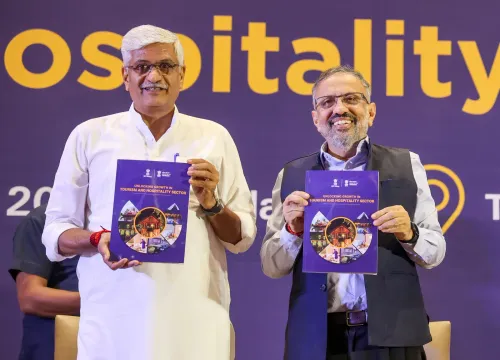
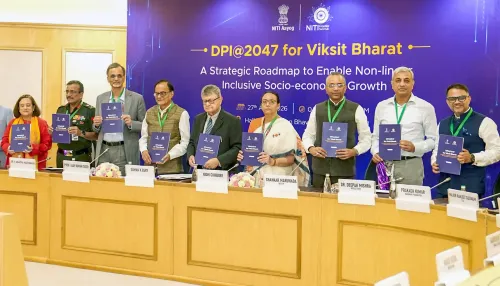
Union Minister Manohar Lal Khattar released the report at a high-profile event attended by Urban Development Ministers from more than 10 states, signalling broad political buy-in for the reform agenda.
The report's most significant recommendation is the introduction of a directly elected Mayor with a fixed tenure, supported by an empowered Mayor-in-Council system. This would replace the current diffuse leadership structures where elected mayors often lack real executive authority, with power concentrated in state-appointed bureaucrats or parastatals.
Other major recommendations include integrated urban service delivery by bringing water supply, sanitation, and public transport directly under city government control; strengthened municipal finances through own-source revenues and access to municipal bond markets; institutional restructuring of parastatal agencies under city government oversight; and legislative reform through amendments to state Municipal Acts.
What NITI Aayog Members Said
Rajiv Gauba, Member, NITI Aayog, described the report as the outcome of extensive deliberations, evidence-based analysis, and a study of global best practices conducted with a panel of domain experts. He emphasised that the framework is grounded in comparative international experience of cities that successfully transformed their governance structures.
The report's emphasis on directly elected Mayors mirrors successful models in cities like London, Tokyo, and New York, where strong mayoral authority has been directly linked to better urban outcomes in transport, housing, and public health.
Follow the Money: Who Benefits and Who Must Act
The push for municipal bonds is particularly significant. Currently, only a handful of Indian cities have successfully raised funds through this route. If implemented at scale, it could unlock billions in private capital for urban infrastructure, reducing dependence on central and state grants that are often delayed or politically conditioned.
However, the critical bottleneck remains political will at the state level. State governments have historically resisted devolving power to city governments, as urban control is a significant source of political patronage. The presence of ministers from more than 10 states at the launch is encouraging, but reform adoption will ultimately depend on whether states follow through with legislative amendments — a process that has stalled repeatedly since 1992.
Impact on Citizens and What Comes Next
For ordinary urban residents, effective implementation could mean faster resolution of civic complaints, more reliable water and sanitation services, better-planned public transport, and cities financially capable of long-term infrastructure investment without perpetual state bailouts.
The Ministry of Housing and Urban Affairs is expected to follow up with updated policy guidelines and reform incentive frameworks for states in the coming months. With India's urban population projected to cross 600 million by 2036, the window to get governance architecture right is narrowing — making these recommendations not just policy suggestions, but near-term national imperatives.
Point of View
Who have systematically defied the 74th Constitutional Amendment for over 30 years, will finally surrender patronage-rich urban control to empowered city halls. The proposal for directly elected Mayors is transformative on paper, yet it faces the same political resistance that has kept Indian cities administratively stunted despite their economic centrality. The presence of ministers from 10-plus states at the launch is optics; the true measure will be how many states amend their Municipal Acts within the next 24 months. India cannot build a $30 trillion economy on a foundation of governance-starved cities — and that urgency must translate into enforceable timelines, not just advisory frameworks.
NationPress
20 Sept 2026
Frequently Asked Questions
What is the NITI Aayog urban governance report about?
The NITI Aayog report titled Moving Towards Effective City Government presents a roadmap to reform urban governance in India's largest cities. It recommends directly elected Mayors, integrated service delivery, stronger municipal finances, and institutional restructuring to empower city governments.
What does the NITI Aayog report say about directly elected Mayors?
The report recommends introducing a directly elected Mayor with a fixed tenure supported by an empowered Mayor-in-Council system. This aims to bring clarity, continuity, and accountability to city-level decision-making, replacing current fragmented leadership structures.
How does this report connect to India's Viksit Bharat 2047 goal?
The report positions urban governance reform as essential to achieving the Viksit Bharat 2047 vision and India's $30 trillion economy target. It argues that empowered, well-financed city governments are critical to driving economic growth, innovation, and employment at national scale.
What are municipal bonds and why does the NITI Aayog report mention them?
Municipal bonds are debt instruments issued by city governments to raise capital from financial markets for infrastructure projects. The report recommends enabling Indian cities to access municipal bond financing to reduce dependence on state and central grants and fund long-term urban development independently.
Who released the NITI Aayog urban governance report?
Union Minister Manohar Lal Khattar released the report on April 25, 2025. The event was attended by Urban Development Ministers from more than 10 states, reflecting broad-based political participation in advancing urban governance reforms across India.