Pakistan 2026-27 budget slammed by economists, civil society over austerity
Synopsis
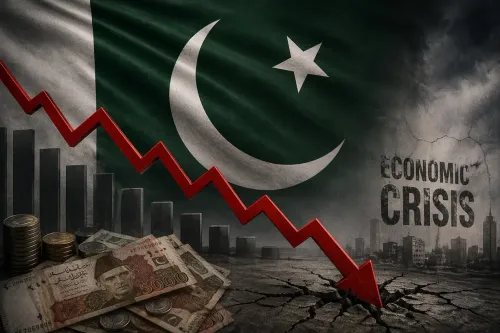
At an HRCP seminar in Islamabad, Pakistani economists and labour leaders tore into the 2026-27 budget — calling its gender commitments 'largely rhetorical,' its labour protections absent, and its tax structure punishing for the poor. The government's 'stabilisation' story, critics argue, is being written on the backs of those who can least afford it.
Key Takeaways
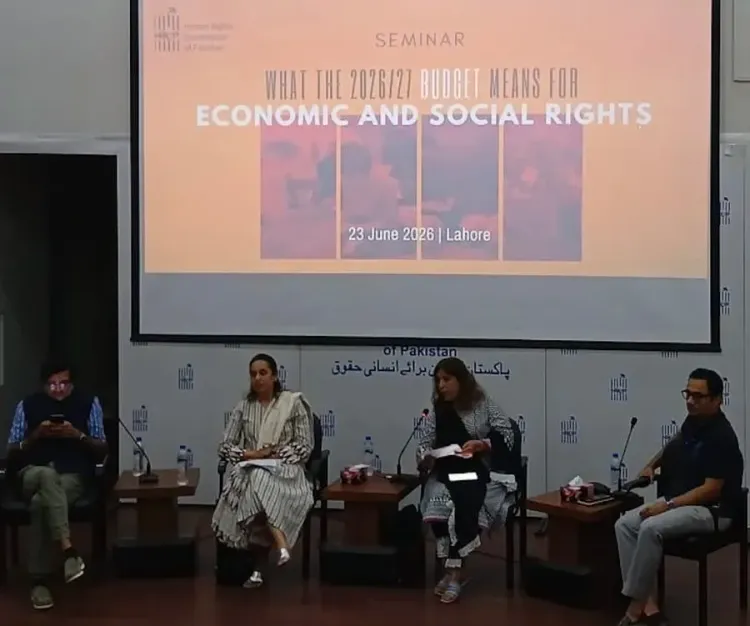
The Human Rights Commission of Pakistan (HRCP) hosted a seminar in Islamabad on 24 June where economists and civil society groups criticised the 2026-27 federal budget .
Economist Fahd Ali warned that cuts to education, health, social protection, and nutrition spending would 'deepen existing inequalities.' Economist Hadia Majid called the budget's gender commitments 'largely rhetorical,' noting tax relief measures were unlikely to benefit most women.
APTUF secretary general Rubina Jamil said the budget lacked protections for contract workers, domestic workers, garment workers, agricultural workers, and pensioners.
Economist Aqdas Afzal flagged over-reliance on indirect taxation and insufficient social protection, warning of serious consequences for households below the poverty line.
Participants said 'economic stabilisation' was being achieved at the 'cost of citizens' survival and social justice.'
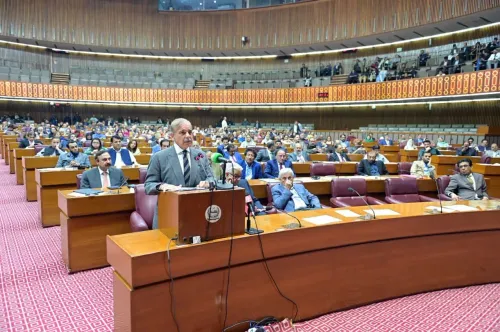
Several Pakistani economists and civil society groups have sharply criticised the country's 2026-27 federal budget, arguing it systematically undermines low-income household welfare, labour protections, and gender equality. The criticism was voiced at a seminar hosted by the Human Rights Commission of Pakistan (HRCP) in Islamabad on Tuesday, 24 June, drawing participants from across the country's civil society, labour federations, and trade unions.
Key Criticisms Raised at the HRCP Seminar
Pakistani economist Fahd Ali warned that reduced public spending on education, health, social protection, and nutrition would 'deepen existing inequalities.' He pointed to shifting household consumption patterns and declining nutritional quality as evidence of growing 'economic distress' at the ground level.
Economist Hadia Majid argued that the budget's gender commitments were 'largely rhetorical,' with responsibility for education, health, and protection having been shifted 'almost deviously' to fiscally constrained provinces. She noted that tax relief measures were 'unlikely to benefit most women' given low female participation in formal employment. Despite persistently poor outcomes in maternal health, child survival, and girls' education, Majid said the budget had failed to address structural barriers limiting women's economic participation.
Labour Leaders Flag Worker Vulnerabilities
Rubina Jamil, secretary general of the All Pakistan Trade Union Federation (APTUF), said the budget was 'developed without meaningful consultation with workers' representatives.' She criticised it for lacking targeted measures for contract workers, domestic and home-based workers, workers in hazardous sectors, garment workers, agricultural workers, and pensioners.
Jamil argued that the burden of economic adjustment fell disproportionately on those least able to absorb it, reinforcing perceptions that the budget favoured economic elites over working people.
Indirect Taxes and Social Protection Under Scrutiny
Economist Aqdas Afzal warned that 'continued reliance on indirect taxation, limited expansion of the tax base, and fiscal consolidation amid rising hardship' had placed disproportionate pressure on low-income households and salaried workers. He added that social protection remained 'insufficient and unevenly targeted,' with serious implications for households below the poverty line across Pakistan.
Government's 'Stabilisation' Narrative Challenged
Participants at the HRCP seminar collectively pushed back against the Pakistani government's framing of the budget as an 'economic stabilisation' exercise. According to the HRCP, organisations present included South Asia Partnership – Pakistan, Simorgh, the Women's Action Forum, the Aurat Foundation, and the Joint Action Committee, alongside multiple labour federations and trade unions. Their collective assessment: stabilisation was being achieved at the 'cost of citizens' survival and social justice.'
With the budget now tabled and implementation underway, civil society groups are expected to intensify pressure on the government to revisit allocations for social sectors and strengthen worker protections in supplementary measures.
Point of View
Gender advocates, and labour federations speaking in unusual unison. The government's 'stabilisation' framing sidesteps the distributional question entirely. Indirect taxes, which dominate Pakistan's revenue mix, are regressive by design — they hit the poor harder as a share of income. Until Islamabad broadens the direct tax base and rings-fences social sector spending, successive budgets will keep recycling the same critique.
NationPress
22 Sept 2026
Frequently Asked Questions
Why are economists criticising Pakistan's 2026-27 budget?
Economists at an HRCP seminar in Islamabad on 24 June argued that the budget deepens inequality by cutting spending on education, health, and social protection while relying heavily on indirect taxation that disproportionately burdens low-income households and salaried workers.
What did the HRCP seminar say about gender equality in the budget?
Economist Hadia Majid said the budget's gender commitments were 'largely rhetorical,' with education, health, and protection responsibilities shifted to fiscally constrained provinces. She noted that tax relief measures were unlikely to benefit most women given low female participation in formal employment.
Which organisations participated in the HRCP budget seminar?
Participants included South Asia Partnership – Pakistan, Simorgh, the Women's Action Forum, the Aurat Foundation, the Joint Action Committee, and several labour federations and trade unions from across Pakistan.
What did labour leaders say about the 2026-27 budget?
APTUF secretary general Rubina Jamil said the budget was developed without meaningful consultation with workers' representatives and lacked targeted measures for contract workers, domestic workers, garment workers, agricultural workers, and pensioners.
What is the concern about Pakistan's indirect taxation approach?
Economist Aqdas Afzal warned that continued reliance on indirect taxation and limited expansion of the tax base places disproportionate pressure on low-income households. He also noted that social protection remains insufficient and unevenly targeted, with serious implications for those below the poverty line.