Pakistan FBR Property Tax Reforms Gutted by Real Estate Lobby

Synopsis
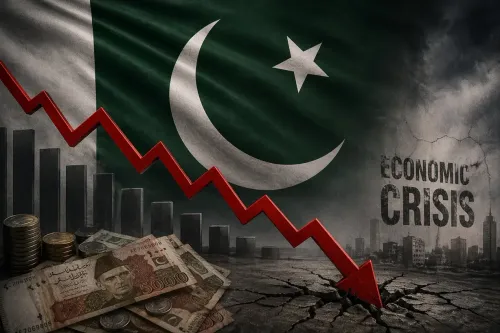
Pakistan's FBR slashed property valuations by up to 35% in Islamabad after real estate lobby resistance, widening the gap between declared and actual transaction values. The reversal exposes how one of Pakistan's most powerful business lobbies continues to block meaningful tax reform, fuelling tax evasion and keeping the country's tax-to-GDP ratio among South Asia's lowest.
Key Takeaways
Pakistan's FBR cut revised property valuations by 10 to 35 per cent in Islamabad following resistance from real estate developers and builders.
The reductions have widened the gap between declared and actual property transaction values , creating more space for tax evasion and undocumented wealth circulation.
Pakistan's real estate lobby is considered one of the country's most powerful, with influence spanning political, bureaucratic, and institutional spheres.
Pakistan's tax-to-GDP ratio stands at approximately 9 to 10 per cent , among the lowest in South Asia, partly due to chronic under-taxation of the real estate sector.
The FBR's selective, locality-specific valuation adjustments have raised concerns about lack of transparency and negotiations with influential stakeholders rather than objective reform.
The rollback puts Pakistan's structural reform commitments under IMF programmes in question, as real estate taxation was flagged as a critical reform area in the 2022 IMF programme .
New Delhi, April 25: Pakistan's Federal Board of Revenue (FBR) has effectively surrendered ground on landmark property tax reforms after slashing revised property valuation rates by 10 to 35 per cent — particularly in Islamabad — following fierce pushback from the country's influential real estate lobby, according to a Dawn report. The rollback lays bare the structural grip of property developers and builders on Pakistan's political and economic machinery, undermining years of stated commitment to broadening the tax base.
FBR's Valuation Reversals: A Pattern of Capitulation
What began as a policy initiative to align official land valuations with prevailing market prices has been systematically dismantled through a chain of reversals, suspensions, and targeted concessions. The FBR had initially raised property valuations across key urban centres to narrow the gap between declared transaction values and actual market rates — a gap widely exploited for tax evasion and parking of black money.
However, even those upward revisions were considered insufficient by independent analysts, as they still lagged significantly behind real market prices. The latest round of cuts has, paradoxically, widened the very gap the reforms sought to close, according to the report.
Rather than implementing a transparent, data-driven, across-the-board revaluation, the FBR opted for selective adjustments in specific localities — a move that has triggered perceptions of backroom negotiations with powerful stakeholders rather than objective policymaking.
Real Estate Lobby's Stranglehold on Pakistan's Political Economy
The real estate sector is widely regarded as one of Pakistan's most powerful business lobbies, with influence penetrating political, bureaucratic, and institutional corridors. Significant stakes held by key actors in positions of authority have repeatedly derailed meaningful taxation efforts targeting the sector.
This is not an isolated episode. Pakistan has a long history of failed attempts to tax property transactions at fair market value. Each attempt has been met with coordinated resistance, legal challenges, or quiet administrative reversals — often within months of implementation.
Critics argue that the revolving door between real estate interests and political power makes genuine reform structurally improbable without external pressure, such as conditions attached to IMF bailout programmes — of which Pakistan has had over two dozen since the 1950s.
Economic Fallout: Low Tax-to-GDP Ratio and Burden on Ordinary Citizens
Real estate continues to function as the preferred vehicle for parking untaxed or illicit wealth in Pakistan, diverting capital away from productive sectors like manufacturing, agriculture, and technology. This speculative preference inflates property prices, making housing unaffordable for middle- and lower-income citizens.
The macroeconomic consequences are severe. Pakistan's tax-to-GDP ratio hovers around a chronically low 9 to 10 per cent — one of the lowest in South Asia — compared to India's approximately 18 per cent and the global average of over 15 per cent. The government's dependence on regressive indirect taxes to compensate disproportionately burdens ordinary wage earners and consumers.
The persistent under-reporting of property transactions also fuels a parallel undocumented economy, complicating Pakistan's efforts to meet FATF compliance standards and international anti-money laundering obligations — areas where the country has faced sustained scrutiny.
Selective Adjustments Fuel Transparency Concerns
The targeted nature of the FBR's valuation changes has raised serious governance red flags. By adjusting valuations in specific localities rather than conducting a uniform national revaluation exercise, the FBR has opened itself to allegations of selective favouritism.
Independent economists and civil society groups have long demanded that Pakistan adopt a technology-driven, automated valuation model — similar to systems used in India under the Benami Transactions (Prohibition) Act and circle rate frameworks — to remove human discretion and lobbying influence from the process.
Notably, Pakistan's 2022 IMF programme had specifically flagged real estate taxation as a critical reform area. The current backtracking raises questions about Islamabad's ability to honour structural reform commitments in future programme negotiations.
What Comes Next
With Pakistan navigating a fragile economic recovery and under pressure from international lenders to expand its tax net, the fate of property tax reform will be a critical test of the government's reform credibility. Analysts warn that without dismantling the real estate lobby's influence, Pakistan's fiscal consolidation efforts will remain superficial, leaving the country trapped in a cycle of borrowing and austerity that hits its most vulnerable citizens hardest.
Point of View
It signals that tax reform in Pakistan is performative, not structural. The deeper irony is stark: a country perpetually on IMF life support, with a tax-to-GDP ratio that shames even much poorer nations, continues to shield its wealthiest asset class from fair taxation. Until Pakistan's political class — many of whom are themselves real estate stakeholders — faces genuine accountability, no reform framework, however well-designed, will survive contact with vested interests.
NationPress
23 Sept 2026
Frequently Asked Questions
Why did Pakistan's FBR reduce property valuations in Islamabad?
Pakistan's FBR reduced property valuations in Islamabad by 10 to 35 per cent following strong resistance from real estate developers and builders. The reductions reversed earlier upward adjustments that were intended to align official land values with actual market prices.
How does Pakistan's real estate sector affect its tax collection?
Pakistan's real estate sector is widely used to park untaxed and illicit wealth, enabling widespread under-reporting of property transactions and tax evasion. This contributes to Pakistan's chronically low tax-to-GDP ratio of around 9 to 10 per cent, one of the lowest in South Asia.
What is the impact of FBR's property valuation cuts on ordinary Pakistanis?
The valuation cuts widen the gap between declared and actual transaction values, perpetuating undocumented wealth circulation and tax evasion. To compensate for lost revenue, Pakistan relies heavily on indirect taxes, which disproportionately burden low- and middle-income citizens.
Has Pakistan attempted property tax reform before?
Yes, Pakistan has repeatedly attempted to reform property taxation but has consistently faced coordinated resistance from the real estate lobby. The 2022 IMF programme specifically flagged real estate taxation as a critical reform area, but meaningful implementation has remained elusive.
How does Pakistan's property tax situation compare to India?
India employs circle rate frameworks and legislation like the Benami Transactions (Prohibition) Act to reduce discretion in property valuation, while Pakistan's process remains susceptible to lobbying and selective adjustments. India's tax-to-GDP ratio stands at approximately 18 per cent, nearly double Pakistan's 9 to 10 per cent.