PoJK unrest since June: 101-119 killed, UN rapporteurs raise rights alarm
Synopsis
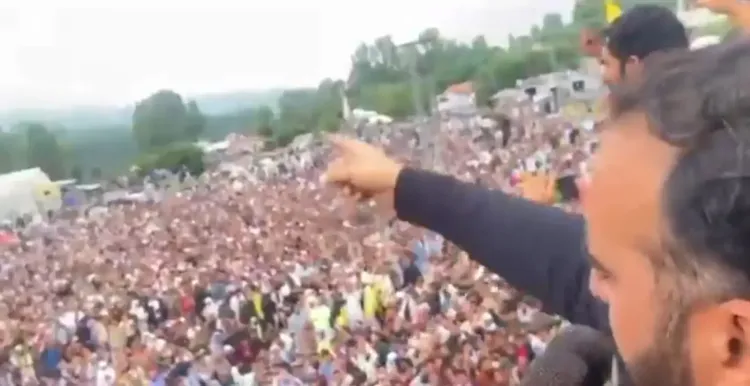
What started as economic protests in PoJK in June has become an international human rights flashpoint: between 101 and 119 civilians reportedly killed, six UN Special Rapporteurs alarmed, and families of the dead allegedly coerced into signing terrorism declarations before bodies were released — all while Pakistan claims to champion Kashmiri rights.
Key Takeaways
Protests in Pakistan-occupied Jammu and Kashmir (PoJK) began in June 2026 over economic hardships and escalated into a confrontation over political rights.
The Jammu Kashmir Human Rights Organisation estimates 101–119 people killed and more than 910 injured; a UN communication cites at least 96 protester deaths and 6 security force deaths .
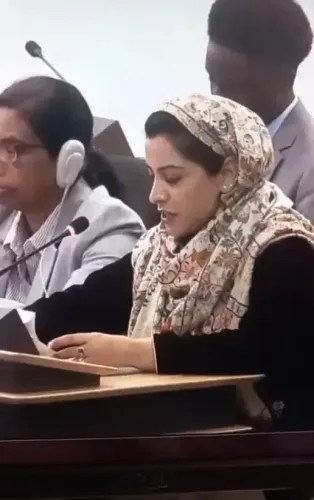
Six UN Special Rapporteurs wrote to the Pakistani government on 4 September , flagging use of live ammunition, tear gas, media restrictions, and arrests affecting more than 200 people .
The family of Fahad Barkat was allegedly asked to sign a terrorism declaration before his body was released; Pakistani authorities reportedly performed his last rites after the family refused.
The Geopolitico report calls for an impartial investigation, restored communications, and unrestricted journalist access, arguing the crisis tests Pakistan's stated advocacy for Kashmiri political rights.
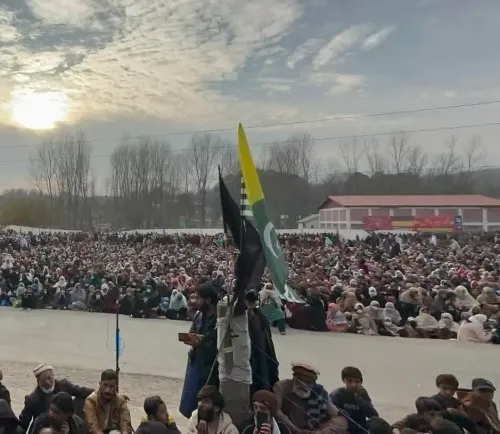
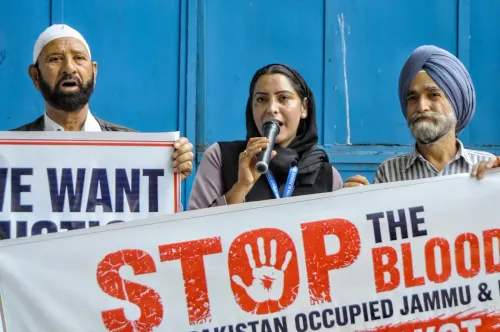
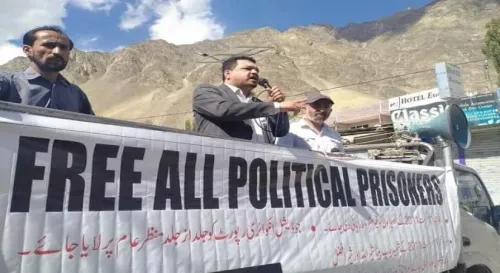
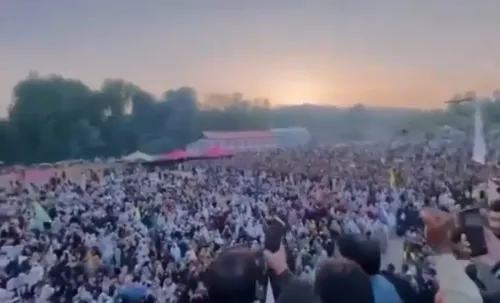
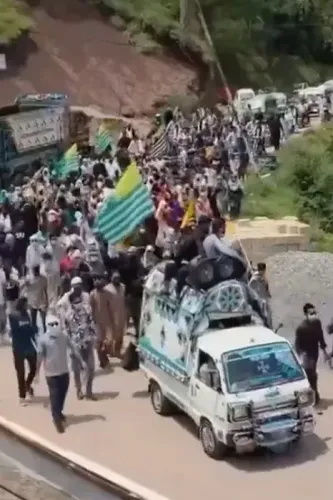
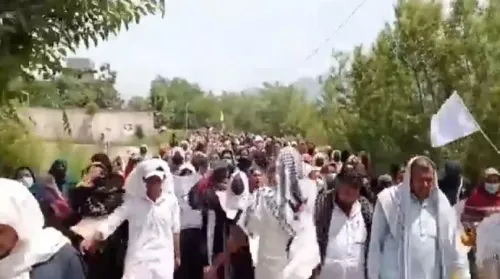
The protests that swept through Pakistan-occupied Jammu and Kashmir (PoJK) beginning in June 2026 have exposed a deepening gulf between the political aspirations of local residents and Islamabad's approach to governing the disputed territory, according to a report by Greece-based geopolitical publication Geopolitico. What began as demonstrations over economic hardships has since transformed into a confrontation over political rights, institutional accountability, and the limits of regional autonomy.
Scale of Casualties and UN Concern
At least 96 protesters and six members of the police and paramilitary forces have been killed since the unrest began, according to a communication reportedly addressed to the Pakistani government by six United Nations Special Rapporteurs on 4 September. The Jammu Kashmir Human Rights Organisation and local activists put the toll higher, claiming between 101 and 119 people were killed and more than 910 were reportedly injured during the unrest.
Although these figures remain difficult to verify independently, the consistency of accounts emerging from local communities underscores the need for a comprehensive examination of the conduct of Pakistan's security forces, the Geopolitico report noted. Restrictions on information access have further complicated efforts to establish an accurate record of events.
Allegations Against Security Forces
The concerns raised by the UN experts extend well beyond the fatality count. These include allegations of use of tear gas, live ammunition, and physical violence, as well as restrictions on telecommunications, arrests of journalists and political activists, and measures reportedly affecting more than 200 people, according to the Geopolitico report.
Among the most serious allegations is the reported treatment of families attempting to recover the bodies of those killed. The Jammu Kashmir Human Rights Organisation reportedly said that the family of Fahad Barkat was allegedly asked to sign a declaration identifying him as a terrorist killed in a police encounter before his body would be released. When the family refused, Pakistani authorities reportedly performed his last rites themselves. Similar accounts have been referenced in the communication from the UN Special Rapporteurs.
Notably, if such allegations are substantiated, they would represent not only a violation of human dignity but also a deliberate attempt to impose an official interpretation of events on the families of the deceased — and to deter others from participating in protests by attaching the label of terrorism to those killed.
Challenge to Pakistan's Kashmir Narrative
For decades, Pakistan has presented itself internationally as a champion of Kashmiri political rights. The allegations now emerging from PoJK pose a direct challenge to that diplomatic narrative. Critics argue that the response of Pakistani security forces to civilian protests in the territory contradicts Islamabad's stated position on the rights of Kashmiris in the region administered by India.
'The immediate priorities should include an impartial investigation into civilian and security-force casualties, restoration of communications, unrestricted access for journalists and human rights observers, judicial review of the designation of JAAC, and the release of individuals detained solely for peacefully exercising their political rights. The international community must apply consistent standards to human rights concerns across Kashmir, regardless of which government administers the territory concerned,' the Geopolitico report said.
Broader Implications for Civil Liberties
The report argued that the crisis extends far beyond the trigger of flour prices or the capacity of authorities to manage public demonstrations. 'It concerns the relationship between political power and civil liberties, the right of communities to demand accountable governance, and the responsibility of the state to protect human life. Silencing dissent cannot substitute for addressing its causes. Nor can restrictions on information erase the obligation to establish the truth,' Geopolitico added.
The scale of civilian casualties has, according to the report, elevated what was initially a domestic political dispute into a human rights issue that warrants international scrutiny. With the UN already engaged and civil society documentation continuing, the pressure on Islamabad to allow independent access to PoJK is likely to intensify.
Point of View
Islamabad faces an accountability gap it cannot paper over with its standard Kashmir rhetoric. The deeper irony is that the same arguments Pakistan deploys against India's governance of Jammu and Kashmir — civilian casualties, information blackouts, political detentions — are now being directed at Pakistan itself, and from within territory it controls.
NationPress
22 Nov 2026
Frequently Asked Questions
What triggered the protests in PoJK in 2026?
The protests in Pakistan-occupied Jammu and Kashmir began in June 2026 over economic hardships, including concerns about the price of basic commodities. They subsequently expanded into a wider confrontation over political rights, institutional accountability, and the scope of regional autonomy.
How many people have been killed in the PoJK unrest?
According to a communication from six UN Special Rapporteurs to the Pakistani government dated 4 September, at least 96 protesters and six security force members have been killed. The Jammu Kashmir Human Rights Organisation and local activists put the civilian toll higher, at between 101 and 119 people killed and over 910 injured, though these figures have not been independently verified.
What did the six UN Special Rapporteurs raise with Pakistan?
In a communication reportedly addressed to the Pakistani government on 4 September, six UN Special Rapporteurs flagged allegations including the use of tear gas and live ammunition, physical violence, restrictions on telecommunications, arrests of journalists and political activists, and measures affecting more than 200 people.
What are the allegations regarding Fahad Barkat's family in PoJK?
The Jammu Kashmir Human Rights Organisation reportedly alleged that the family of Fahad Barkat was asked to sign a declaration identifying him as a terrorist killed in a police encounter before his body would be released. When the family refused, Pakistani authorities reportedly performed his last rites themselves. Similar cases have been cited in the UN Special Rapporteurs' communication.
Why does the PoJK unrest challenge Pakistan's diplomatic position on Kashmir?
Pakistan has long presented itself internationally as an advocate for Kashmiri political rights. The allegations of civilian killings, information blackouts, and coercion of victims' families in PoJK — territory Pakistan itself administers — directly contradict that narrative and expose a tension between Islamabad's international rhetoric and its domestic conduct in the region.