Nationwide Protests Erupt in Sindh Over Skyrocketing Fuel Prices and Inflation
Synopsis
In Sindh province, widespread protests have erupted as citizens voice their discontent over soaring fuel prices and rampant inflation. Various political groups, including the Sindh United Party and Pakistan Tehreek-e-Insaf, have united in their demands for government intervention to alleviate the financial burden on the public.
Key Takeaways
Widespread protests across Sindh against rising fuel prices.
Political parties unite in demands for government relief.
Activists criticize government economic policies and call for accountability.
Protesters highlight the burden of inflation on the working class.
Demonstrations emphasize the need for immediate action on economic issues.
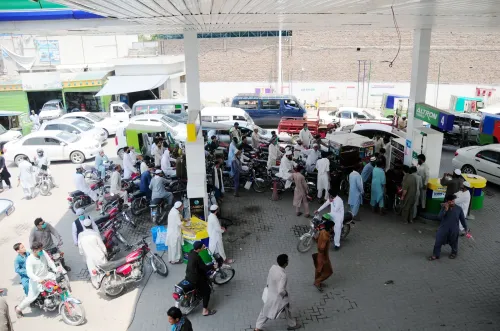
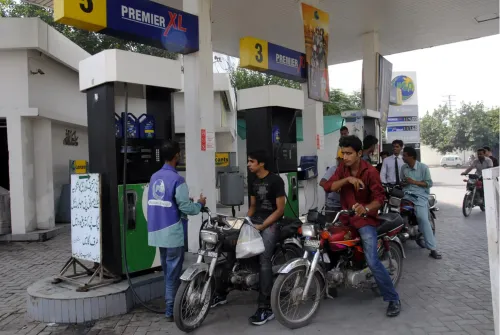
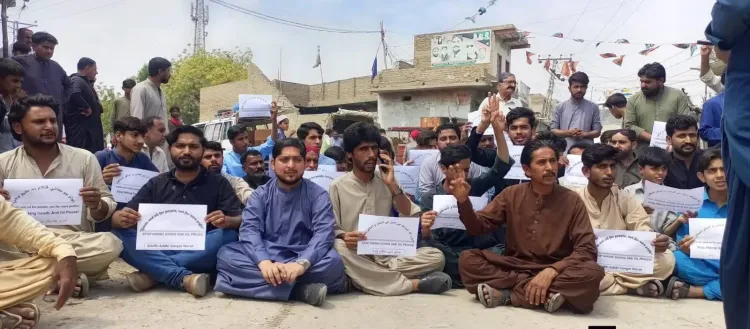
Islamabad, April 6 (NationPress) Demonstrations and rallies erupted in Karachi, Jacobabad, Hyderabad, Sukkur, and other regions of Pakistan's Sindh province in response to the recent surge in petroleum prices and escalating inflation, according to local media reports on Monday.
The Sindh United Party (SUP) organized a protest outside the local press club in Sukkur on Sunday. Numerous party activists participated, donning shrouds (kafans) and observing a hunger strike, as reported by Pakistan's prominent daily, Dawn.
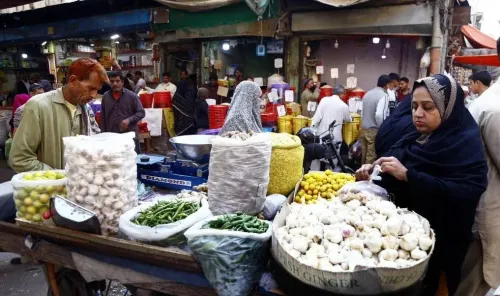
During the event, SUP leader Eidan Jagirani criticized the government's latest petrol price increase, asserting that the "genie of inflation" has been unleashed, rendering essential food items unaffordable for the working class.
At the same location, workers from the Pakistan Tehreek-e-Insaf (PTI) staged their own protest, where senior leader Gohar Khan Khoso announced that petrol prices had escalated to PKR 378 per litre. He cautioned that protests would escalate if the government failed to provide immediate relief and eliminate excessive taxes.
The Awami Tehreek conducted a rally from Teer Chowk to Ghanta Ghar in Sukkur, culminating in a sit-in. Leaders Ahmed Katiar and advocate Sarwan Jatoi accused the government of leveraging the West Asia conflict as a justification for raising petrol prices to PKR 378 and diesel to PKR 520 per litre. They criticized Prime Minister Shehbaz Sharif and Sindh Chief Minister Murad Ali Shah, labeling recent subsidy announcements as "cosmetic measures" intended to quash public dissent.
Similarly, a collaborative demonstration was organized by the National Trade Union Federation Pakistan (NTUF) and the Home-Based Women Workers Federation (HBWWF) in Karachi, attracting participation from workers and representatives of various political and human rights organizations. Demonstrators carried placards advocating for the abolition of the petroleum levy and an increase in wages commensurate with the current cost of living.
Labour leaders, including Nasir Mansoor and Zahra Khan, denounced the economic policies of the International Monetary Fund (IMF) and World Bank, urging the government to postpone foreign debt repayments and abolish free fuel privileges for officials, as reported by Dawn.
The Aam Insan Tehreek organized a bicycle rally in Jacobabad to highlight the challenges faced by citizens in accessing motorized transportation. Movement leaders Syed Ali Shah and Altaf Mirani stated that the authorities had "snatched the morsel from the mouths of the poor," urging the government to cut down on its "royal" expenditures and official protocols rather than imposing burdens on the populace.
On April 3, the Human Rights Council (HRC) of Pakistan held a protest at the Karachi Press Club against the fuel price hike, labeling it as "unjustified" and warning that it adds further financial strain on the public.
The rights organization noted that a significant number of citizens, civil society members, and activists participated in the protest, expressing grave concerns over the ongoing rise in fuel prices and its direct influence on inflation and living costs.
"Speakers collectively demanded that the government take immediate action to manage inflation and provide relief to the citizens. They cautioned that if such anti-public policies persist, the protest movement will expand further," stated the HRC of Pakistan.
Point of View
It is evident that the protests in Sindh reflect deep-seated frustrations over economic policies that many perceive as detrimental to the working class. The rising cost of living and fuel prices are key concerns that resonate across various segments of society, prompting calls for government accountability and relief measures.
NationPress
9 Oct 2026
Frequently Asked Questions
What sparked the protests in Sindh?
The protests were ignited by a recent increase in petroleum prices and escalating inflation, prompting various political groups to unite in their demands for government intervention.
Which political parties are involved in the protests?
Key political parties participating in the protests include the Sindh United Party (SUP), Pakistan Tehreek-e-Insaf (PTI), and the Awami Tehreek, among others.
What are protesters demanding?
Protesters are demanding the abolition of the petroleum levy, immediate government action to control inflation, and the removal of excessive taxes.
How has the government responded to the protests?
While specific responses from the government have not been detailed, leaders of the protesting parties have criticized recent subsidy announcements as inadequate.
What impact do rising fuel prices have on citizens?
Rising fuel prices contribute significantly to the overall cost of living, making essential goods increasingly unaffordable for many citizens, particularly the working class.