Quad maritime security: India anchors Chennai-Perth mission, eyes 2027 drills
Synopsis
An Indian Coast Guard vessel just completed a Chennai-to-Perth voyage carrying all four Quad nations — and that's only the headline act. Behind it: a new maritime surveillance framework to debut at Sea Dragon 2027, a $10 million critical-minerals fund, and a rare joint pledge to dismantle cyber-scam networks stealing tens of billions annually. India is no longer just a participant in Quad maritime security — it's the anchor.
Key Takeaways
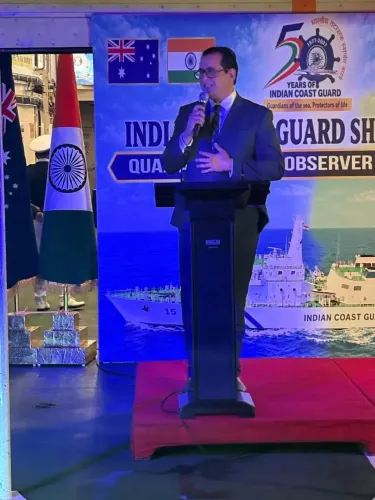
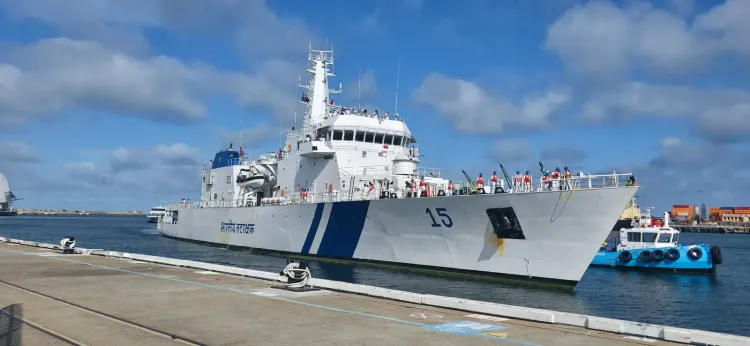
An Indian Coast Guard vessel completed the second Quad-at-Sea Ship Observer Mission from Chennai to Perth between 25 September and 7 October 2026 .
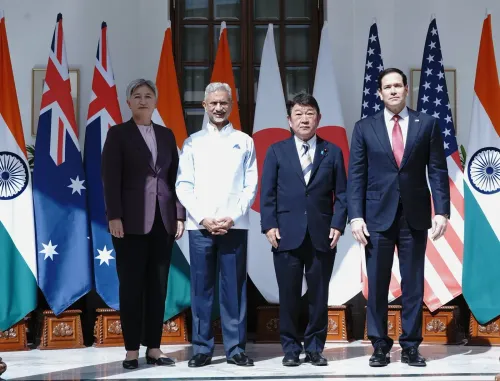
Jaishankar met counterparts from the US , Japan , and Australia in Atlanta on 31 October 2026 — the Quad's third ministerial of 2026.
The first Indo-Pacific Maritime Surveillance Collaboration exercise will take place at Sea Dragon 2027 .
The US committed $10 million to critical-minerals recovery infrastructure in India and ASEAN nations.
Quad nations pledged to dismantle cyber-scam networks stealing tens of billions of dollars annually, though no enforcement timeline was set.
Freedom of navigation in the Strait of Hormuz , Red Sea , and Bab el-Mandeb Strait was explicitly affirmed under UNCLOS .
India anchored the second Quad-at-Sea Ship Observer Mission, with an Indian Coast Guard (ICG) offshore patrol vessel carrying representatives of all four Quad nations — India, the United States, Japan, and Australia — from Chennai to Perth between 25 September and 7 October 2026. The completed voyage was described by the four partners as a significant stride toward coordinated maritime law enforcement in the Indo-Pacific.
Ministerial Meeting in Atlanta
Details of the mission and wider Quad maritime agenda were released after External Affairs Minister S. Jaishankar met US Secretary of State Marco Rubio, Japanese Foreign Minister Toshimitsu Motegi, and Australian Foreign Minister Penny Wong on the sidelines of the G20 Foreign Ministers' Meeting in Atlanta on 31 October 2026. Japan confirmed the discussions ran approximately 40 minutes and constituted the Quad's third ministerial meeting of 2026, following sessions in May and July.
New Exercises and Maritime Surveillance Framework
The four countries announced that their first exercise under the Indo-Pacific Maritime Surveillance Collaboration initiative would be held at Sea Dragon 2027. The initiative, unveiled by foreign ministers in New Delhi in May, focuses on improving real-time information sharing and maritime domain awareness across the Indo-Pacific.
The ministers also announced the first Quad Maritime Domain Awareness Track 1.5 Symposium, scheduled for early 2027 under the Quad Maritime Training Initiative (MAITRI). The symposium will provide regional partners a platform to exchange best practices on maritime monitoring technologies and data sharing. Separately, Australia, Japan, and the United States will send observers to India's annual humanitarian assistance and disaster relief exercise in November 2026.
Critical Minerals and Economic Security
On economic security, the ministers welcomed a US commitment of $10 million to support infrastructure and facilities in India and ASEAN countries for recovering critical minerals from electronic waste and scrap materials. The amount was not earmarked solely for India. The Quad Critical Minerals Initiative Framework, also first announced in May, drives this effort to reduce collective dependence on any single supplier nation.
The partners said they would explore streamlined export and import procedures for recyclable materials and encouraged private investment in waste collection networks, processing plants, and refineries. They also expressed concern over economic coercion, arbitrary export restrictions, and non-market practices disrupting critical-industry supply chains — language widely read as directed at China, though Beijing was not named.
Cyber Scams and Transnational Crime
The ministers expressed deep concern about online and cyber scam operations, calling them a threat to national and international peace and security. They condemned criminal groups that traffic people and compel them to defraud citizens, noting these operations steal tens of billions of dollars annually from people across the four countries.
'The Quad countries committed to dismantling these operations and holding transnational criminal groups and their leaders accountable,' the joint statement said. No specific enforcement operations or timelines were set out, however.
Freedom of Navigation and Disaster Logistics
The joint statement stressed the need to protect navigational rights and freedoms in the Strait of Hormuz, the Red Sea, and the Bab el-Mandeb Strait, calling for unhindered maritime passage and crew safety consistent with the UN Convention on the Law of the Sea (UNCLOS). This comes amid continuing Houthi disruptions to Red Sea shipping lanes that have elevated global freight costs since late 2023.
The four countries also reported progress on standard operating procedures for the Indo-Pacific Logistics Network, following a tabletop exercise hosted by Japan's Defence Ministry in September. Further work on shared disaster-relief logistics is planned for the next Rim of the Pacific exercise.
As the Quad's maritime architecture deepens, India's role as a mission host and vessel provider signals a growing expectation that New Delhi will shoulder an expanding share of Indo-Pacific security responsibilities.
Point of View
A role that will carry expectations of sustained resource commitment. The cyber-scam pledge is the most underreported element: framing transnational fraud as a security threat rather than a law-enforcement problem elevates it to ministerial-level priority and could unlock intelligence-sharing beyond current norms. The $10 million critical minerals figure, however, is modest relative to China's processing dominance, suggesting the framework still outpaces the funding. And the absence of any enforcement timeline on scam networks or specific minerals projects risks reducing ambitious language to aspirational text — the Quad's familiar vulnerability.
NationPress
31 Oct 2026
Frequently Asked Questions
What was the second Quad-at-Sea Ship Observer Mission?
It was a maritime voyage aboard an Indian Coast Guard offshore patrol vessel that carried representatives of all four Quad nations — India, the US, Japan, and Australia — from Chennai to Perth between 25 September and 7 October 2026. The mission was designed to strengthen joint capacity against unlawful maritime activities in the Indo-Pacific.
What did the Quad ministers agree to in Atlanta on 31 October 2026?
Ministers from India, the US, Japan, and Australia met in Atlanta on 31 October 2026 on the sidelines of the G20 Foreign Ministers' Meeting. They announced the Sea Dragon 2027 maritime surveillance exercise, the first Quad Maritime Domain Awareness Symposium in early 2027, a US $10 million critical-minerals fund, and a joint commitment to dismantle cyber-scam networks.
What is the Indo-Pacific Maritime Surveillance Collaboration initiative?
It is a Quad framework, announced in New Delhi in May 2026, aimed at improving real-time information sharing and maritime domain awareness across the Indo-Pacific. Its first joint exercise is scheduled for Sea Dragon 2027.
How does the Quad plan to tackle cyber scam networks?
The four countries issued a joint commitment to dismantle transnational criminal groups running online and cyber scam operations, which reportedly steal tens of billions of dollars annually from citizens across Quad nations. However, the joint statement did not specify enforcement operations or a timetable for action.
What is the Quad's critical minerals initiative?
The Quad Critical Minerals Initiative Framework, announced in May 2026, focuses on recovering critical minerals from electronic waste and scrap to reduce reliance on any single supplier. The US committed $10 million to support related infrastructure in India and ASEAN countries, with plans to ease cross-border trade in recyclable materials.