Rajasthan hits record 127 girls per 100 boys in colleges as total admissions fall for 2nd year

Synopsis
Rajasthan now has more women in colleges than ever — 127 girls for every 100 boys — but the headline achievement masks a second consecutive fall in total admissions, down 4.23% to 12.55 lakh in 2025-26. The state's decade-long enrolment growth streak is over, and government colleges are absorbing the sharpest hit.
Key Takeaways
Rajasthan recorded 127 girls per 100 boys in college enrolment in 2025-26 — its highest-ever female-to-male ratio, up from 97 girls per 100 boys in 2015-16 .
Total college enrolment fell 4.23% to 12,55,809 students, following a 1.31% drop in 2024-25 — ending nearly a decade of uninterrupted growth.
Female enrolment stood at 7,02,179 ; male enrolment at 5,53,630 .
Among Scheduled Tribes , the ratio was the highest at 134 girls per 100 boys .
Government colleges saw the sharpest admissions fall, attracting only 5,42,195 students versus 7,13,614 in private institutions.
Experts cite teacher shortages, weak infrastructure, and a shrinking school-level pipeline as key drivers of the overall decline.
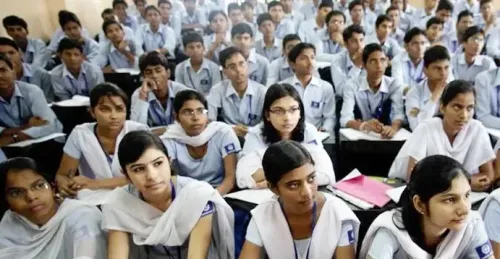
Rajasthan has recorded its highest-ever female-to-male enrolment ratio in higher education, with 127 girls joining colleges for every 100 boys during the 2025-26 academic session — even as the state logs a second consecutive annual decline in overall college admissions. The dual trend underscores a structural shift in who is choosing higher education in the state, even as the total pool of students shrinks.
Overall Admissions Decline
According to data released by the State Higher Education Department, total enrolment across undergraduate and postgraduate courses stood at 12,55,809 in 2025-26, down from 13.11 lakh the previous year — a fall of 4.23 per cent. This follows a 1.31 per cent drop recorded in 2024-25, ending nearly a decade of uninterrupted growth in college enrolment.
Government colleges bore the sharpest impact, attracting 5,42,195 students against 7,13,614 in private institutions. Male enrolment stood at 5,53,630 — 2,03,463 in government colleges and 3,50,167 in private colleges.
Record Female Participation Across Categories
Female enrolment reached 7,02,179, with 3,38,732 in government colleges and 3,63,447 in private institutions. The current ratio of 127 girls per 100 boys marks a dramatic improvement from 97 girls per 100 boys recorded in 2015-16 — a decade-long upward trajectory.
The trend cuts across social categories. Among Scheduled Tribes, the ratio reached 134 girls per 100 boys, the highest of any group. The General category recorded 129, followed by Minorities at 128, OBCs at 126, and Scheduled Castes at 122.
What Experts Say
Abir Ahmed, a policy expert on female education and employment, attributed the gains to a convergence of policy measures. 'The rise in girls' enrolment is the result of several policy interventions working together — scholarships, free education, better transport, hostel facilities and growing social acceptance of higher education for girls. More young women are now entering colleges than ever before. The next challenge is ensuring they find meaningful employment after completing their education,' Ahmed said.
Damodar Goyal, President of the Society for Private Unaided Schools at Rajasthan, welcomed the gender gains but flagged deeper structural concerns. 'The increase in girls' enrolment is encouraging, but the overall decline in admissions is worrying. School enrolment has already fallen sharply, especially in higher classes, and that is now beginning to reflect in college admissions. Teacher shortages, weak infrastructure and declining learning outcomes need urgent attention if this trend has to be reversed,' Goyal said.
Why the Decline in Total Admissions Matters
The back-to-back falls break a near-decade-long streak of enrolment growth and point to upstream pressures: shrinking school-level pipelines, particularly at the senior secondary stage, are feeding fewer students into college. This comes amid broader concerns about learning outcomes and institutional capacity in Rajasthan's public education system. Notably, government colleges — which serve a disproportionately higher share of first-generation learners and students from economically weaker sections — have seen the steepest drop, raising equity questions that go beyond gender ratios.
What to Watch
Educationists and policymakers will now need to address the employment pipeline that Ahmed flagged — ensuring that record female enrolment translates into workforce participation, not just graduation numbers. The next academic cycle will indicate whether the overall admissions decline stabilises or deepens further.
Point of View
Transport subsidies, and hostel infrastructure have clearly moved the needle over a decade. But celebrating it in isolation risks obscuring a more uncomfortable truth: Rajasthan's college pipeline is contracting, and government institutions — the primary access point for marginalised communities — are contracting fastest. The gender story and the access story are not separate; if overall enrolment keeps falling, the absolute number of women in higher education will eventually follow the ratio down. The more urgent question is whether Rajasthan's school system can reverse its own enrolment slide before the college-level damage compounds.
NationPress
10 Oct 2026
Frequently Asked Questions
What is Rajasthan's female-to-male enrolment ratio in colleges for 2025-26?
Rajasthan recorded 127 girls for every 100 boys in college enrolment during the 2025-26 academic session, its highest-ever ratio. This is a significant rise from 97 girls per 100 boys in 2015-16.
By how much have college admissions declined in Rajasthan?
Total college admissions in Rajasthan fell 4.23% to 12,55,809 in 2025-26, down from 13.11 lakh the previous year. This is the second consecutive annual decline, following a 1.31% drop in 2024-25.
Which social category has the highest female enrolment ratio in Rajasthan colleges?
Scheduled Tribe students recorded the highest ratio at 134 girls per 100 boys. The General category followed at 129, Minorities at 128, OBCs at 126, and Scheduled Castes at 122.
Why are overall college admissions falling in Rajasthan despite rising female participation?
Experts point to a shrinking school-level pipeline, particularly at the senior secondary stage, as well as teacher shortages, weak infrastructure, and declining learning outcomes. These upstream factors are reducing the total number of students reaching college, even as girls' participation within that pool rises.
How many students enrolled in government versus private colleges in Rajasthan in 2025-26?
Of the 12,55,809 total enrolments, 5,42,195 students joined government colleges and 7,13,614 enrolled in private institutions. Government colleges recorded the steeper proportional decline.