Rajasthan Governor Urges Journalism Students to Honor Tradition and Embrace Responsibility
Synopsis
Rajasthan's Governor, Haribhau Bagde, inspires journalism students at Haridev Joshi University to connect with India's journalistic legacy while emphasizing the importance of ethical responsibility. The convocation ceremony celebrates academic achievements and the vital role of journalism in society.
Key Takeaways
Connect with India's rich journalistic legacy.
Embrace ethical responsibility in journalism.
Strengthen education in journalism and mass communication .
Combat the challenge of fake news .
Utilize knowledge for the greater good of society.
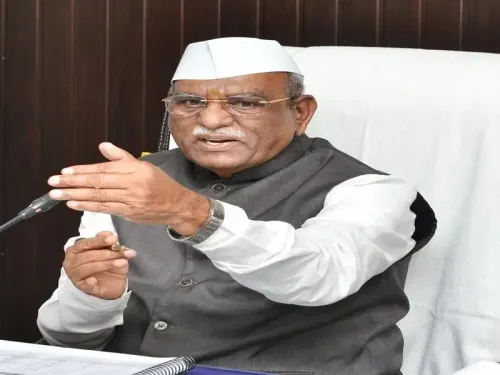
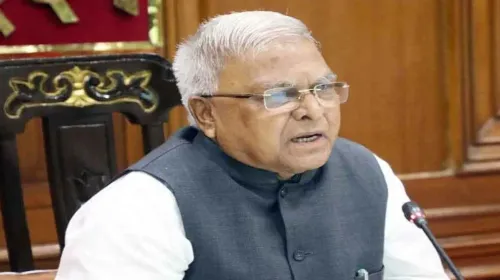
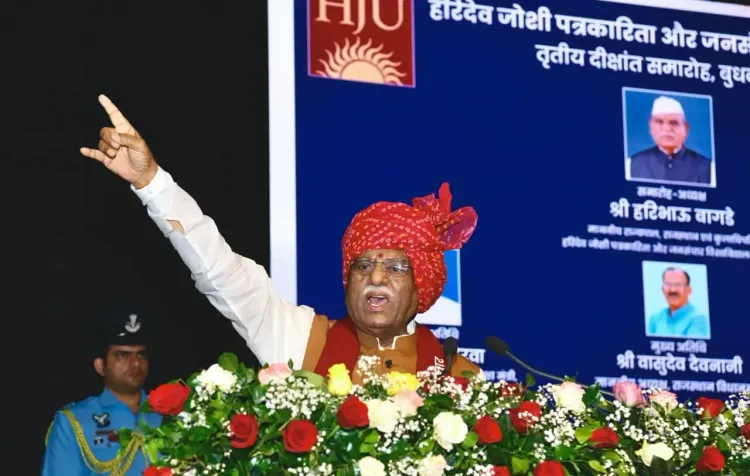
Jaipur, March 25 (NationPress) The Governor of Rajasthan and Chancellor Haribhau Bagde urged journalism and mass communication students to engage deeply with India's extensive journalistic heritage and knowledge systems.
He pointed out that journalism's role extends beyond merely reporting news; it should also promote intellectual and cultural growth.
Speaking at the third convocation ceremony of Haridev Joshi University of Journalism and Mass Communication in Jaipur, Governor Bagde emphasized journalism's significance during the Indian freedom struggle.
He honored notable figures like Ganesh Shankar Vidyarthi, Vijay Singh Pathik, Karpoor Chandra Kulish, and Bishan Singh Shekhawat, underscoring the necessity of enhancing journalism and mass communication education.
Governor Bagde reaffirmed his commitment to press freedom while stressing that such freedom must be exercised with responsibility.
He highlighted the need to cultivate strong ethical principles among aspiring journalists.
Characterizing the convocation ceremony not just as an academic milestone but as the start of a new chapter in life, the Governor referenced the Gurukul tradition, where students learn to uphold truth, righteousness, and humility upon completing their education.
He encouraged the students to leverage their knowledge for the betterment of society, avoiding arrogance.
Highlighting India's rich cultural heritage, the Governor noted that timeless epics like the Ramayana and Mahabharata continue to impart valuable moral and life lessons.
He asserted that the primary goal of journalism has always been to convey the truth and raise social consciousness, a mission that should remain steadfast.
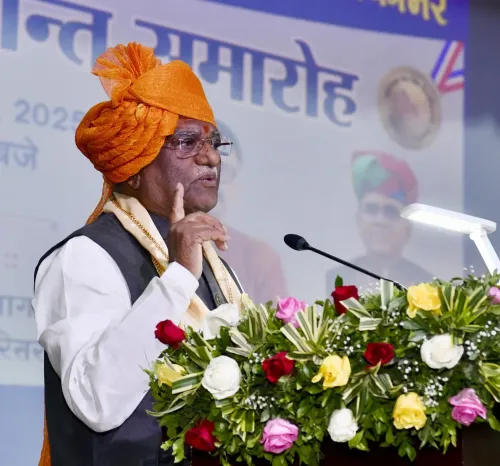
During the event, Rajasthan Assembly Speaker Vasudev Devnani was present as the chief guest, with Deputy Chief Minister and Higher Education Minister Prem Chand Bairwa as the special guest.
Speaker Devnani remarked that the convocation symbolizes not merely the acquisition of a degree but a significant moment of building confidence and accepting greater responsibilities.
Reflecting on the Emergency of 1975, he acknowledged that although freedom of expression was curtailed during that time, robust journalism played a crucial role in defending the truth.
He conveyed that journalism transcends being a profession; it is a mission.
In light of the rapid transformations brought on by digital media and artificial intelligence, Speaker Devnani warned about the increasing challenge of fake news.
He advised future journalists to prioritize accuracy over speed.
Emphasizing the significance of regional languages, Speaker Devnani encouraged students to progress while remaining connected to India's knowledge traditions.
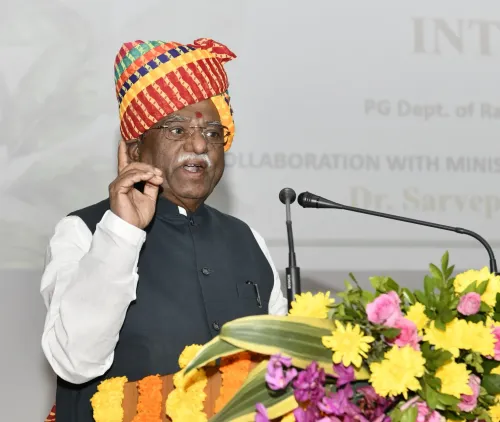
Deputy Chief Minister Bairwa congratulated the graduates, calling the convocation a testament to their hard work and determination.
In memory of freedom fighter and journalist Ganesh Shankar Vidyarthi, the Deputy Chief Minister described journalism as a reflection of society and a powerful instrument for public awareness.
He noted that while journalism was once primarily associated with print media, digital platforms have now made it more widespread and instantaneous.
Nonetheless, the Deputy Chief Minister cautioned that not all viral content is accurate, thereby heightening the responsibilities of journalists.
He urged students to uphold essential professional values—impartiality, integrity, and objectivity—as they contribute to nation-building.
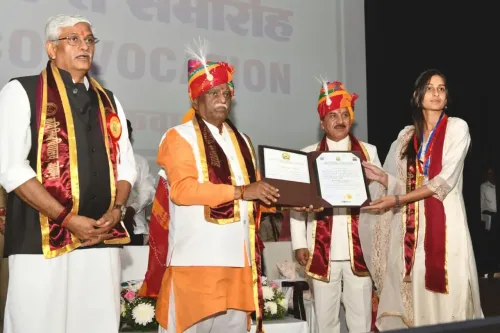
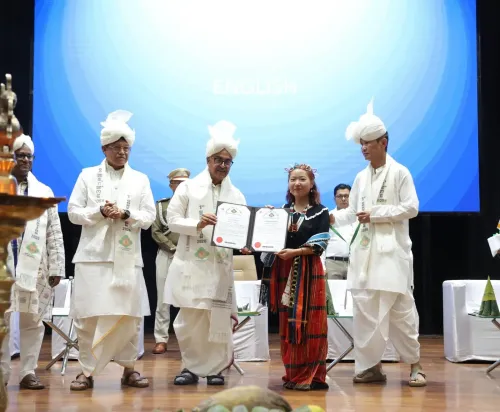
During the ceremony, degrees were awarded to 271 students who completed their final examinations in 2024 and 2025.
This cohort included 269 undergraduate and postgraduate students, along with two research scholars receiving PhD degrees.
Based on academic distinctions, 12 students who secured the top position were honored with gold medals, while 35 students who achieved first, second, and third ranks were presented with certificates of merit.
Vice-Chancellor Nand Kishore Pandey shared in his annual report the university's academic accomplishments, innovations, and future goals.
He stated that the institution remains dedicated to offering quality, modern, and practical education in media and mass communication.
Point of View
The Governor's address highlights a critical aspect of journalism education—balancing tradition with modern challenges. His call for ethical responsibility resonates in today's digital age, where the integrity of information is paramount.
NationPress
24 Sept 2026
Frequently Asked Questions
What did Rajasthan Governor Haribhau Bagde emphasize during the convocation?
He emphasized that journalism should not only disseminate news but also promote intellectual and cultural development, while stressing the importance of ethical responsibility.
Who were some notable figures mentioned by the Governor?
The Governor mentioned eminent personalities such as Ganesh Shankar Vidyarthi, Vijay Singh Pathik, Karpoor Chandra Kulish, and Bishan Singh Shekhawat.
What was the significance of the convocation ceremony?
The ceremony marked not just academic achievements but also the beginning of a new phase in the students' lives, where they are encouraged to contribute positively to society.
How many degrees were awarded during the ceremony?
A total of 271 degrees were awarded, including undergraduate, postgraduate, and PhD degrees.
What warning did Speaker Devnani give regarding journalism?
He warned about the growing challenge of fake news in the digital age and advised aspiring journalists to prioritize accuracy over speed.