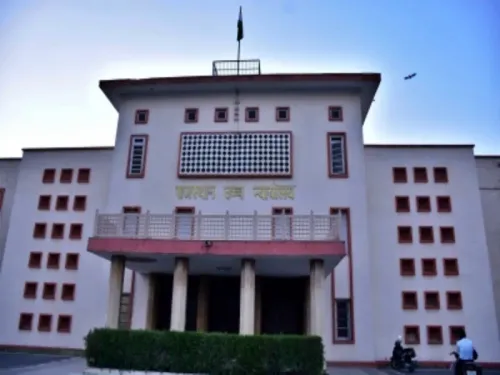
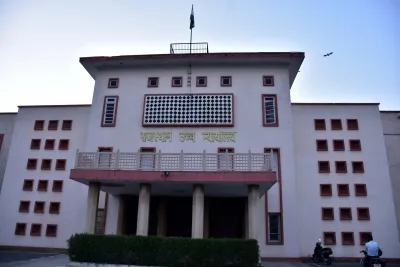
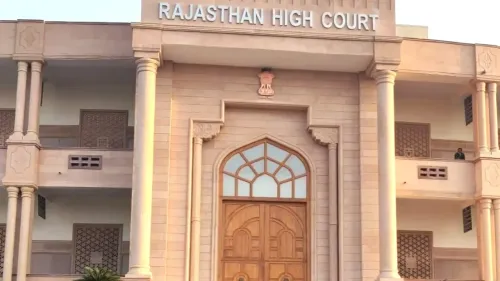
Rajasthan HC strikes down out-of-state vehicle road tax as illegal

Synopsis
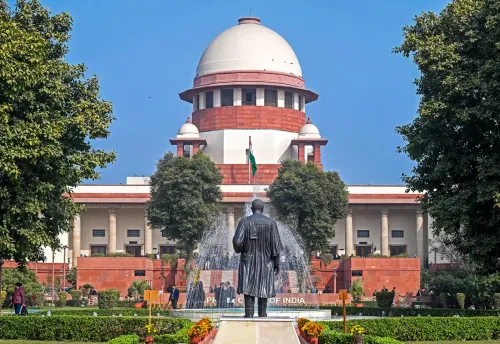
The Rajasthan High Court has struck down the state Transport Department's road tax demands on privately owned out-of-state vehicles as unconstitutional, ruling that no valid statutory notification authorised the levy. The bench ordered immediate release of seized vehicles and full refunds within 30 days — a significant check on state tax overreach that affects vehicle owners from at least six states.
Key Takeaways
The Rajasthan High Court declared the Transport Department's road tax collection on out-of-state private vehicles illegal on 3 November 2026 .
A Division Bench of Chief Justice Sanjay K.
Agrawal and Justice Sameer Jain ruled no valid statutory notification existed to authorise the levy.
The department must refund all collected taxes within 30 days and immediately release all seized vehicles .
Vehicles registered in Haryana, Delhi, Punjab, Gujarat, Uttar Pradesh , and Madhya Pradesh were among those affected.
The state government's reliance on a 10 July 2024 notification was rejected as it was issued under a different statutory provision.
The ruling invokes Article 265 of the Constitution — no tax can be collected without express authority of law.
The Rajasthan High Court on 3 November 2026 declared the Rajasthan Transport Department's practice of collecting road tax from private cars and jeeps registered in other states — on the ground that they had been operating in Rajasthan for more than 30 days — illegal, ruling that no such levy could stand without a specific statutory notification authorising it.
A Division Bench comprising Chief Justice Sanjay K. Agrawal and Justice Sameer Jain held that the Transport Department cannot impose or collect taxes on non-transport vehicles registered outside Rajasthan without a valid notification issued under the relevant provisions of law. The bench directed the department to refund all taxes collected from the petitioners within 30 days and to immediately release all seized vehicles.
Background to the Dispute
The petitions were filed by Harpi Core Network India Private Limited and several individual vehicle owners whose private vehicles — registered in states including Haryana, Delhi, Punjab, Gujarat, Uttar Pradesh, and Madhya Pradesh — were intercepted by flying squads of the Rajasthan Transport Department during routine inspections.
The petitioners argued that lifetime road tax had already been duly paid in their respective home states at the time of registration. Despite this, enforcement officials initiated proceedings, demanding a lump-sum one-time tax on the grounds that the vehicles had remained in Rajasthan for more than 30 consecutive days — the threshold prescribed under Rule 28 of the Rajasthan Motor Vehicles Taxation Rules read with the Rajasthan Motor Vehicles Taxation Act, 1951.
The Constitutional Argument
Central to the petitioners' case was Article 265 of the Constitution of India, which mandates that no tax shall be levied or collected except by authority of law. They contended that the Transport Department was acting on administrative interpretations rather than a notification that specifically authorised the levy in question — making the entire exercise constitutionally suspect.
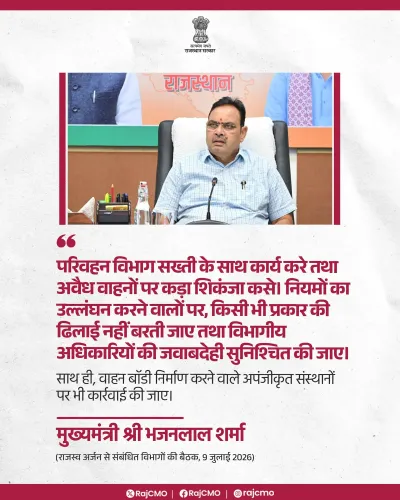
The Chief Minister Bhajanlal Sharma-led state government defended the action, pointing to a notification dated 10 July 2024 that prescribed rates for one-time taxation of non-transport vehicles. The government argued this notification covered vehicles already registered in other states and, accordingly, that both the tax demands and the vehicle seizures were legally justified.
What the Court Found
The High Court, after examining the 10 July 2024 notification, found that it prescribed tax rates only for passenger and goods vehicles as a category. Crucially, no separate notification had been issued under the specific statutory provision that would authorise levying a one-time tax on privately owned non-transport cars registered in another state.
The bench held that merely mentioning 'vehicles registered in other states' within a notification issued under a different provision does not satisfy the statutory requirement for imposing such a tax. It clarified that when the law requires a specific notification to authorise a particular levy, the government cannot substitute it with a notification issued under an unrelated provision.
On this basis, the court held that the one-time tax demand on out-of-state private cars was unsustainable and directed the immediate release of seized vehicles and a refund of all collected taxes within 30 days.
Implications for Vehicle Owners
The ruling is significant for the large number of private vehicle owners — particularly those working, studying, or residing temporarily in Rajasthan while their vehicles are registered in other states — who had faced enforcement action. This is a recurring friction point in multi-state India, where millions of vehicles regularly cross state lines for extended periods.
Notably, the judgment reinforces a principle that taxation requires explicit statutory backing, not administrative convenience — a check that courts have periodically had to reassert against executive overreach by state transport departments. The Transport Department is now expected to revisit its enforcement protocols, and a corrective statutory notification, if the state wishes to retain such a levy, would need to be freshly issued.
Point of View
The case highlights how India's federal structure creates genuine ambiguity around vehicle taxation for the millions of citizens who live in one state and drive a car registered in another. Until Parliament or the states devise a harmonised framework, such disputes will keep returning to court.
NationPress
3 Nov 2026
Frequently Asked Questions
What did the Rajasthan High Court rule on out-of-state vehicle road tax?
The Rajasthan High Court ruled that the Transport Department's collection of road tax from private cars and jeeps registered in other states — on the ground that they had been in Rajasthan for more than 30 days — was illegal. The court held that no valid statutory notification specifically authorised such a levy, making the entire tax demand unsustainable.
Will affected vehicle owners get a refund?
Yes. The High Court directed the Rajasthan Transport Department to refund all taxes collected from the petitioners within 30 days of the order. Seized vehicles are also to be released immediately.
Which states' vehicles were affected by Rajasthan's road tax action?
Private vehicles registered in Haryana, Delhi, Punjab, Gujarat, Uttar Pradesh, and Madhya Pradesh were among those intercepted and subjected to tax demands by Rajasthan's Transport Department flying squads.
Why did the court reject the state government's July 2024 notification?
The court found that the 10 July 2024 notification prescribed tax rates for passenger and goods vehicles generally, but did not constitute a specific notification under the statutory provision required to levy a one-time tax on privately owned non-transport cars registered in other states. Using a notification issued under a different provision to justify a separate levy was held insufficient in law.
What is Rule 28 of the Rajasthan Motor Vehicles Taxation Rules?
Rule 28 of the Rajasthan Motor Vehicles Taxation Rules stipulates that vehicles remaining in Rajasthan for more than 30 days become liable to pay tax under the Rajasthan Motor Vehicles Taxation Act, 1951. The state government invoked this rule to justify its enforcement action, but the High Court held that without a specific authorising notification for non-transport private vehicles from other states, the rule alone could not sustain the levy.