Voter registration conference in Ranchi 2026: AI useful, human oversight essential
Synopsis
Election administrators and academics from across the globe have converged on Ranchi to confront a deceptively complex problem: how do you keep a voter list accurate in a country defined by mass migration, rapid urbanisation, and shifting demographics? The conference's clearest signal so far — AI can help, but the final call must stay human.
Key Takeaways
A two-day international conference titled 'Voter Registration and Voter Register-2026' opened in Ranchi on 2 September 2026 .
The event is jointly hosted by the Office of the Chief Electoral Officer, Jharkhand and the Central University of Jharkhand at NUSRL, Ranchi .
More than 800 universities and institutions were approached; 58 research papers were selected from 230 abstracts received.
Studies on voter registration systems in Estonia, Brazil, Australia, Canada, Denmark, Ghana, and South Africa were presented across six technical sessions .
Experts stressed that while AI can streamline electoral roll management, human oversight must remain central to final decisions.
Conference findings will be published in print and digital formats to support future electoral management research.
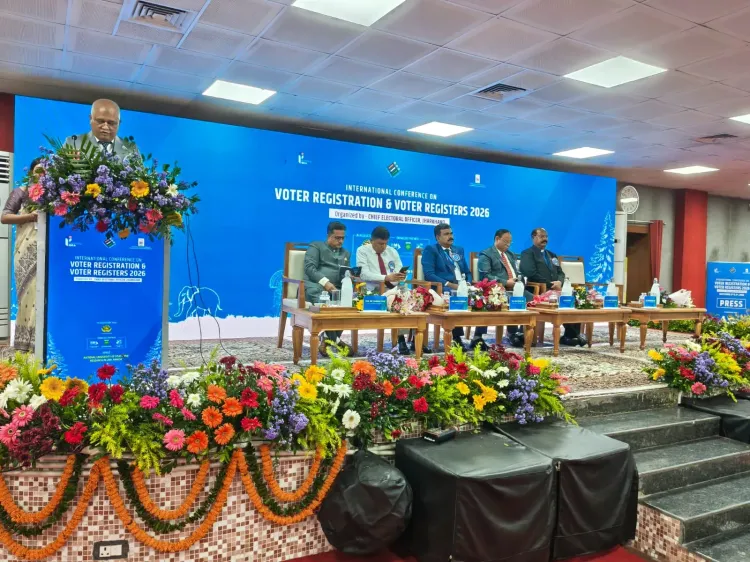
A two-day international conference on electoral roll management opened in Ranchi on Wednesday, 2 September, bringing together election administrators, academics, and researchers from across the world to tackle the growing challenge of maintaining accurate, inclusive voter lists. The event, titled 'Voter Registration and Voter Register-2026', is being jointly hosted by the Office of the Chief Electoral Officer, Jharkhand, and the Central University of Jharkhand at the National University of Study and Research in Law (NUSRL), Ranchi.
Why the Conference Was Called
Jharkhand Chief Electoral Officer K. Ravi Kumar told delegates that the forum goes beyond the ongoing Special Intensive Revision (SIR) exercise. The core agenda, he said, is to pool national and international experience on voter registration systems — with a particular focus on eliminating fake and duplicate entries while keeping eligible citizens on the rolls.
'Bringing together the practical experiences of election administrators and academic research can help make electoral rolls more reliable and inclusive,' Ravi Kumar said.
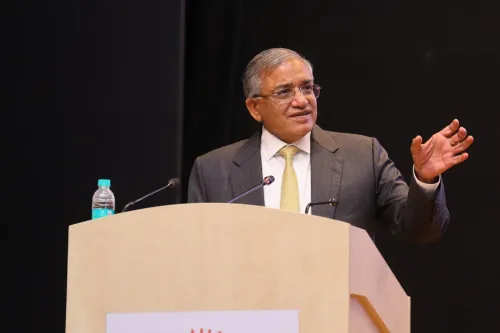
Election Commission's Principal Secretary Arvind Anand attended the inaugural session as chief guest.
Scale and Participation
The organisers reached out to more than 800 universities and institutions for participation. Of the 230 abstracts received, 80 were shortlisted and 58 research papers selected for discussion and publication. On the opening day alone, six technical sessions were held, with researchers presenting studies on voter registration systems in Estonia, Brazil, Australia, Canada, Denmark, Ghana, and South Africa. Topics included online registration, voter databases, emerging technologies, and voter awareness initiatives.
Key Themes: Migration, Marginalisation, and Technology
One of the conference's most pressing themes was the challenge posed by migrant voters. Experts flagged the difficulty migrant workers and other mobile populations face in retaining and updating their registration records as they relocate for employment. This is a particularly acute problem in a state like Jharkhand, which records significant seasonal and long-distance labour migration.
Participants also examined strategies to improve electoral participation among rural and marginalised communities, tribal populations, border-area residents, and women voters. Social media outreach and multilingual awareness campaigns were discussed as practical tools to close registration gaps.
On the technology front, Artificial Intelligence and digital systems drew considerable attention. While experts broadly agreed that technology can streamline voter roll management, they were emphatic that human scrutiny must remain central to final decision-making — a caution that reflects growing global unease about over-automating processes with democratic stakes.
Academic Voices
NUSRL Vice-Chancellor Prof (Dr) Ashok R. Patil described electoral rolls as the foundation of democratic participation, stressing the dual imperative of inclusion and accuracy. Central University of Jharkhand Vice-Chancellor Prof Sarang Medhekar acknowledged the transformative potential of AI in election management but warned that data security challenges must be addressed in parallel. Dr Father Robert Pradeep Kujur, Principal of St Xavier's College, Ranchi, called on colleges and universities to take an active role in voter awareness and registration drives, particularly for young voters, migrants, and disadvantaged groups.
What Comes Next
Key findings and recommendations from the two-day conference will be published in both print and digital formats. Organisers expect the outcomes to inform future research on voter registration and feed into improvements in electoral management practices across participating countries. The conference concludes on Thursday, 3 September.
Point of View
And the twin threats of ghost entries and exclusion of genuine voters are not abstract. The emphasis on human oversight over AI is the right instinct, but the harder question — who audits the auditors? — was not publicly resolved. Jharkhand's high migrant-worker population makes it an apt host, yet the state's own SIR exercise has faced criticism over deletions. Whether conference recommendations translate into enforceable practice, or remain academic, is the test that matters.
NationPress
17 Oct 2026
Frequently Asked Questions
What is the 'Voter Registration and Voter Register-2026' conference in Ranchi?
It is a two-day international conference that opened in Ranchi on 2 September 2026, jointly hosted by the Office of the Chief Electoral Officer, Jharkhand, and the Central University of Jharkhand at NUSRL. The conference brings together election administrators, academics, and researchers to discuss global best practices in electoral roll management, with a focus on eliminating fake and duplicate entries while ensuring eligible voters are not excluded.
Why is human oversight being emphasised over AI in voter roll management?
Experts at the conference agreed that while AI and digital systems can significantly streamline voter registration processes, the final decision on inclusion or deletion of names must involve human scrutiny and verification. The concern is that fully automated systems carry risks of erroneous exclusions — particularly for marginalised, tribal, and migrant populations — with direct consequences for democratic participation.
Which countries' electoral systems were discussed at the Ranchi conference?
Researchers presented studies on voter registration systems in Estonia, Brazil, Australia, Canada, Denmark, Ghana, and South Africa. The sessions covered online registration models, voter databases, emerging technologies, and voter awareness initiatives drawn from these countries' experiences.
What is the Special Intensive Revision (SIR) exercise mentioned at the conference?
The Special Intensive Revision (SIR) is an ongoing exercise conducted by India's Election Commission to review and update electoral rolls — verifying entries, removing duplicates, and enrolling newly eligible voters. Jharkhand Chief Electoral Officer K. Ravi Kumar noted that the conference's scope goes beyond the SIR, aiming to build a broader knowledge base on voter registration.
What will happen to the findings from the Ranchi voter registration conference?
Key findings and recommendations from the two-day conference will be published in both print and digital formats. Organisers expect the outcomes to contribute to future research on voter registration and inform improvements in electoral management practices in India and participating countries.