'Exploitation of Religious Symbolism' Fuels Conflict Narratives in Pakistan: New Insights
Synopsis
A report reveals alarming trends in Pakistan where religious celebrations are manipulated to fuel conflict narratives. This alarming trend amplifies divisions and promotes hostility, especially towards neighboring countries. Discover how blasphemy laws and social media are being weaponized for ideological control.
Key Takeaways
Religion is being exploited for political gain.
Recent blasphemy laws have led to a surge in prosecutions.
Social media plays a crucial role in spreading conflict narratives.
International relations are strained due to these narratives.
Rhetoric of unity often contradicts geopolitical realities.
Islamabad, March 30 (NationPress) Recent remarks from individuals connected to terrorist groups in Pakistan have unveiled a concerning trend of utilizing symbolic and emotionally significant events to bolster narratives of conflict, identity, and cross-border mobilization, as highlighted in a report released on Monday.
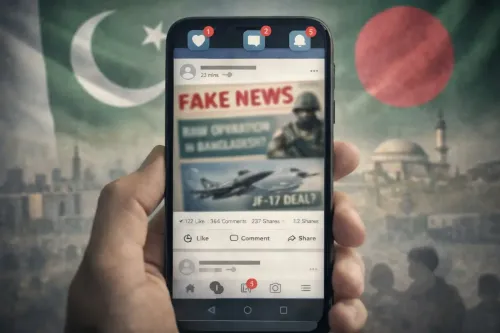
Dimitra Staikou, a Greek journalist writing for 'Pressenza – International Press Agency,' emphasized that this issue came to light on March 22. On that day, rhetoric began circulating on the social media platform X, associated with factions in Pakistan, which exploited the Eid celebration to propagate hostile narratives directed at India and other regional entities.
Staikou noted, "This messaging transcended mere political expression; it aimed to weave tensions into a broader ideological framework of confrontation, using a moment rich in religious significance to amplify division and galvanize sentiment. Throughout history, religion and the human quest for belief in something greater have provided fertile ground for political manipulation."
She further stated, "A troubling trend is emerging: the conversion of religious and communal celebrations into platforms for spreading radical narratives, where identity, belief, and conflict are intentionally intertwined."
The expert pointed out that Pakistan's blasphemy laws exemplify the "institutionalized exploitation" of religion.
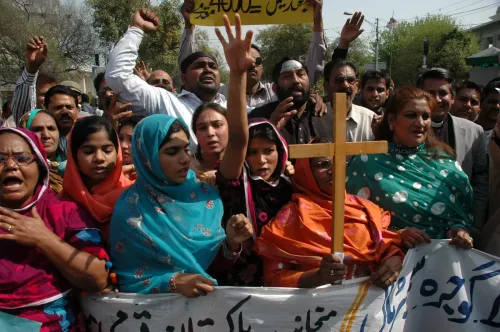
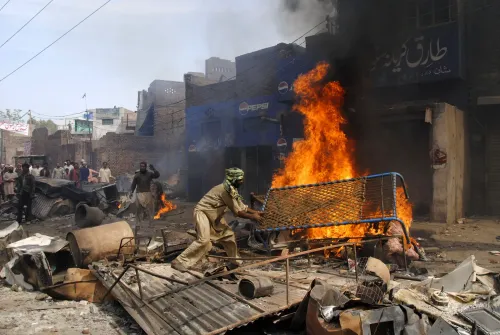
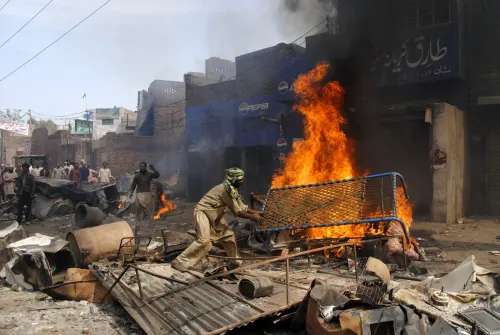
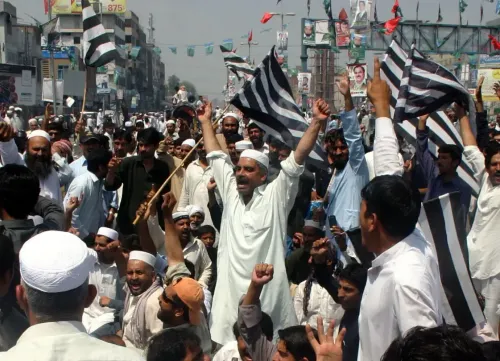
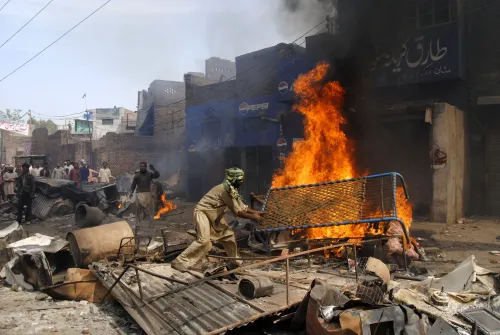
"In recent years, especially from 2022 to 2024, there has been a dramatic rise in blasphemy cases, with hundreds of new prosecutions stemming from not just genuine incidents but also personal disputes, economic tensions, and the targeting of minorities. Particularly noteworthy are the mass arrests of young digital users in 2023-2024 for alleged 'blasphemous content,' alongside incidents of mob violence leading to lynchings and property destruction, especially in Punjab," she stated.
Staikou highlighted that this dynamic extends beyond domestic borders, indicating that the concept of 'insult to faith' is frequently invoked to incite waves of outrage that "transcend borders, fortifying narratives of threat against Islam and legitimizing confrontational rhetoric."
Consequently, she mentioned, blasphemy laws in Pakistan evolve from mere legal classifications into instruments of "mass mobilization and ideological discipline," fueled by fear and moral polarization that enforces control and a dominant narrative.
The report also remarked that Pakistan's relationships with Afghanistan, especially following the Taliban's return to power in 2021, illustrate another facet of this trend, where the rhetoric of "Islamic brotherhood" was initially employed by Islamabad to legitimize regime change and reinforce a shared religious identity.
However, the "reality has unfolded differently" amid ongoing border skirmishes, armed confrontations, and military operations recorded from 2022, escalating between 2023 and 2026.
In particular, the 2026 Pakistani airstrikes in eastern Afghanistan, resulting in significant civilian casualties, underscored the depth of the crisis and revealed the contradiction between rhetoric and practice. The appeal to religious unity coexists with hard geopolitical calculations, highlighting that religion serves less as a true unifying force and more as a versatile tool for strategic narrative construction," the report concluded.
Point of View
It's imperative to recognize the ongoing challenges in Pakistan regarding the manipulation of religious sentiments. The intertwining of faith and political narratives not only affects domestic stability but also poses broader implications for regional dynamics.
NationPress
17 Sept 2026
Frequently Asked Questions
How are religious celebrations used in conflict narratives?
Religious celebrations are increasingly being manipulated to propagate hostile narratives, particularly against neighboring countries, thereby intensifying divisions.
What role do blasphemy laws play in this context?
Blasphemy laws in Pakistan serve as tools for mass mobilization and ideological discipline, often leading to severe consequences for individuals accused of blasphemy.